
Campbell County, Kentucky
Fort Thomas Online High School
The same diploma, on a different schedule. An accredited online high school counted in credits, not hours.
Our online K-12 school runs from kindergarten upward; this page sits under the national online high school and the online high school in Kentucky hub. Families in Fort Thomas rarely arrive here looking for a rescue. The city has one public high school, and the usual reason to look outward is not that the school is weak. It is that one school has one shape, and a particular student needs a different pace, a different hour, or a different order. That is a question about fit and about records, so this page is mostly about records.
How does online high school work here?
There is no bell, no homeroom and no bus. A student signs in, sees the courses they are enrolled in, and works through lessons already sitting there. Teachers grade the work and answer questions, every family gets an assigned student services representative, and each completed course is recorded as credit toward graduation.
The part that surprises people is how much of the day comes back. A school day is six or seven hours, but a great deal of it is movement, attendance and waiting for twenty-nine other people. Take that out and the same coursework takes most students between three and five hours.
A made-up week, not a timetable we hand out. The point is the grey: open blocks are yours to place, and nothing here is scheduled against a bell.
Nothing above is a timetable we issue. Work is released by course, not by hour, so the only fixed points in a week are the ones a family puts there. For the long version, how does online high school work? walks through a term from the first sign-in to the final transcript.
Already know the grade and the timing? Start enrollmentortalk to a counseloror call(888) 242-4262
Count the credits before you decide
Ask the current school for the official transcript first. Before choosing anything, the most useful thing a family can do is get the record in hand and count what is already banked.
A transcript settles the argument. It says which courses were completed, what grade was earned and how much credit each carries, and every sensible decision follows from the count. A student who feels hopelessly behind is often four or five credits short. A student who feels fine is occasionally further back than anyone realized.
Where a transfer usually stands
A student moving in the middle of eleventh grade has most of two years banked. Eight credits left is not two more years of school, it is a plan a counselor can write down.
Credits earned at an accredited school move with the student. We read the transcript, say which are granted here, and put that in writing first. Transfer credits explains what travels and what does not, and credit recovery covers repeating one failed course without repeating the year around it. If the gap opened a while ago, finish high school online is written for exactly that.
A diploma is a credit count
High School of America requires 24 credits for its diploma. That is our own requirement, the same for every student we take, and it does not change with the town a family lives in.
And it matters who issues it. This is a school-issued diploma with a school-issued transcript, not a certificate a family writes for itself. The school stands behind the record, which is the difference that shows when somebody else reads it.
Worth being plain about, because it is the thing most often muddled. States set rules for the schools they run. A private online high school sets its own, and ours is 24. What a family needs is the number and who holds the pen. The online high school diploma page sets out what the document says, and graduation credit requirements breaks the 24 into subjects.
| Area | What it usually covers | Credits |
|---|---|---|
| English | Four years, literature and composition | 4.0 |
| Mathematics | Algebra I through a fourth-year course | 4.0 |
| Science | Biology, chemistry, physics | 3.0 |
| Social studies | US history, world history, government, economics | 3.0 |
| World language | Two years of the same language | 2.0 |
| Health and physical education | One combined credit | 1.0 |
| Fine arts | One credit | 1.0 |
| Electives | Chosen with a counselor | 6.0 |
A transfer student does not start that table at zero. They start wherever the transcript leaves them, which is the whole reason the audit comes first.
Fort Thomas online high school for a ninth grader
Nothing has to be undone in a hurry, and credits earned so far this year are not lost by moving. A student can be enrolled here while paperwork at the current school is still being finished.
Ninth grade is when this comes up most, because it is the first year that counts on the transcript and the first year a mismatch shows. A district with a single high school has fewer internal options than a large one, which is a fact about size rather than a criticism, and it is usually what sends a family looking. 9th grade online covers the freshman year in detail, and 10th grade online, 11th grade online and 12th grade online each have their own page, because what matters in each is different.
- What moves with the student
- Completed courses and the credit attached, as shown on the official transcript from an accredited school.
- What does not move
- A course abandoned part way through. Partial work inside an unfinished course carries no credit anywhere, here included, so a course close to finishing is usually worth finishing where it sits.
- What the new transcript shows
- The transferred credits, the issuing school beside each one, and the work completed here. A reader can see the path. That is a fact about the document and not a prediction about anybody’s decision.
- Who to tell, and when
- Request records before you give notice. A school that has already processed a withdrawal is slower to produce a transcript than one that has not.
Want the credit audit before anything else? Start enrollmentortalk to a counseloror call(888) 242-4262
Six online high school courses a year
A full year here is six credits, which is six courses, and the hours they are done in are yours to arrange.
Coursework is self-paced, so nothing is missed by not being present at a particular minute. That is what makes this workable for a household where the useful hours are early, or late, or split around a long drive across the river. We teach grades 9 through 12 this way.
Six credits a year, four years to 24
The catalog is the American curriculum. English runs English I, English 2 and English 3; mathematics runs Algebra I, Geometry, Algebra II and Precalculus; the sciences are Biology, Chemistry and Physics; social studies covers United States History, World History and US Government. The full list of high school courses has the rest.
- Six credits is a standard year. A student carrying a lighter load takes longer, and that is a plan rather than a failure.
- A course finished early releases the next one. Nothing waits for a term to turn over.
- Teachers are reachable by message, and a call is arranged when a message is not enough.
- Work saves as it is done, which matters more than it sounds when a laptop closes mid-sentence.
Tuesday, 6:40, and no bus to catch
The first change most families notice is not academic. It is the hour at the start of the day that stops going on logistics.
This city is close enough to Cincinnati that a commute shapes the morning in a lot of households, and the school run stacks on top of it. Taking the bus out moves the first lesson to whenever the house is actually awake. That is the practical half of our online homeschool programs, and the half families underestimate before they try it.
“The work did not get easier. The day stopped being a fight about getting out of the door, and what was left was just the work.”
A parent, on the first month
The other practical half is the calendar. There is no single enrollment date to miss, which is what most often traps a family who decides in November that September was a mistake.
Every month is an intake
Ready to see the courses against your student’s transcript? Start enrollmentortalk to a counseloror call(888) 242-4262
One high school, three ways to finish
A family weighing a change here is almost always choosing between three things: stay put, teach it at home yourself, or enroll in an accredited school that issues the diploma.
They are genuinely different arrangements, and the difference that matters most is who ends up holding the transcript. Which option fits your family is an honest walk through all three, including the cases where staying put is the right answer.
If the student is younger than high school, the same thinking applies a grade band down, and the Kentucky K-12 online home school hub is the place to start. The state’s own framing is at the Kentucky Department of Education, Campbell County publishes the local services around it, and the old army post the city is named for is worth ten minutes if you are new to the area.
Find your city in Kentucky
We teach the whole state, and the page you are on is the Fort Thomas one. The school is the same in every town; what changes is the drive, the district and the reason a family went looking.
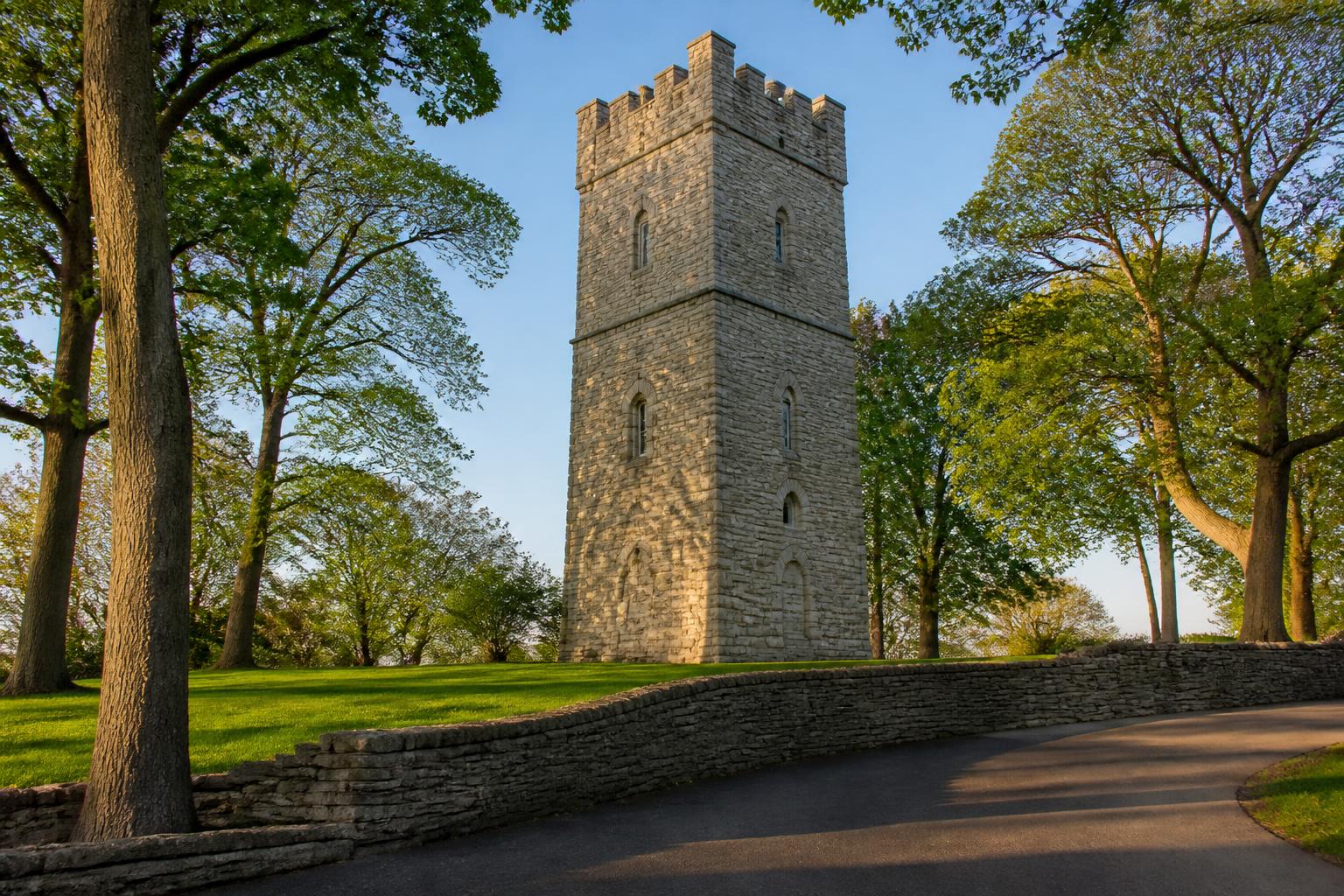
Fort Thomas sits on the ridge above the Ohio River in Campbell County, inside the Cincinnati metro, with Northern Kentucky University a few minutes up the road in Highland Heights and Tower Park on the old army post at the center of town. A student here is often a short drive from three districts and still has one high school to choose from, which is the whole reason this page exists.
Other Kentucky cities we have written for:
- Louisville
- Lexington
- Bowling Green
- Owensboro
- Covington
- Georgetown
- Richmond
- Florence
- Elizabethtown
- Nicholasville
- Hopkinsville
- Henderson
- Jeffersontown
- Frankfort
- Paducah
- Independence
- Radcliff
- Ashland
- Madisonville
- Murray
- Erlanger
- Winchester
- Danville
Or start from the Kentucky online high school hub, which lists every city under it.
Not in Fort Thomas? The school is the same wherever you are. Start enrollmentortalk to a counseloror call(888) 242-4262
Who signs the diploma?
We do. High School of America issues the diploma and the transcript that goes with it, as an accredited private school. The family does not self-certify anything.
That is the cleanest difference between enrolling here and homeschooling independently, where record-keeping and the credential both sit with the parent. If you are weighing that route properly, how to start homeschooling sets out what it asks of you. Either route can work; what differs is who stands behind the document afterwards.
Before anything is agreed
The credit audit comes first, and you get the number in writing
A counselor reads the official transcript and tells you how many of the credits already earned are granted here. That number arrives before any decision is asked of you, and you can walk away from it.
A specimen, not a student.
- Send the transcriptRequest the official record from the current school. An unofficial copy is enough to start the conversation.
- Get the auditA counselor reads it and tells you, in writing, which credits are granted and how many remain.
- Agree the planCourses, order and a realistic finish date, built around the hours the household actually has.
- Start the first courseIn the month you are in. There is no cohort to wait for.
Can a student start in the middle of a semester?
Yes. Enrollment is monthly and courses are released individually, so a start in the middle of October is ordinary rather than an exception.
Is the diploma accredited?
Yes. We are an accredited private school and issue our own diploma and transcript. The accreditation page explains what that means and how it is verified.
How many credits does a student need to graduate?
24, which is our own requirement. Credits already earned at an accredited school count toward it once the audit confirms them.
What does it cost?
Tuition is set by grade level and by whether it is paid in one go or over months, and a counselor confirms the figure for your situation. The tuition page has the current structure.
Can a student take a single course?
Yes. A student can take one course to recover a credit or move ahead in a subject without leaving their current school.
What happens after graduation?
The student holds an accredited diploma and a transcript showing the courses behind it. Many go on to college locally, including Northern Kentucky University just up the road in Highland Heights. What any institution does with an application is its own decision, and no school can promise otherwise.
Start with the transcript, not the decision
Send the record and a counselor will tell you how many credits are granted and what is left. It costs nothing and it is yours to keep either way.