Kenton County / Grades 9 to 12
Independence Online High School
Some students work because they want a car. Others work because the hours are part of how the house runs, and those are the ones a 7:40 bell is hardest on. This is an online high school where the coursework fits around the shifts instead of the other way round.
- Grades 9 to 12
- Accredited
- Self-paced
- No fixed class times
- Start any month
- Certified teachers
Or call (888) 242-4262 on a weekday and ask for admissions.

Read This First
What Is Independence Online High School?
Before anything else: if the job can be moved, move the job. An employer who will shift a teenager off the closing rota is a smaller problem to solve than a change of school, and a family that has not asked yet should ask before reading further.
Independence Online High School is an accredited online high school diploma program for grades 9 to 12, taught by certified teachers, with no fixed class times. Families in Kenton County come to it when the hours are genuinely immovable: a rota set a fortnight ahead, a warehouse or delivery shift on the Ohio side, a parent who needs the car back by four. The admissions process asks for a grade level and nothing about employment.
- The diploma is the same document whatever hours the student keeps. There is no part-time tier and no reduced version of it.
- All 24 required credits still have to be earned. The schedule moves; the requirement does not.
- Coursework has due dates and is marked by teachers, so a student who stops is visible in days rather than at the end of term.
- Start dates are monthly. High School of America takes students in every month of the year.
When Staying Enrolled in the District Is Better
In three situations it plainly is, and a family should rule them out before going further. None of what follows is a reason to move a student anywhere.
| The situation | Why the district school is the better answer |
|---|---|
| The rota is negotiable | Most employers will move a teenager off closing shifts if somebody asks directly. That conversation costs an afternoon; a transfer costs a school year of settling in. |
| The school already has a flexible option | Some schedules can be rebuilt around a first or last period left open. Ask the counseling office what is possible before assuming nothing is. |
| The work is seasonal | A summer or holiday run of hours does not need a change of school. It needs a plan for eight weeks, and credit recovery afterwards if a course slipped. |
What follows assumes the hours are fixed, the employer will not move them, and the household needs them.
The First Week of Online High School
Quieter than families expect, and front-loaded with paperwork rather than coursework. The first week is where the schedule actually gets built, and it is worth doing deliberately.
- 1
The transcript arrives and is read. A counselor maps what is already earned against the 24 credits and names what is outstanding. This happens before payment.
- 2
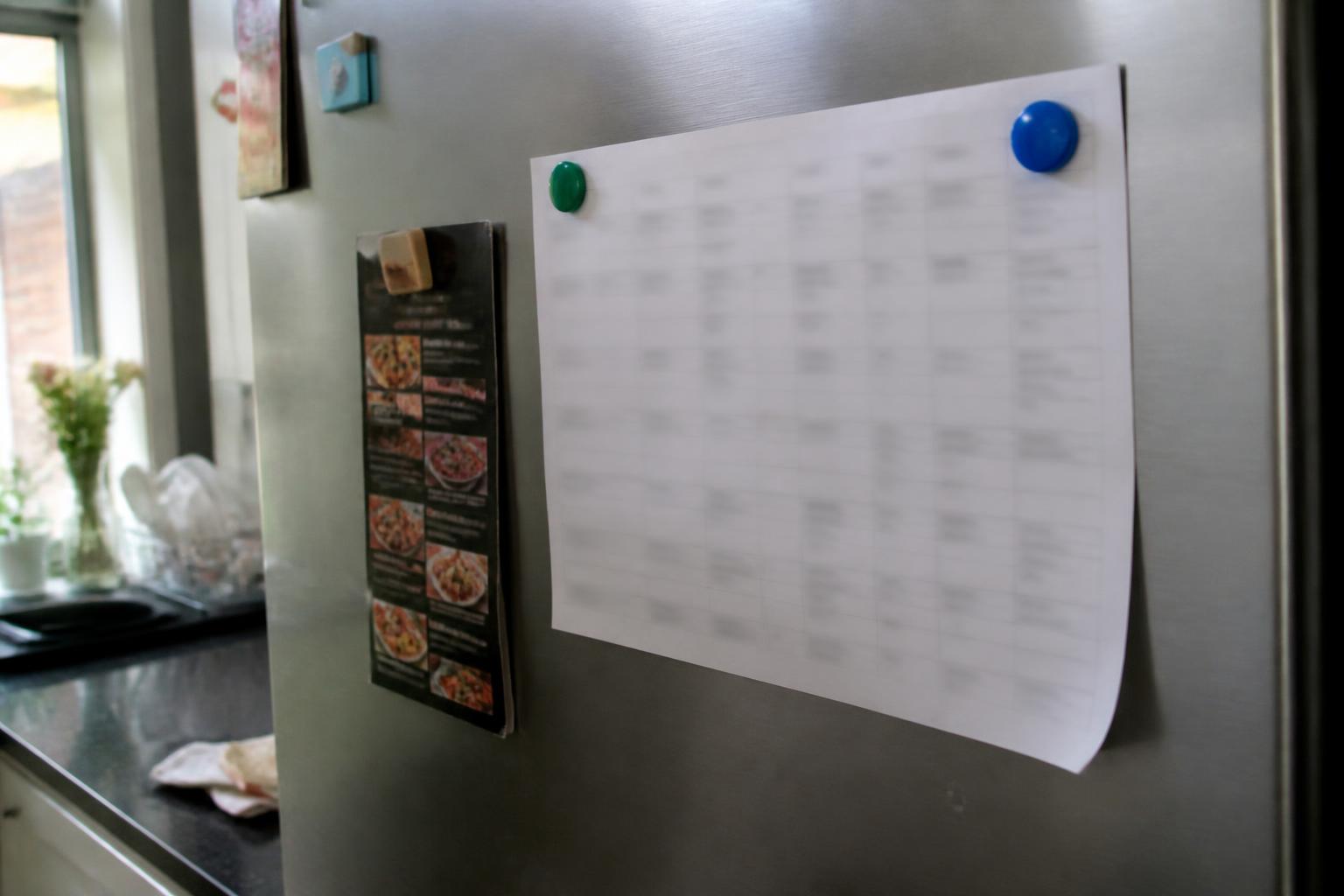
The week gets drawn on paper. Shifts first, because those are fixed, then the study blocks in what is left. Most students find four to six usable hours a day that a school timetable was never able to reach.
- 3
Courses open. Not all at once. Two or three to begin with, so a student learns the pace before carrying a full load.
- 4
The first marked work comes back. Usually inside a fortnight, and it is the first honest signal of whether the plan drawn in step two survives contact with a real week.
| Day | Fixed | What is left for coursework |
|---|---|---|
| Monday | Shift, 4pm to 9pm | A long morning. The best block in the week, and the one most often wasted by sleeping through it. |
| Tuesday | Shift, 4pm to 9pm | Same again. Two mornings back to back is where the longer science work goes. |
| Wednesday | Nothing fixed | The catch-up day. Left deliberately empty when the timetable is drawn, because something always slips. |
| Thursday | Shift, 4pm to 9pm | A morning block, then nothing after four. |
| Friday | Shift, 2pm to 10pm | The hardest day. Usually reading rather than written work. |
| Weekend | Varies by rota | Whatever the fortnight’s rota leaves. Planned late, once it is posted. |
That is one arrangement and not a template. The point of drawing it is that a student looking at a week this way can usually see more usable time than they expected, because a school timetable had been taking the whole middle of every day whether or not it was being used well.
Filling every non-working hour with study on the first timetable. A week with no slack in it fails the first time a shift runs late, and then the student concludes the whole arrangement does not work. Leave the gaps in on purpose.
Which Online High School Courses the Year Contains
The same subjects as any other high school year, drawn from the full high school course list. They are set out by subject here rather than by grade, because a student fitting courses around shifts usually takes them in an order the grade sequence does not describe.
- English.English 1, English 2 and English 3, taken in sequence because each one assumes the last.
- Mathematics.Algebra 1, then Geometry, then Algebra 2, and Pre-Calculus for students carrying on.
- Science.Biology, Chemistry and Physics. These are the courses most often interrupted by a job, because the work comes in longer blocks.
- Social studies.World History, United States History and U.S. Government.
- Electives.Art History and Criticism among others, and the ones most often used to balance a heavy term.
- By year. The conventional route is 9th grade online, then 10th grade online, 11th grade online and 12th grade online, and a self-paced student can sit across two of them at once.
How Credits Transfer From the District Transcript
They transfer on the record, not on a conversation, which is why the transcript is the first thing anybody asks for. A transfer credit is assessed on what the document says was completed and passed. Nothing is lost because a student changed schools mid-year, and nothing needs arguing for.
- Transfer credit
- A course completed elsewhere that counts toward the 24. Assessed from the transcript, not re-taken.
- Partial credit
- A course abandoned part-way through. Usually finished rather than restarted, which is the single biggest reason to move mid-year rather than wait.
- Outstanding credit
- What is still to be earned. This is the number that decides how heavy the year is, and transferring credits is how it gets settled.
What the Credit Audit Finds
Most often, that a student is closer than the family thought, and occasionally the opposite. A year that felt like a write-off frequently contains three or four completed credits nobody counted, because a half-finished year is not a wasted one on a transcript. It can also find a course that was dropped in week three and never recorded, which is the kind of gap worth knowing about in October rather than in May.
The audit matters most for a student who has moved schools before, or who was out for a stretch. Records do not always follow a student cleanly, and a course completed at one school can sit unrecorded at the next one for a year without anybody noticing. A counselor reading the transcript against the 24 credits will see the gap. So will a family, once somebody lays the document out and counts.
It is also where the plan stops being a guess. Until the audit is done, every estimate of how long a diploma will take is arithmetic performed on an assumption. Afterwards it is arithmetic performed on a list, and the difference changes what a family decides.
The transcript is not a judgment. It is an inventory, and an inventory is the only honest place to start a plan from.
How Tuition Works When Hours Are Short
Tuition does not vary with how many hours a student works, and the current figures are on the tuition page rather than here, where they would go out of date. What does vary is how many courses a student still needs, and a student arriving with credits already banked is not paying for a full year of them. The savings page sets out how that is worked out. Ask a counselor to price the outstanding list rather than a whole grade.
Hours change, and the enrollment does not have to change with them. A student whose shifts increase in a busy season can slow a course rather than drop it, and one whose job ends can take on another without waiting for a term to turn over. What matters for the diploma is the credits completed, not the rate they were completed at, and that is the part a fixed timetable could never accommodate.
What Happens to Graduation and the Diploma
The diploma is issued by us, it is accredited, and it does not record how the schedule was arranged. That is the part families most want confirmed and it is worth stating without hedging. A transcript shows courses, terms and grades, which is what every transcript shows.
- Stays with the district: school teams, band, theatre and anything run out of the building itself.
- Comes with the student: the accredited record a college admissions office or an employer reads.
- Either way: credits already earned, which belong to the student and not to a school.
Questions Kenton County Families Ask About Enrollment
These five come up on nearly every first call, and the answers do not change depending on who is asking.
Ask them in the order that costs least. The transcript first, the schedule second, the money third. Most families do it backwards and then decide on an estimate.
Does the school need to know where the student works?
No. Employment is not part of enrollment and is not recorded anywhere. A counselor may ask about the hours when helping build a schedule, which is a practical question and not a condition of anything.
Can a student keep working full hours and still finish?
That depends entirely on how many credits are outstanding, which is what the transcript review establishes. We will not promise it before seeing the document, and anybody who does is guessing.
Does the student have to withdraw from the district school first?
No, and it is better not to. Apply, get the transcript reviewed, and withdraw once there is a confirmed start date. Withdrawing first creates a gap in enrollment for no reason.
Is this the same as homeschooling?
No. A parent is not teaching and does not hold the records. Certified teachers deliver and mark the courses and the school holds the transcript. Families wanting the younger grades want the K-12 program for Independence instead.
What happens if the job ends?
Nothing changes about the enrollment. The schedule was built around the hours and can be rebuilt without them, and a student who finds their days suddenly open usually finishes outstanding courses faster than planned.
Where Independence Sits and What to Check
Independence is one of the two county seats of Kenton County, at the southern end of the Cincinnati metro, which is where most of these shifts are worked. Local information is with the city of Independence and with Kenton County, and the district is Kenton County Schools. State rules on enrollment and withdrawal sit with the Kentucky Department of Education, and a family weighing a change of school should check the current position there rather than taking ours for it.
Students carrying on locally afterwards often go to Northern Kentucky University up the road, and an accredited transcript is what that conversation starts from. Other cities are on the Kentucky hub, and the younger grades are covered by the K-12 program. Background on the city is on Wikipedia. The rest of this corner of the state: Covington, Florence and Lexington.
Start an Independence Enrollment
A grade level is the whole of what the form asks for. If a job is the reason you are reading this, try moving the rota first. If that has been tried, or the hours are not the kind that move, a counselor here will read the transcript and tell you what the year actually needs.
Or call (888) 242-4262 on a weekday between 9:30 and 5:30 Eastern.