Lexington Online High School
By the time the season starts, a Lexington household has a year that is already spoken for. This is an online high school for grades 9 through 12 with a plan a counselor fits around that calendar rather than against it. Certified teachers, an American curriculum, and a plan a counselor fits around the season rather than against it.
- Grades 9 to 12
- Accredited
- Self-paced
- Transfer credits
- Credit recovery
- Enroll any month
Or call (888) 242-4262 on a weekday and ask for admissions.
What Lexington Online High School Is
An accredited private online school for grades 9 through 12, open to any household in Lexington and Fayette County. The school provides coursework that is read, worked and graded online, at whatever hour suits the house.
Three ways in: the full online high school diploma, single high school courses taken alongside another school, or credit recovery on one subject that went wrong. Prior work carries over through transfer credit, pace is self-paced, and tuition is quoted per student. Younger children in the house belong on the Lexington K-12 school instead, which runs kindergarten through eighth grade on the same record.
Why the Horse Calendar Breaks a High School Year
Most towns have a school year with work fitted around it. Here it runs the other way, and it has for two hundred years.
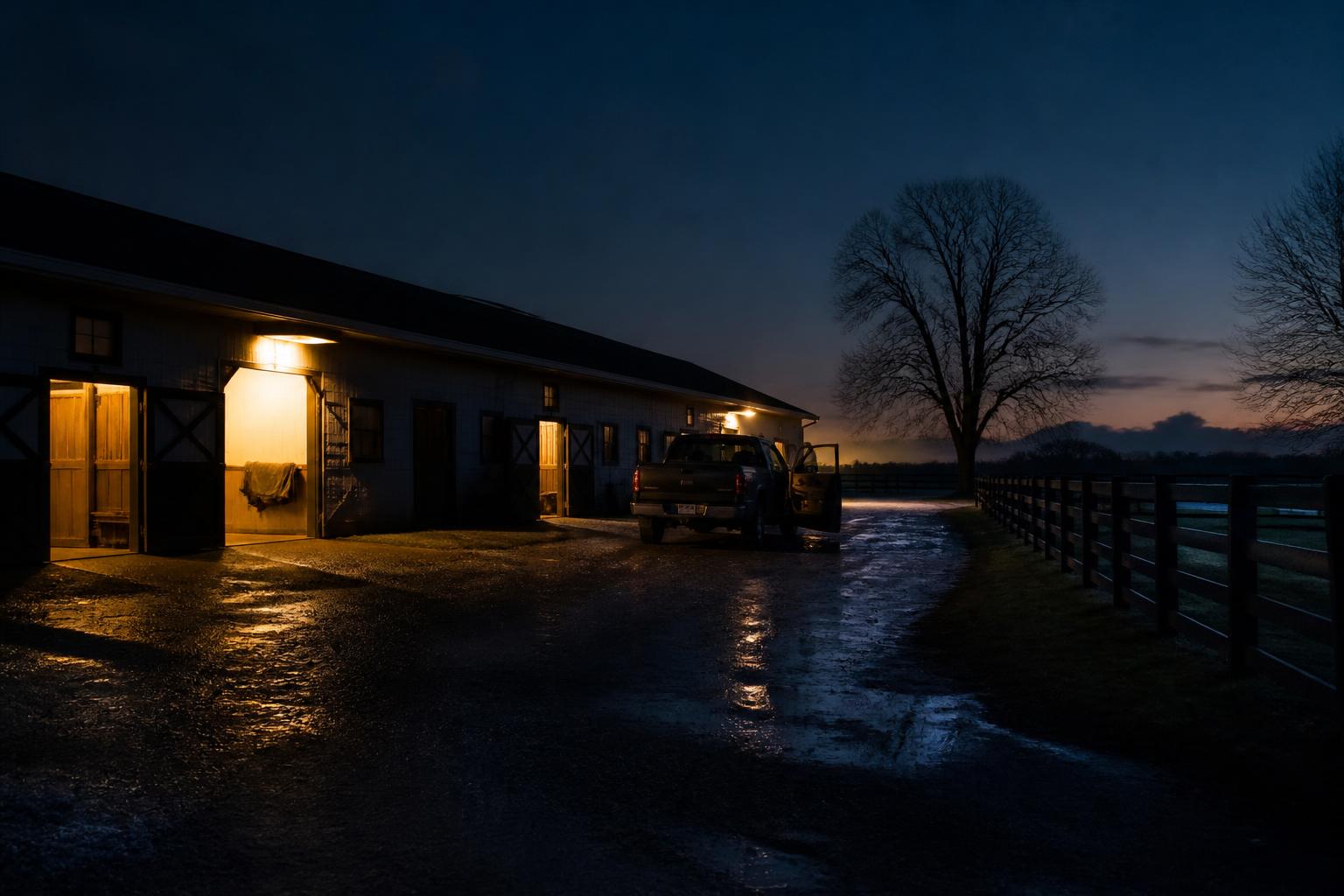
Foaling season
Mares foal overnight and on no notice. A household on a farm during those months is awake at three in the morning and asleep at nine, which lands squarely on top of spring semester and every attendance policy attached to it.
The spring meet
Keeneland runs three weeks and the work starts well before dawn. It is not a holiday; it is the busiest stretch of the year for a large part of this county.
The yearling sale
Two weeks of fourteen-hour days, beginning almost exactly when a district calendar does. A family working the sale starts the school year already behind and spends October catching up.
The fall meet
Another three weeks, and then the breeding shed paperwork that follows it.
Everyone else on the same clock
The industry is not only farms. Vets, farriers, van drivers, feed and tack suppliers, insurance and bloodstock offices all keep the same calendar, and so do the households attached to them.
A school year that assumes September is quiet was not written for this county.
Not a horse household? The same flexibility serves student-athletes, families posted through Bluegrass Station, and anyone whose week simply refuses to sit still. Households running younger children alongside a teenager use the Kentucky K-12 program, which covers the same towns.
What You Take, Grade by Grade
Every class below opens its own page, so you can read the course before a student is enrolled in it. Order depends on the transcript that arrives, not on the grade printed on it.
Enrolling Between the Busy Weeks
There is no enrollment season here, which is the point: you start in whichever week is quiet. Courses follow an American curriculum whenever that week arrives.
- 1
Send the form in a slow week
Grade level only. Sales, foaling and the show calendar do not have to be consulted first.
- 2
Look at the estimated path
Produced from the grade level alone, so you can weigh it before anything is committed.
- 3
Ask the old school for the transcript
Do this early even if the start is months out. Records move on school time, not yours.
- 4
Credits get ruled on
A counselor decides what carries, and the plan is written around what genuinely remains.
- 5
Start, then set the pace
Front-load the quiet months, ease off through the busy ones. The plan bends to the year.
A student who enrolls in January and one who enrolls in July reach the same diploma. Clubs and activities stay open either way.
Working Ahead, Then Working Light: Self-Paced Online High School

The point of a self-paced year is not that nobody minds whether the work gets done. It is that the work is measured against a plan instead of a clock, so a heavy fortnight can be paid for in advance and repaid afterwards.
In practice a student here front-loads January before the mares start, or clears three weeks of coursework before the September sale and coasts through it. The plan does not reset because a fortnight was unusual. A counselor moves the dates; nobody starts the year again.
- Nothing a student has to attend at a fixed hour
- Coursework that travels to a sale, a meet or a barn office
- Enrollment opens in any month, mid-semester included
- Teachers who grade the work and answer questions on weekdays
- A counselor watching pace, so a quiet fortnight is noticed in days
For Students Who Mean to Work in the Industry
Plenty of students here are not looking for a way out of the business. They intend to stay in it, and a school year should not treat that as a problem to be managed.
The honest advice is that the industry rewards two things at once, and a school plan can serve both. The practical side is learned on a farm and nobody needs a classroom for it. The side that opens doors later is science and record-keeping, and that part is coursework.
A student aiming at veterinary work, equine reproduction, nutrition or bloodstock analysis is going to meet biology, chemistry and statistics whether they expected to or not. Those are the courses worth taking seriously rather than surviving, and a counselor will weight a plan toward them when a family says that is the direction.
For a student who wants the office side, the useful subjects are the ones nobody warns them about: contracts, tax and insurance all sit in ordinary economics and government coursework, and syndication agreements are read by people who learned to read carefully somewhere.
What tends to matter by twelfth grade:
- Biology and chemistry finished properly, not merely passed, if any veterinary path is in view
- Mathematics carried as far as the student can take it, because bloodstock work is arithmetic under pressure
- Writing that holds up, since a condition report and a client email are both documents somebody acts on
- A transcript that a state university will read without needing it explained
None of that requires giving up the season. It requires a plan that knows about the season in advance, which is the whole argument of this page.
Coming In Mid-Year With Credits Already Earned
Hardly anyone starts here in ninth grade. They arrive from somewhere else, usually part-way through a term, and the first thing they want to know is whether the work so far still counts.
It does. The school accepts transfer credit. A counselor reads the transcript, rules on what carries, and writes the remaining plan around it. A student two years in starts as a student two years in. Coursework opens as soon as the account is live, so November is not a reason to wait until August.
To begin you need:
- The enrollment form, which asks for a grade level and nothing more
- A transcript or report card, whenever it turns up
- One conversation once somebody has read the record
The admissions process lays out the order it happens in. The first fortnight is deliberately quiet: the account opens, the student works the opening unit of one course while the counselor reads the record, and the full plan lands once there is something real to build it from. Nobody is asked to commit to a schedule before anyone has seen a transcript.
The Diploma, and Who Stands Behind It
The accreditation is held by American K12 School, and High School of America is its online K-12 division. Anyone asking a school or employer to verify should be given that name.
- Accredited
- Reviewed against an external standard, which is what lets a record from here be read by somebody who has never heard of us.
- Transfer credit
- Work finished elsewhere, counted from the transcript rather than re-taken. For a student who left mid-season this is the whole question.
- Transcript
- Courses, terms and grades. It is the working document, and the one a program director asks for.
Worth understanding what accreditation actually settles before choosing any school: whether credits move when a student does, whether a transcript reads like anyone else’s, and whether a registrar has grounds to assess the diploma at all.
Our graduation requirements are ours, as a private school. A district’s requirements govern a district’s diploma. Background on the city is on its Wikipedia entry, and the statewide view sits on the Kentucky online high school hub. More about us on the about page. The towns ringing this one have pages too, at Georgetown, Nicholasville and Richmond.
What Online High School Tuition Depends On
Tuition requires a quote rather than a price list, because there is no standard student. Three things set the number:
- The grade a student enters at, and what is already on the record
- How many credits are left between here and a diploma
- Whether it is the full program or a single course
The tuition page covers how payment is handled and savings covers what brings it down. The enrollment form returns an estimate from a grade level alone, before anyone speaks to you.
What the Transcript Shows a Program Director
An accredited transcript lists courses, grades and credits earned, with the issuing school on it. Nothing marks the work as having been done online, because accreditation is what a registrar weighs. The transcript requires no explanation to be read.
With the state’s flagship a few minutes away, the useful starting point is what it actually asks for: the University of Kentucky admissions pages. Requirements differ more between institutions than families expect, and reading two of them is worth more than reading ten articles about online schools.
Acceptance is the receiving institution’s call, always. A college, an employer or a branch of service decides for itself, and anyone promising otherwise is promising what is not theirs.
- An athlete with a college program in view should have the course plan checked against NCAA eligibility rules in tenth grade, not twelfth
- Transcripts are requested through the office and sent to the institution directly
- Students arriving from abroad, or leaving for it, are covered by the U.S. diploma for international students
- Graduating is a record rather than an event; what a family does to mark it is theirs to decide
The student and parent resources cover how a week runs once the plan is set.
Questions Lexington Families Ask About Online High School
Can a student work a season and still finish on time?
That is the ordinary case here rather than the exception. The plan is built around the weeks a household already knows are lost, and the student banks work ahead of them. Finishing on time depends on the credits carried in and the pace kept, not on whether April was busy.
Is this school accredited, and who holds it?
Yes. American K12 School holds the accreditation and this is its online K-12 division. Give that name to any school or employer asking to verify.
My child has been out of school for a term. Is that a problem?
No. A counselor reads whatever record exists, decides what still counts and builds from there. A gap changes the plan; it does not disqualify anybody.
Do you take students from outside Fayette County?
Yes. The school is statewide and national. Nothing about enrolling depends on which county a family lives in.
Those four decide whether to start. The next three are about paperwork somebody else is holding.
What happens if my student falls behind?
A counselor reviews pace against the plan rather than waiting on a report card, so a quiet fortnight surfaces in days. The usual answer is a revised plan, not a penalty.
Is there anything live a student must attend?
No. Nothing is gated behind being present at a set hour. Teachers and counselors are reachable on weekdays.
How quickly can a student start?
Coursework opens once the account is live. Enrollment runs year round and a transcript can follow on afterwards.
Those settle what carries across. The rest are about what the school is actually like to attend.
Will a college take this diploma?
Credits and the diploma travel on an accredited transcript that reads like any transferring student’s. Each institution decides for itself, which is true of every school’s diploma.
What does a student need at home?
A computer and a reliable connection. That is the whole list.
Can I speak to somebody before enrolling?
Call (888) 242-4262 on a weekday and ask for admissions, or send the form and a counselor reads it that business day.
Start a Lexington Enrollment
A grade level is enough to begin. A counselor takes it from there, and the season can stay where it is.
Weighing this against other options? The federal National Center for Education Statistics publishes the national enrollment and graduation picture, and has nothing to sell you either way.