

Galaxies and Planets
A Journey Through
The Universe
You are here.
In a universe you barely
understand.
Scroll to discover
Earth
Our fragile blue dot. A rocky planet thriving with life, shielded by a thin atmosphere and a magnetic field that protects us from solar radiation.
The Solar System
A neighborhood of eight planets, countless asteroids, and icy comets, all bound by the immense gravity of our local star: the Sun.
The Milky Way
A staggering spiral galaxy housing between 100 to 400 billion stars. At its core, a supermassive black hole anchors this cosmic city.
Observable Universe
Spanning 93 billion light-years, it contains trillions of galaxies. A web of dark matter and cosmic structures expanding ever outward.
Deep space — a cinematic journey through a living nebula
Architects of the Cosmos: Galaxies
Vast structures of stars, gas, dust, and dark matter bound together by gravity and centered around supermassive black holes.
Spiral Galaxies
Characterized by elegant, sweeping arms full of young stars and nebulas. The Milky Way is a classic example of this dynamic formation.
Elliptical Galaxies
Smooth, featureless spheres or ovals. They contain older red stars and very little dust, making them cosmic retirement homes.
Irregular Galaxies
Chaotic and unordered, often the result of gravitational interactions or galactic collisions pulling them out of shape.
The Celestial Bodies: Planets
From scorching rocky worlds to gas giants swirling with endless storms.
Rocky Planets
Solid surfaces carved by volcanoes, impacts, and weather. Included are Earth, Mars, and Venus.
Gas Giants
Massive spheres of hydrogen and helium lacking a solid surface. Jupiter's Great Red Spot is a storm larger than Earth.
Extreme Exoplanets
Worlds orbiting distant stars where it might rain glass horizontally, or planets made entirely of diamond.
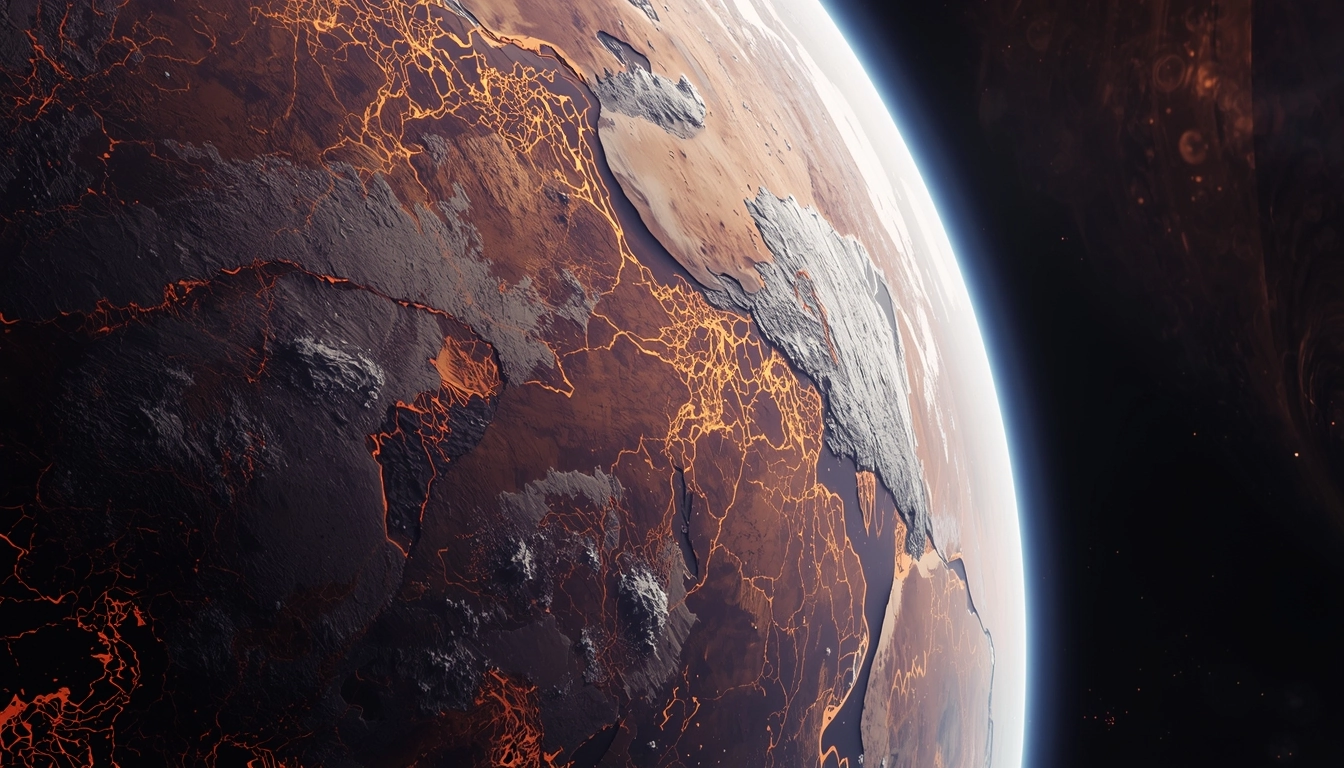
Surface of a lava world — molten rivers carve paths through crystalline mountains
Entering lightspeed — a journey to the edge of the observable universe
Build Your Own Planet
Modify cosmic variables and see how a planet evolves in real-time.
Telemetry Readings
*Simulation based on standard G-type main-sequence star. Adjust parameters to test extremophile boundaries.
NASA Collaboration
Cosmic Observation Lab
Directly connected to the source. Explore real-time discoveries and historical data from NASA's most powerful eyes in the sky.
Hubble vs. Webb
Pillars of Creation: visible light vs. infrared.

Loading NASA images...
Drag the bar to compare the images
The universe is vast.
But understanding it starts with learning.
Explore more with High School of AmericaNASA · Astronomy Picture of the Day
🌐 Open Original on NASA.gov