
Explore our interactive mini book below and discover, page by page, how these incredible animals regenerate.
Just click on the book to start reading ...
Animals That Can Regrow Body Parts | Amazing Regeneration in Nature
The Mystery of Regeneration
Imagine losing an entire limb in a devastating accident and simply waiting for it to seamlessly grow back, complete with functioning nerves, bones, and muscle tissue, just like a fingernail or a strand of human hair. For humans, this kind of miraculous healing remains the stuff of science fiction and comic books. But across the vast animal kingdom, extreme biological regeneration is a brilliant reality for many diverse species. This process, which involves the flawless repair or replacement of lost or damaged tissues, complex organs, and even entire halves of a body, represents one of the most sophisticated and ancient evolutionary survival strategies on Earth.
Regeneration isn't merely about surviving an injury; it's about perfectly rebuilding the original biological structure from scratch. It requires a staggering coordination of real-time cellular signaling, the rapid activation of dormant stem cells, and precise, error-free genetic control. While global research institutions study these incredibly complex creatures to unlock the ultimate biological secrets to treating everything from catastrophic spinal cord injuries to previously incurable degenerative diseases, students enrolled in our Florida Online High School programs get a front-row seat to these fascinating subjects.
In our engaging STEM courses, we explore exactly how these animals achieve these miracles. Whether you are taking AP Biology or simply looking to earn your U.S. high school diploma online, understanding natural regeneration opens a unique window into the mechanics of life itself.
Did You Know?
Most human regeneration is limited to the liver (which can regrow from a small portion) and the skin. However, we lack the "blastema" cells that allow other animals to regrow entire limbs.
1. Axolotls: The Peter Pans of Biology
The Axolotl (Ambystoma mexicanum), native to the ancient lake systems of Xochimilco near Mexico City, possesses a unique trait called neoteny: they reach adulthood without metamorphosis, remaining in their larval form for life. Their appearance, with feathery gills and a constant "smile", has made them icons of the biology community.
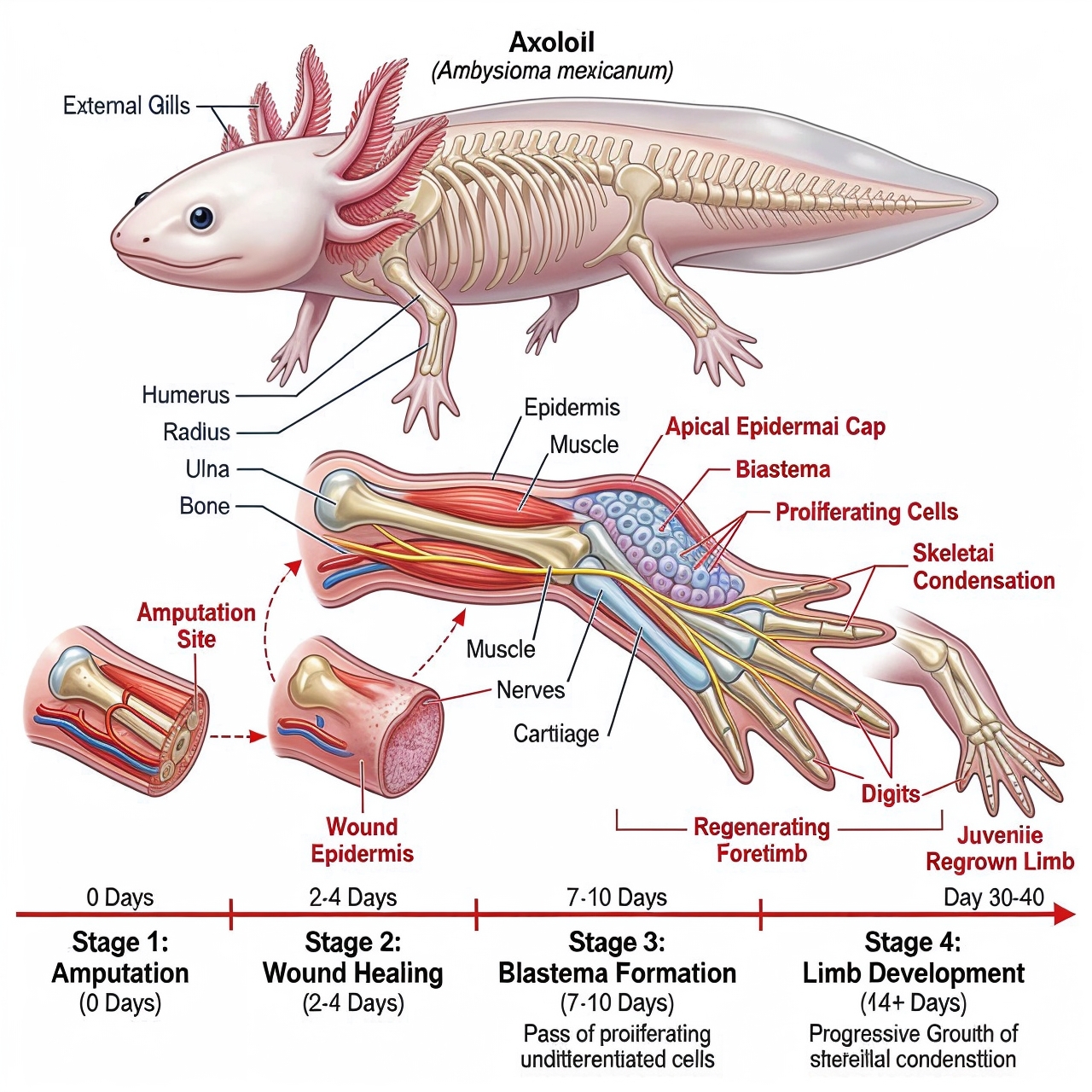
They can regrow limbs, lungs, heart, and even sections of their brain.
The Cellular Blueprint
When an axolotl loses a limb, it doesn't simply heal over with a scarred stump. Within minutes, specialized skin cells rush to cover the wound, forming an "apical epithelial cap." Just beneath this cap, a mass of undifferentiated, highly active cells called a blastema rapidly forms. These cells literally revert back to a stem-cell-like state, ready to become bone, muscle, blood vessels, or nerve endings.
- Phase 1: Immediate Wound Closure. The wound is seamlessly covered by a uniquely structured wound epidermis in minutes, entirely skipping the fibrotic scarring phase.
- Phase 2: The Blastema Formation. A concentrated mass of multipotent, undifferentiated cells aggregates at the amputation site.
- Phase 3: Reconstruction. Guided by complex genetic instructions and bio-electric signals, the limb perfectly rebuilds itself cell by cell.
Science Spotlight: Epigenetics
The axolotl physically unwinds sections of its DNA that were previously tucked away during adult life, allowing ancient "regeneration-specific" embryonic genes to become accessible once again. This is a popular and deeply discussed topic among students taking our self-paced online high school biology tracks.
Beyond just limbs, axolotls can regenerate their crushed spinal cord, repair portions of their heart tissue, and even replace missing sections of their own brain without any apparent cognitive deficits. This near-miraculous biological flexibility has made them an absolute staple in global research labs and an invaluable resource for students in our advanced High School courses like AP Biology and Zoology.
Because they retain their larval characteristics throughout their entire lives (a process known as neoteny), their cells remain in a uniquely malleable state compared to other adult amphibians that undergo full metamorphosis, like frogs.
Quick Quiz: Axolotls
What is the MASS of undifferentiated, stem-like cells that forms at the site of the axolotl's wound called?
2. Starfish: Decentralized Miracles
Starfish (Asteroidea) are marine echinoderms, globally recognized for their iconic radial symmetry and their profound ability to literally "fall apart" as an extreme defense mechanism, and then methodically put themselves back together. Unlike vertebrates, they possess a completely decentralized nervous system governed by a complex nerve ring built around their mouth, rather than relying on a vulnerable central brain.
If a predator grabs a starfish by an arm, the animal can purposefully detach the limb to escape. Over the course of several months to a year, the main body will regrow the missing arm. Even more astoundingly, in certain species, the severed arm itself can regenerate an entirely new central disc and eventually become a complete second starfish, provided a portion of the central nerve ring remains attached.
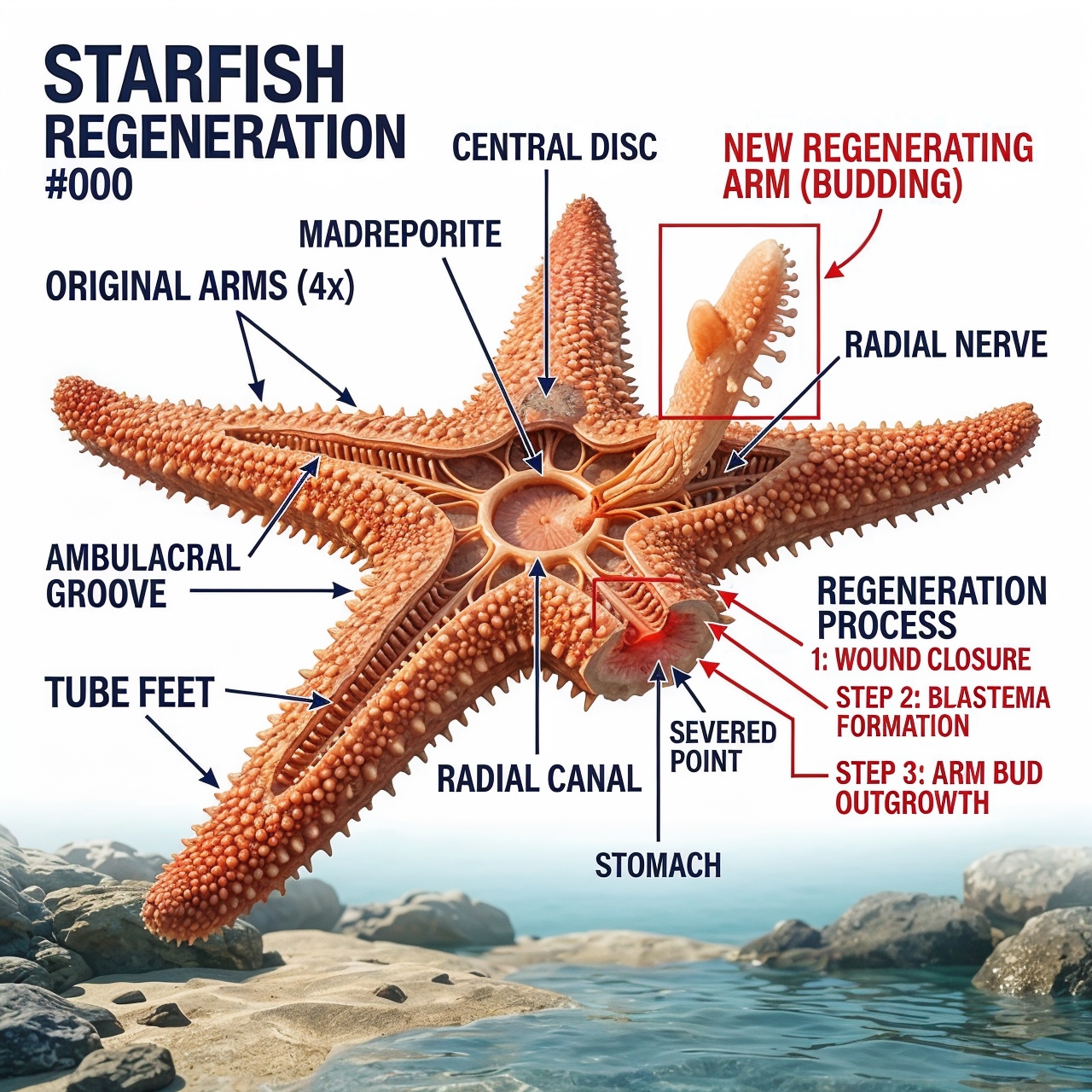 Radial symmetry and hydraulic precision. (Click to Zoom)
Hydraulic Precision
Starfish don't use muscles connected to bones to walk; instead, they operate entirely on a vast biological hydraulic system. During regeneration, this complex water vascular system must be flawlessly rebuilt. If the hydraulic pressure is not perfectly equalized, the starfish loses its ability to coordinate its thousands of tiny tube feet, rendering it immobile and incapable of feeding.
The regeneration of the madreporite—the critical intake valve that regulates oceanic water flow into the starfish's body—is one of the most mechanically complex rebirths in the animal kingdom, requiring the perfect alignment of microscopic internal piping.
Student Insight: The Keystone Predator
In environmental science, starfish are classified as "keystone species" because they voraciously consume mussels and barnacles, which would otherwise physically crowd out every other species on the rocky shorelines. Their phenomenal ability to survive horrific injuries ensures they can continue to actively control coastal biodiversity for decades.
Students exploring how many credits they need to graduate often choose our rigorous environmental science electives to learn exactly how delicate these vast aquatic ecosystems truly are.
3. Planarians: Immortal Fragments
Planarians are non-parasitic flatworms that possess perhaps the most extreme regenerative powers on the planet. If you cut a planarian into 200 pieces, you will eventually have 200 identical planarians. Unlike humans, who rely on scar tissue (fibrosis) to merely patch up wounds, planarians initiate a complete rebuild of their anatomy.
This process is guided by a powerful biological system called "polarity." The polarity ensures that a head always grows at the front and a tail always grows at the back of the fragment, regardless of how small the piece is. This incredible resilience makes them a primary focus in global regenerative medicine studies.
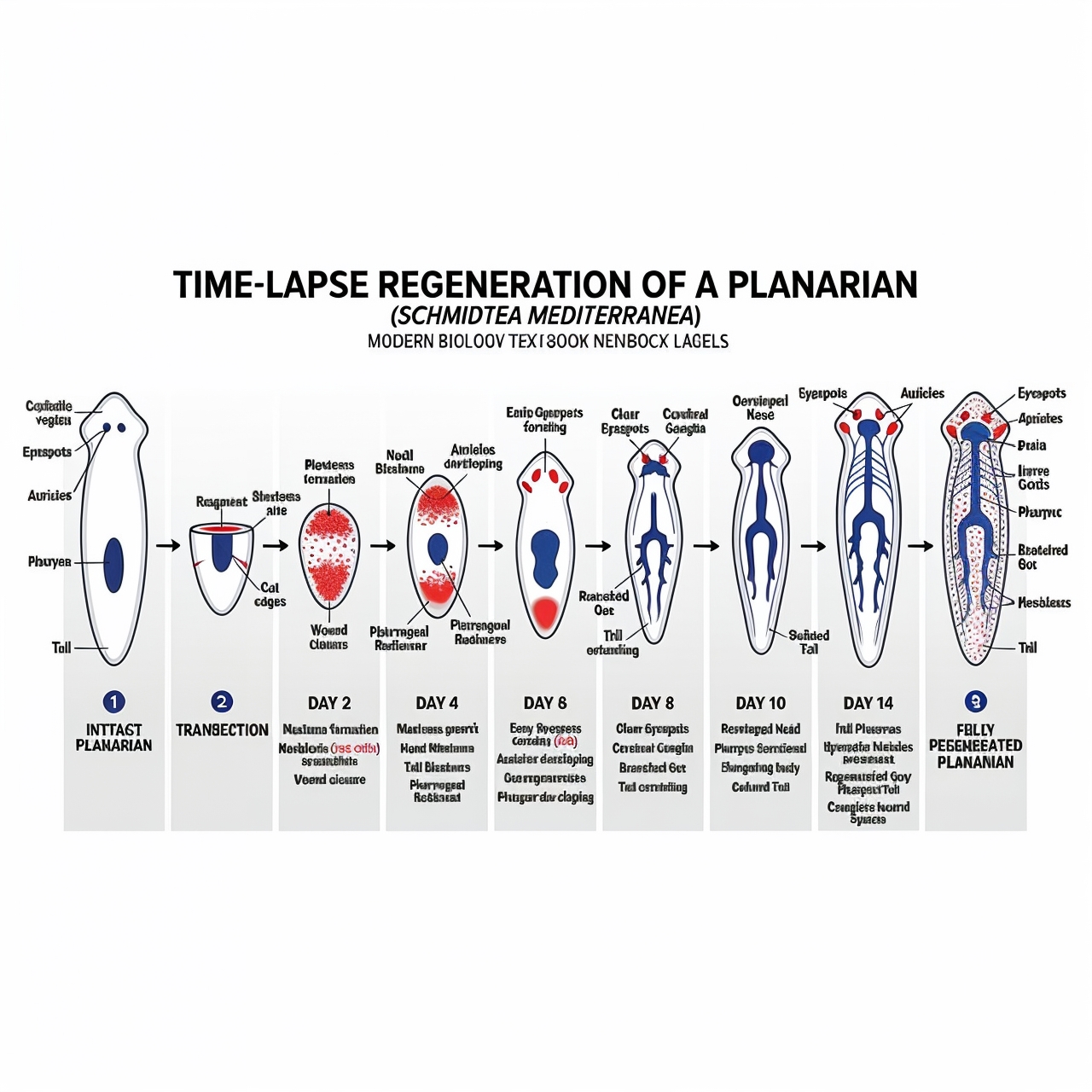 The complex process of flatworm regeneration. (Click to Zoom)
Bio-Facts: Neoblasts
Their neoblasts are pluripotent, meaning they can become any cell in the body, including neurons and even entire brains. They comprise up to 20% of the flatworm's total cell count.
The Immortal Brain
When a planarian regrows its head, the new brain often retains the memories of the old one. The neoblasts act as a decentralized backup system for the entire animal's identity. In groundbreaking laboratory experiments, planarians that were trained to navigate complex mazes before being decapitated were able to remember how to solve the maze after completely regrowing their new brains.
This suggests that memories in some biological systems might not be exclusively stored in the brain's physical structure, but perhaps encoded chemically or biologically throughout the nervous system and shared via these pluripotent stem cells. The implications for human diseases like Alzheimer's and general cognitive decline are profound, opening entirely new pathways for neurological research.
"To understand the Planarian is to unlock the ultimate secrets of cellular biology." (High School of America Curriculum)
4. Lizards: The Strategic Sacrifice
Many lizards, such as geckos and anoles, have mastered autotomy: the voluntary shedding of a tail to distract predators. The detached tail continues to wiggle violently for several minutes, creating a perfect decoy that allows the lizard to escape while the predator is preoccupied.
This is not a random tear; the lizard's tail has pre-built "fracture planes" designed specifically for this purpose to minimize uncontrolled bleeding. Once the immediate danger has passed, the lizard must begin the arduous task of regrowing its tail, a process that can take anywhere from a few weeks to several months depending on the species and environmental factors. Students pursuing an online high school diploma with us often study these extreme metabolic costs in detail, analyzing how energy is forcefully reallocated from reproduction and growth directly to pure regeneration.
A Functional Replacement, Not a Perfect Replica
While the lizard can regrow its tail, it is rarely a perfect replica: the new tail is supported by a continuous tube of cartilage rather than individual bony vertebrae. The coloration and scale patterns are also usually duller and less defined than the original tail.
This massive cellular rebuild requires an immense metabolic toll. Lizards temporarily lose their ability to store fat (which is usually kept in the tail), leaving them vulnerable to starvation and less attractive to potential mates during the regrowth phase.
By studying the genetic pathways that allow the leopard gecko to sprout a functional tail composed of a massive spinal cord, blood vessels, and muscle tissues without forming dense scars, researchers hope to eventually apply these lessons to human spinal cord injuries.
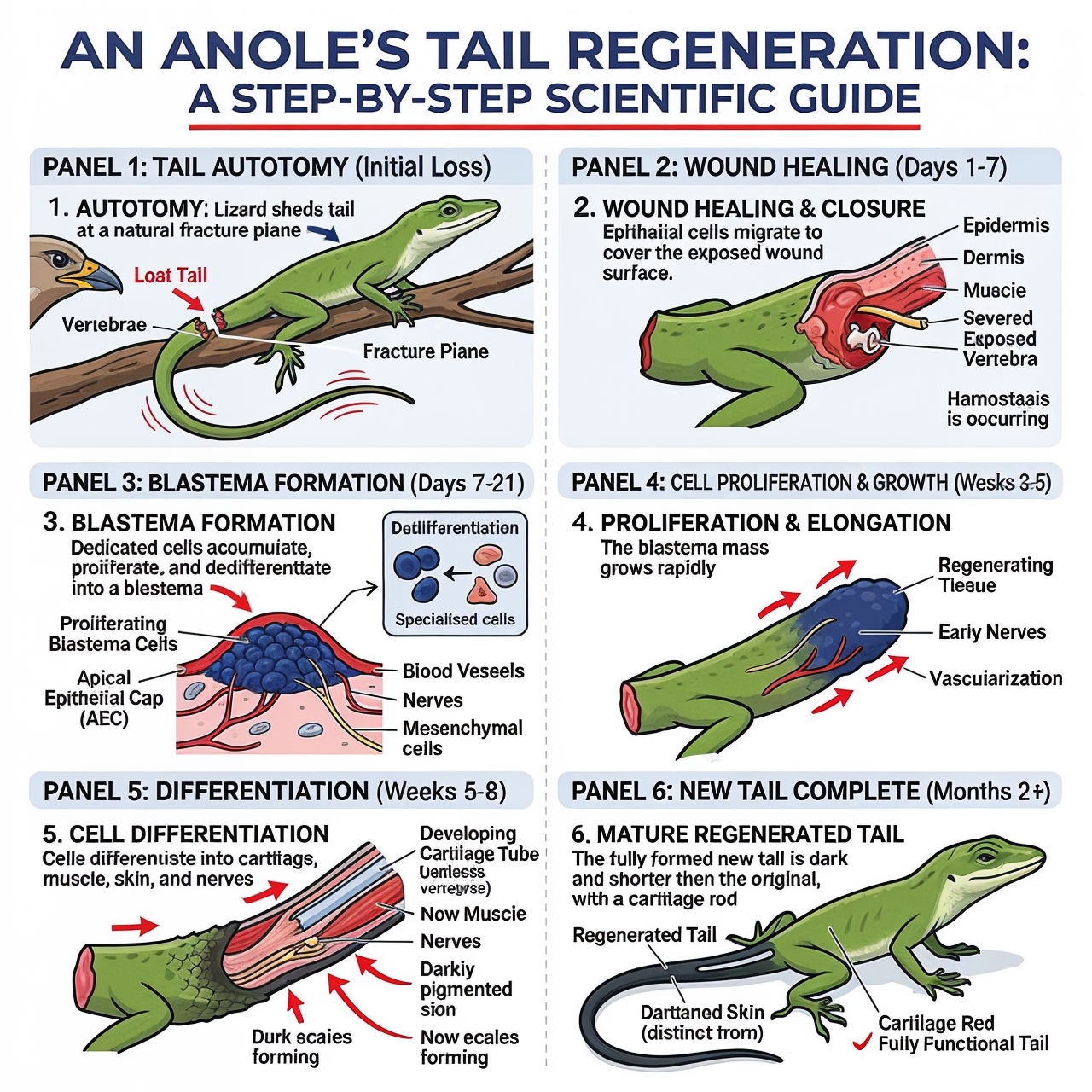 The strategic metabolic cost of survival. (Click to Zoom)
5. Sea Urchins: Eternal Maintenance
Sea urchins (Ouriços-do-mar) are remarkable for their longevity, with some deep-sea species like the Red Sea Urchin living for over 200 years essentially without aging. They possess an extraordinary ability to regenerate broken spines, tubed feet, and even repair critical damage to their hard external shell (the "test").
They achieve this using an army of specialized stem cells and coelomocytes that rush to the site of an injury. These cells work tirelessly to lay down new calcium carbonate layers, perfectly sealing the breach and protecting their soft internal organs from oceanic predators and harsh environmental changes.
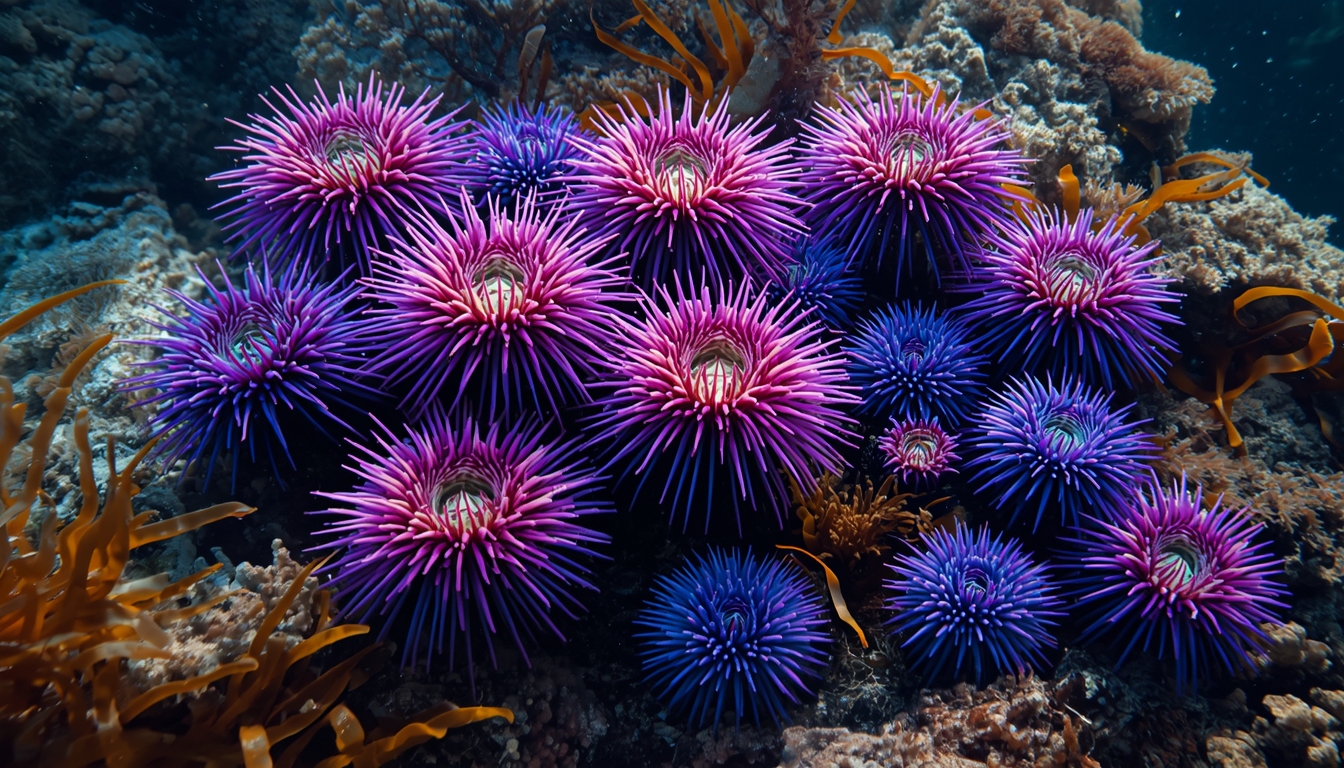 Eternal maintenance of the cellular machinery. (Click to Zoom)
"Forever Young" Cells
Their cells do not show telomere shortening, a key factor in biological aging. Telomeres are the protective caps at the ends of chromosomes. In most animals, including humans, these caps wear down every time a cell divides, eventually leading to cellular death and the physical decline of the organism. Sea urchins maintain these protective caps indefinitely, making them vital subjects in the quest to understand human longevity.
Speed & Molecular Machinery
If many animals can regenerate, why does the speed vary so wildly? Regeneration requires "unlocking" embryonic blueprints through the incredibly complex Wnt signaling pathway.
When an injury occurs, cells at the wound site must coordinate rapidly to decide whether they should heal the skin or build an entirely new structure. Regenerators have evolved specialized mechanisms to suppress fibrosis (scarring). In humans and other terrestrial mammals, fibrosis serves to immediately seal a wound to prevent infection and blood loss, but this rapid scarring blocks the critical cellular signals required for regrowing complex organs.
Because they skip the scarring phase and immediately trigger the Wnt pathway, Planarians can become fully functional within a few hours, whereas larger vertebrates like the axolotl may take many weeks or even months to achieve the same result.
Testing Your Understanding
We've explored how different species utilize unique biological mechanisms to survive devastating injuries. From the axolotl's complex limb regeneration to the astonishing speed of the planarian neoblasts, nature has developed multiple ways to cheat death and rebuild the physical form.
Now, let's put your newfound knowledge to the test. Consider everything you've learned about the metabolic costs, the required environments, and the sheer biological speed of these organisms.
Knowledge Check: Speed
Which species is typically the FASTEST at regrowing lost tissue without scarring?
The Future of Medicine
If an axolotl can do it effortlessly, why can't we? Humans actually possess many of the same foundational genes as these super-regenerators; the difference lies in how our genetic code is expressed and regulated after embryonic development ends.
Today, scientists at institutions worldwide are exploring advanced gene therapy, bio-electric stimulation, and artificial tissue engineering to bridge this gap. By learning how to artificially induce a "blastema" environment (the cellular mass that forms at an amputation site in amphibians), we may one day be capable of regrowing human digits, fully repairing spinal cord damage, or regenerating failing hearts without the need for organ donors.
Ethics: The Should
If we could live 200 years like the sea urchin, how would that drastically alter the fabric of human society? We rigorously discuss these profound "should" questions in our U.S. Government and Economics courses at High School of America.
The Ultimate Barrier
As we look to the future of biological engineering, identifying the primary roadblocks in our own DNA is critical. Humans are built for immediate survival in terrestrial environments, which heavily prioritizes rapid healing over perfect reconstruction.
To achieve the medical miracles of tomorrow, we must first understand the fundamental evolutionary trade-offs that separated mammals from our aquatic ancestors millions of years ago, and learn how to temporarily "switch off" our natural defense mechanisms.
Ultimate Challenge
What is the primary evolutionary barrier preventing full, complex limb regrowth in adult humans today?
Take Your Studies Further
At High School of America, we prepare students for the STEM careers of the future. Our flexible online curriculum allows you to dive deep into subjects like Zoology, Genetics, and Environmental Science from anywhere in the world.

Start Your Journey Today
Join thousands of students who are shaping the future of science and innovation.