
Your Child Isn't Making It Up.
School Anxiety Is Real, and Solutions Exist.
School anxiety in children is one of the most widely misunderstood mental health challenges facing American families today. If your child has recurring stomachaches on school mornings, dreads leaving the house, or says they feel sick only when school is in session: this guide is for you.
What Is School Anxiety in Children, and Why Is It Getting Worse?
School anxiety in children, sometimes called school refusal or school avoidance, is not the same as a child being lazy, dramatic, or simply not liking school. It is a genuine psychological response to real, identifiable stressors that causes significant distress around school attendance, academic performance, or social situations at school.
School anxiety affects students at every grade level. It spikes at major transitions: starting middle school, entering high school, changing schools mid-year, or returning after a prolonged absence. And according to the National Institute of Mental Health↗, rates have increased every year since 2012 with no indication the trend is reversing.
This guide is for parents who want to understand what is driving their child's anxiety, what the warning signs look like in real behavior, and what concrete options exist beyond waiting for the school system to fix itself.
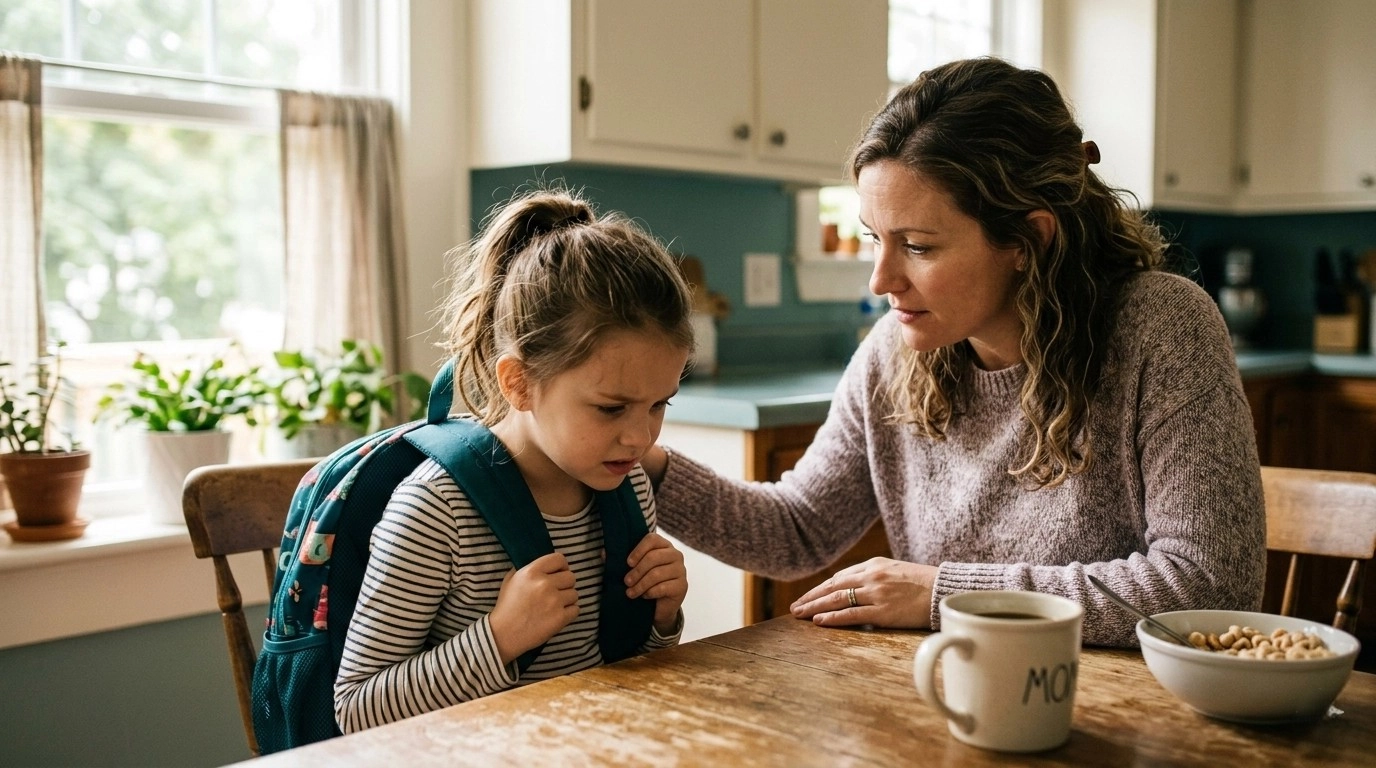
School Anxiety vs. Social Anxiety vs. Generalized Anxiety Disorder
These three conditions overlap, but understanding the distinctions helps parents respond more effectively:
School Anxiety
Specifically triggered by school situations: tests, presentations, the cafeteria, the bus, being called on in class. Symptoms ease dramatically on weekends, holidays, and breaks. The environment-specific pattern is the defining marker.
Social Anxiety
Involves fear of social judgment and embarrassment. School environments amplify social anxiety significantly, but the fear extends beyond school to any situation involving evaluation or observation by others.
Generalized Anxiety Disorder
Affects daily functioning across multiple areas of life, not limited to school. GAD requires professional diagnosis and treatment. All three conditions can, and frequently do, coexist in the same child.
The Warning Signs of School Anxiety in Children and Teenagers
Children rarely say "I have anxiety." They show it through behavior, physical symptoms, and subtle changes that parents often misread as attitude problems or defiance. Here is what to look for across age groups:
Physical Warning Signs
- Recurring stomachaches or headaches on school mornings
- Nausea or vomiting before school without a diagnosed illness
- Frequent requests to visit the school nurse during the day
- Fatigue and exhaustion that persist after adequate sleep
- Difficulty sleeping on Sunday nights (the Sunday scaries)
- Rapid heartbeat or shortness of breath before school
- Physical symptoms that vanish completely on weekends and holidays
Emotional & Behavioral Signs
- Crying, tantrums, or meltdowns during school morning routines
- Clinging in younger children, withdrawal and silence in older ones
- Refusing school or finding excuses to stay home
- Declining grades without any change in stated effort
- Refusing to discuss school or what happened during the day
- Increased irritability or emotional outbursts in the evenings
- Loss of interest in hobbies or activities they previously loved
- Excessive reassurance-seeking repeated multiple times
Signs Specific to Teenagers
- Skipping classes or unexplained absences not told to parents
- Increased screen time used as escape rather than connection
- Avoiding school lunch: eating alone, skipping it, or leaving campus
- Sudden drop in subjects where they previously performed well
- Expressing hopelessness about college, the future, or their own chances
- Conflict with teachers or peers that seems disproportionate
- Physical complaints that intensify as Monday approaches
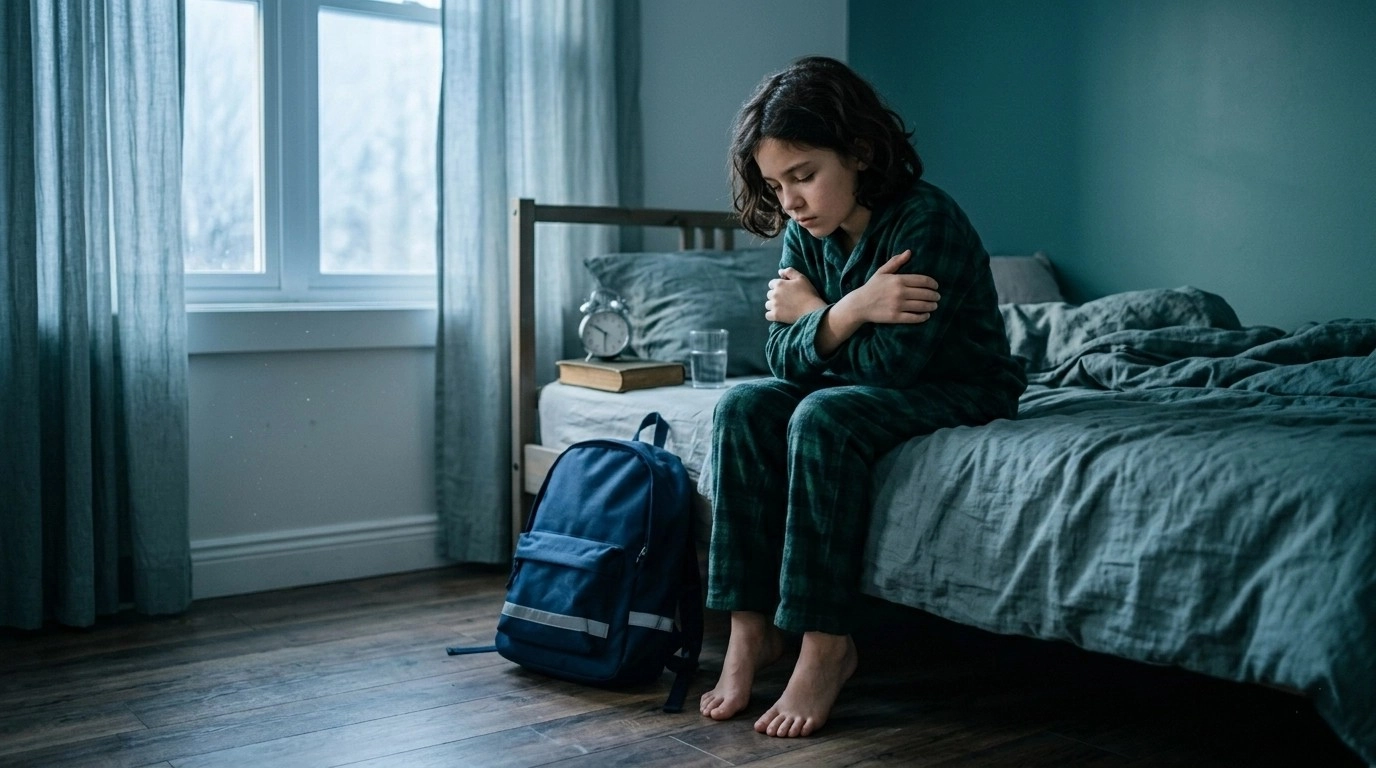
If your teenager is showing several of these signs simultaneously, the school environment itself may be the primary driver, and therapy can only accomplish so much when a child must return to that environment every day. Our resource on how online learning supports student mental health explains what a structural change in environment actually changes in practice.
The 6 Most Common School Anxiety Triggers in Children: What the Research Shows
School anxiety in children does not come from nowhere. For most children it is a direct response to specific, identifiable stressors in their school environment. Understanding the trigger is essential to addressing the anxiety effectively rather than just managing its symptoms:
Academic Performance Pressure
The relentless focus on grades, class rank, and college readiness creates a culture where children as young as 10 believe their entire future depends on test scores. Students in competitive public schools live under constant peer comparison. The one-size-fits-all pacing of public classrooms leaves students who learn differently feeling chronically behind through no fault of their own.
- Perfectionists who tie their entire identity to academic achievement
- First-generation college students carrying the weight of family expectations
- Students with learning differences who struggle to match the group pace
- Advanced students who are bored, under-challenged, and quietly disengaging
Bullying and Social Rejection
Bullying in 2026 is not limited to the playground. Cyberbullying follows students home and continues around the clock, with no off switch. Even students never directly targeted can develop anxiety from witnessing chronic aggression or from the persistent low-level fear of becoming a target. For families whose children are already experiencing bullying, the ability to transfer to a safe learning environment without bullying is worth serious consideration.
Social Evaluation and Peer Judgment
Adolescence is already a period of intense self-consciousness. Public school, where hundreds of peers observe every interaction, every clothing choice, every misstep, amplifies this dramatically. Common triggers include:
- The fear of eating alone in the cafeteria or having nowhere to sit
- Being called on without knowing the answer in front of classmates
- Giving presentations to peers who may react critically or mockingly
- Navigating romantic drama and breakups in a small, enclosed social environment
- Body image concerns in physical education or locker room settings
Safety Fears and Active Shooter Drills
Active shooter drills are now a standard feature of public school life across the United States. While designed to prepare students for emergencies, research published in peer-reviewed psychology journals shows that regular lockdown drills increase rates of anxiety, depression, and sleep disturbance in school-age children. For students who already carry anxiety, the cumulative psychological effect of being trained to fear their school building can be severe and lasting.
Sensory and Environmental Overload
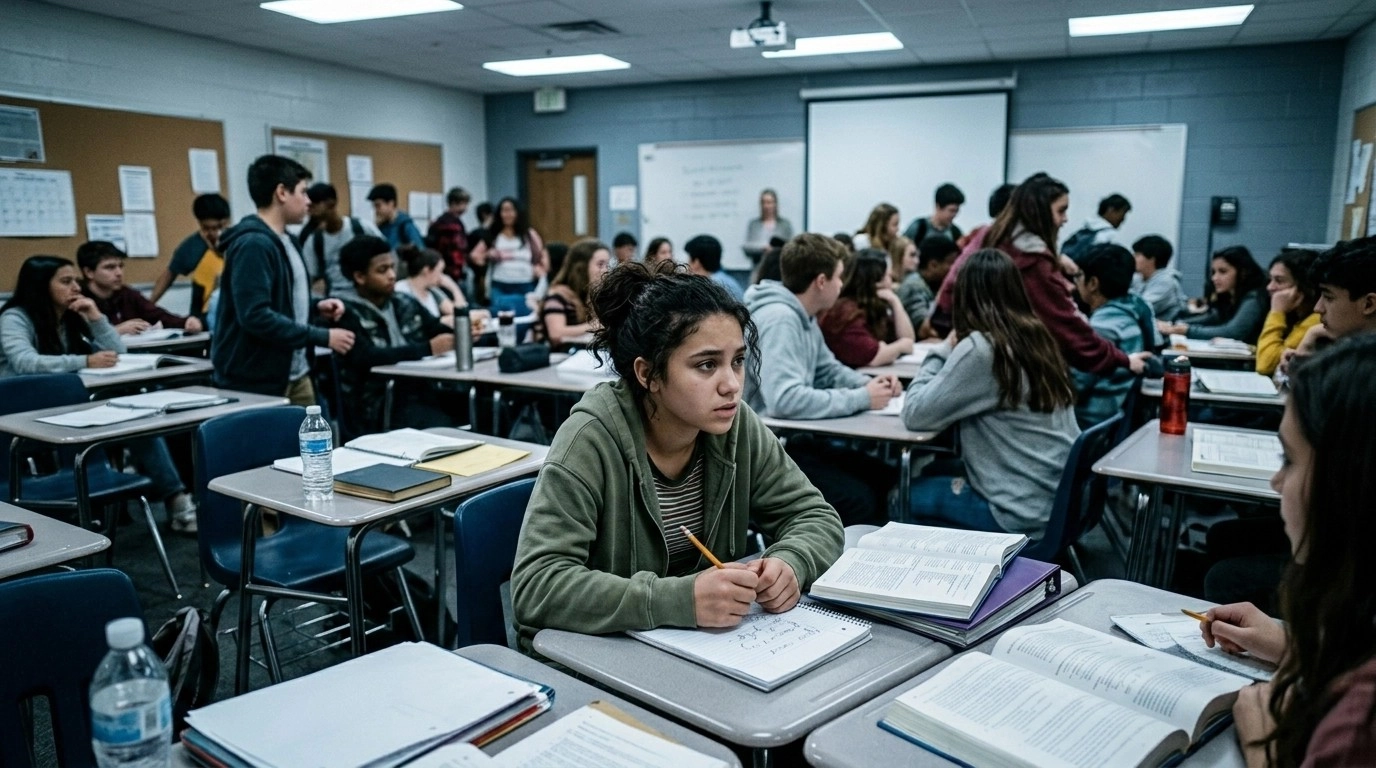
Public school buildings are inherently overstimulating environments: loud hallways during passing periods, packed cafeterias, fluorescent lighting, and constant unpredictable transitions throughout the day. For children with sensory processing differences, ADHD, autism spectrum characteristics, or a more sensitive temperament, this environment is not merely uncomfortable: it is genuinely exhausting. These children are accurately reporting their experience of an environment that was not designed with them in mind.
College and Future Planning Pressure
Starting as early as eighth grade, students face explicit and implicit pressure to begin planning for college. By junior year, the college application process has been documented as one of the highest-anxiety periods in adolescent development. Students obsess for months over essays, test scores, deadlines, and rejection from schools they have been told define their worth. According to the American Psychological Association↗, U.S. teens now report average stress levels higher than those of adults, with school as the most commonly cited source.
5 Steps for Parents When School Anxiety in Children Disrupts Daily Life
If your child is showing signs of school anxiety in children, these concrete steps can be taken immediately, without waiting for the school to respond first:
Validate Without Rushing to Fix
The instinct to solve the problem immediately is understandable and comes from love. But children who feel their anxiety is being dismissed or minimized are less likely to open up over time. Start with listening, not solutions. "That sounds really hard. Tell me more about what's happening" goes much further than "You'll be fine, everyone gets nervous sometimes."
Get Specific About the Trigger
Is the anxiety tied to a specific class? A particular teacher? A social situation? Getting precise makes it far easier to address. Keep a simple log for two weeks: when does anxiety peak? What specific situations precede it? What happened the week it got significantly worse? Patterns will emerge that point clearly toward the root cause.
Contact the School, in Writing
If a specific teacher, a bullying situation, or a classroom dynamic is a factor, document everything and request a formal meeting with the school counselor or principal. Always follow verbal conversations with an email confirmation: "Per our conversation today, I understand that X will be addressed by Y date." Documentation creates accountability and protects your child.
Seek Professional Support
A licensed therapist trained in Cognitive Behavioral Therapy (CBT) or Acceptance and Commitment Therapy (ACT) can make a measurable difference. When possible, look for a therapist who specializes in school refusal specifically, as this is a distinct clinical challenge that requires targeted treatment, not just general anxiety management techniques. According to the CDC↗, CBT is among the most evidence-supported treatments for childhood anxiety disorders.
Honestly Evaluate the Environment
Sometimes the honest assessment is that the school environment itself is the primary problem. Therapy can only accomplish so much when a child must return to a toxic or overwhelming setting every single day. If that is your situation, the question worth asking plainly is: is there a better environment for my child to learn and grow in?
This is where many families begin seriously researching alternatives to traditional public schooling. Our practical guide on transitioning from traditional school to online homeschooling walks through every step families need to take.
Online School as a Solution for School Anxiety in Children
For families where school anxiety in children has become severe enough to affect daily functioning, changing the learning environment is not giving up on education. It is recognizing that environment is a variable, and changing it strategically can remove the primary source of daily distress.
A well-designed online K-12 program does not simply relocate the problems of public school to a computer screen. It structurally eliminates many of them. Research on online learning and adolescent mental health consistently shows that students with anxiety, depression, and school refusal demonstrate measurable improvement when placed in flexible, self-directed learning models that remove high-stimulation, high-evaluation environments.
- Crowded hallways and cafeterias as daily social pressure environments
- Fixed standardized test schedules with no flexibility
- Being called on in class in front of 30+ peers
- Mandatory 7 AM start times regardless of individual biology
- 1 school counselor shared among 415+ students in crisis
- Active shooter drills as routine normalizing school as dangerous
- Academic pacing set by the class, not the individual student
- Social hierarchies that are inescapable during school hours
- No crowded hallways, cafeterias, or locker rooms: social pressure removed structurally
- Self-paced coursework: students advance when ready, not when the bell rings
- No public presentations or call-outs: social evaluation removed entirely
- Flexible scheduling: work during peak focus hours, not at 7 AM
- Personalized support at a fraction of the public school counselor ratio
- Home as a secure base: students learn where they already feel safe
- No active shooter drills: a psychological relief many families underestimate
- Full accreditation and diploma-earning curriculum throughout
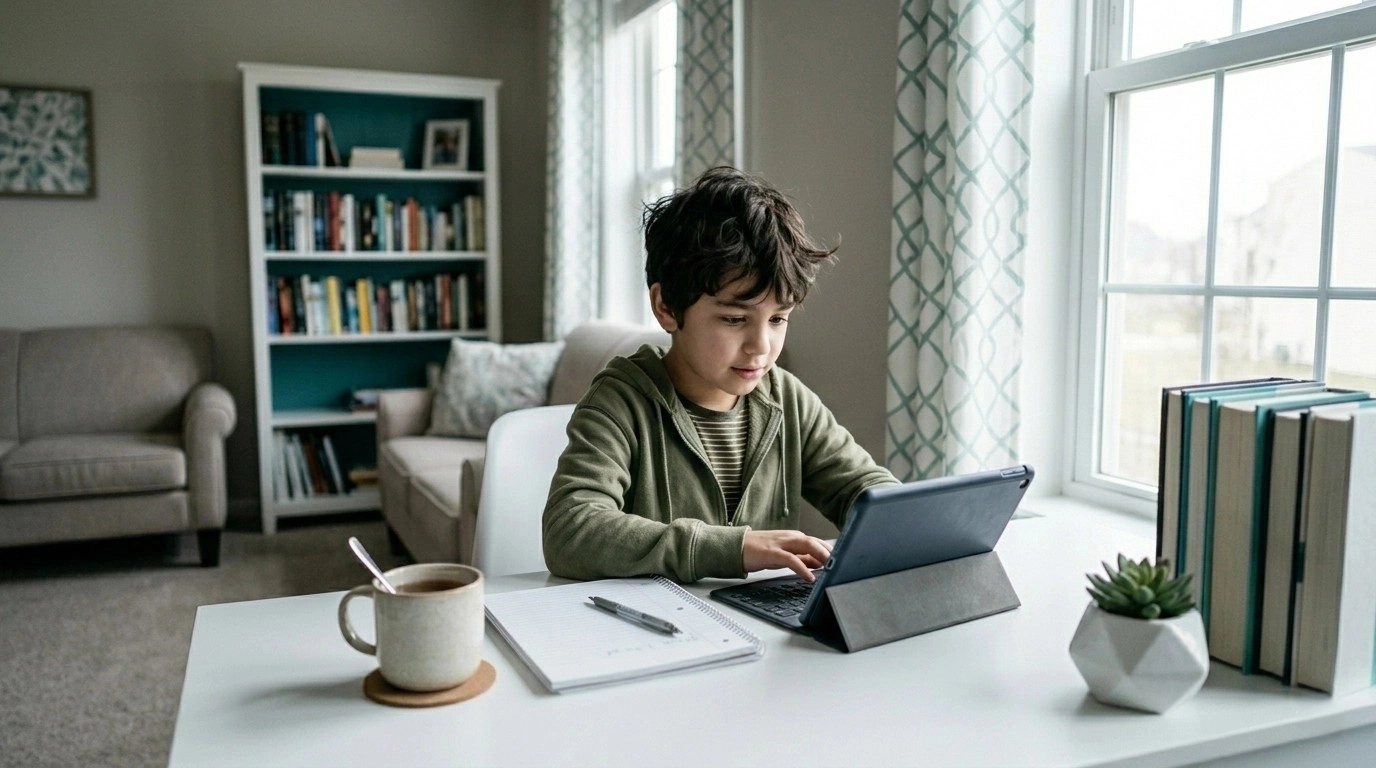
What to Verify Before Enrolling a Child with School Anxiety
If you are seriously considering moving your child from public school to an online program, confirm these points before committing:
- Accreditation: Confirm the program is regionally or nationally accredited. Without it, the diploma may not be recognized by colleges, employers, or the military.
- Mid-year enrollment: Many families assume they must wait for the school year to end. Our guide on mid-year high school transfer explains exactly how this process works and when it is and is not possible.
- Age and grade requirements: Learn about minimum age and grade placement guidelines before applying to any program.
- Credit transfers: Coursework completed at a public school may transfer to the online program. Ask the enrollment team specifically about your child's completed credits before assuming they will not count.
- Self-directed readiness: Online school requires motivation and a degree of self-organization. Anxious students often thrive in this model, but have an honest conversation with your child about what it will require before committing both of you.
Frequently Asked Questions About School Anxiety in Children
These are the most common questions parents ask when researching school anxiety in children and exploring educational alternatives for their families:
School anxiety in children is a clinically recognized psychological condition, not avoidance behavior or manipulation. The physical symptoms, including stomachaches, headaches, and rapid heartbeat, are genuine physiological stress responses. Children experiencing school anxiety are not choosing to feel this way. The defining diagnostic marker is that symptoms cluster specifically around school situations and ease significantly on weekends, holidays, and breaks, which reflects a real environmental trigger, not a character flaw.
Normal pre-school nervousness is temporary, mild, and does not significantly interfere with daily functioning. It resolves quickly once the child is actually at school. School anxiety, by contrast, is persistent, intense, and causes significant disruption: frequent school avoidance, recurring physical symptoms, declining academic performance, and withdrawal from activities they previously enjoyed. If your child's distress is affecting their sleep, health, or quality of life across multiple weeks, that warrants attention beyond reassurance.
This is one of the most common dilemmas parents face, and the answer is not straightforward. For mild anxiety, some supported exposure is generally recommended by clinical psychologists to avoid reinforcing avoidance patterns. For severe anxiety, particularly when it involves panic attacks, physical illness, or significant depression, forcing attendance without addressing root causes can worsen the condition. The evidence-based approach is to work with a licensed therapist who specializes in school refusal to develop an individualized plan, rather than relying on any general rule. Simultaneously evaluating whether the school environment itself is the primary problem is a separate but equally important question.
School anxiety in children can appear at any age, but it tends to spike at key developmental transitions. Common peaks include: starting kindergarten (separation anxiety component), the transition to middle school (heightened social self-consciousness), beginning high school (academic and social pressure increase), and returning to school after any prolonged absence. The transition to high school is particularly associated with a rise in anxiety intensity, as academic expectations, social complexity, and college-related pressure all increase simultaneously.
For many children, yes, particularly when the school environment itself is the primary anxiety driver. Research consistently shows improvement in anxiety and depression markers among students who transition away from high-stimulation, high-evaluation classroom settings. Online school removes the most common triggers structurally: crowded social environments, public evaluation, fixed early schedules, and the psychological weight of active-shooter drills. For students whose anxiety is rooted in those specific triggers, the relief is often dramatic and relatively fast. Our resource on online learning and student mental health covers this research in detail.
You are not overreacting. Parents of anxious children are routinely told, by well-meaning relatives and school staff alike, that they are coddling their child or making things worse. This is wrong, and it is important to name it clearly. School anxiety is a real, documented psychological condition. Untreated school anxiety in childhood is associated with chronic anxiety disorders in adulthood, clinical depression, lower educational attainment, and reduced quality of life. Taking your child's distress seriously and being willing to consider structural change is responsive, informed parenting. If you are ready to explore what an accredited online K-12 program could look like for your family, our complete FAQ for parents and students is the right starting point.
Your Child Deserves an Education Built Around Who They Actually Are
School anxiety in children is real. The environment that causes it is real. And the alternative is real too: a fully accredited, self-paced online K-12 program that removes the stressors structurally. High School of America offers enrollment year-round, including mid-year transfers for families who cannot wait for the next school year to begin.