
The 4.0 Arms Race:
How GPA Obsession
Is Breaking Students
American high schoolers are trapped in a grade escalation spiral that colleges helped create and that mental health experts now call a quiet public health crisis.
TL;DR: What You Need to Know
- American high school GPAs have risen 0.43 points since 1990 while NAEP reading scores and SAT scores remained completely flat, revealing the rise as grade inflation, not improvement.
- 59% of high school students identify grades and academic performance as their top stressor, ranking higher than social media, family conflict, and friendships.
- High-GPA-pressure schools have clinical anxiety and depression rates 2 to 3 times the national average, even among students who are performing well.
- The 4.0 is no longer exceptional over 75% of students admitted to top-25 universities have one, making it a baseline floor, not a competitive advantage.
- Accredited online schools like HSOA remove students from the social comparison environment that drives GPA obsession in the first place.

What GPA Obsession Actually Is and Why It's Structural, Not Individual
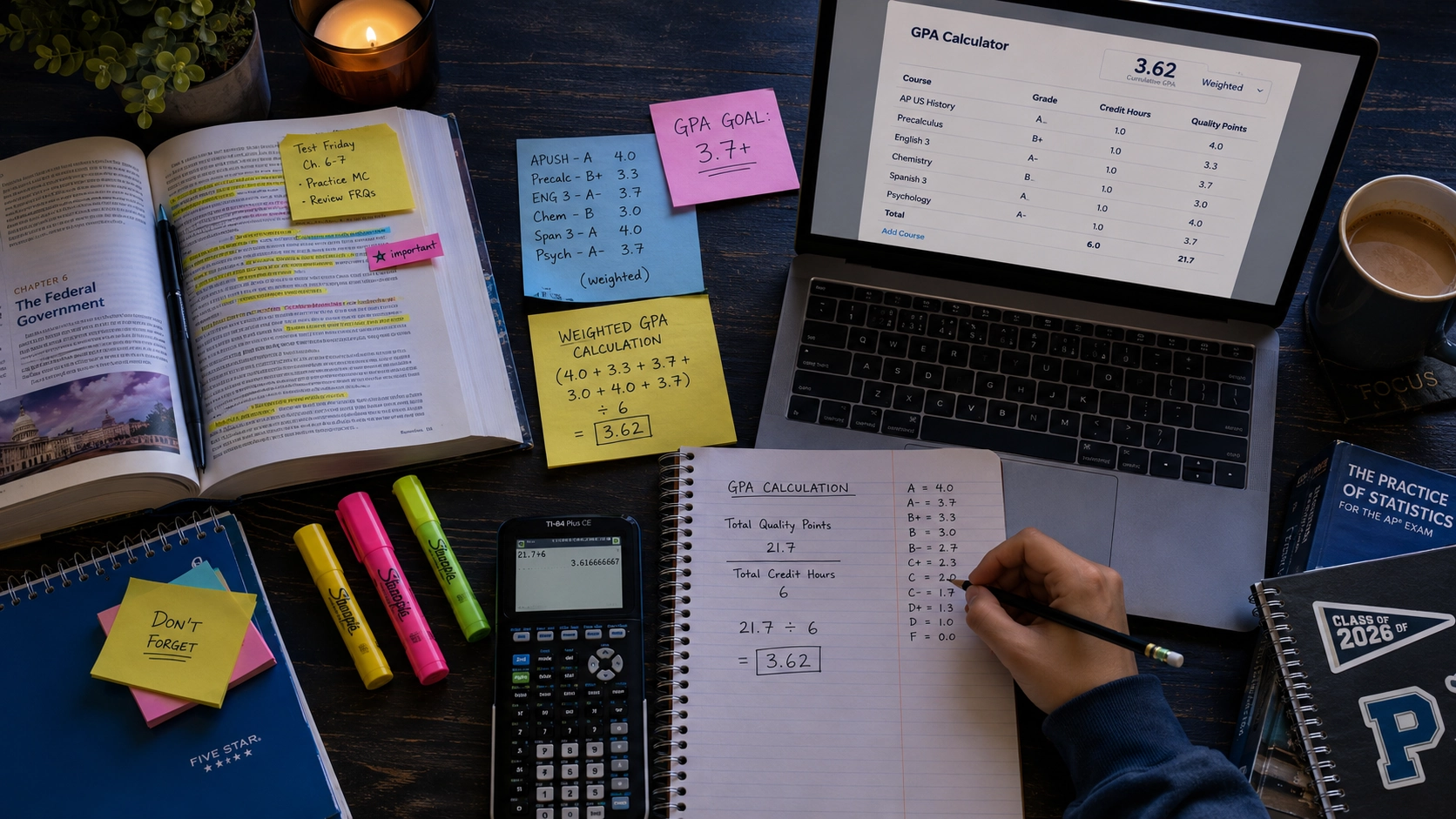
GPA obsession public schools across America have normalized is a crisis that rarely gets discussed with the honesty it deserves. When parents and educators talk about grade pressure, the conversation defaults to personal responsibility: students should manage their stress better, prioritize correctly, develop resilience. This framing misses the structural cause entirely.
GPA obsession is not a personality flaw. It is the rational response to an irrational incentive structure. American college admissions particularly at selective four-year universities created a system in which a 3.9 unweighted GPA is considered unremarkable, a 4.0 is baseline, and students must pursue advanced coursework not because they are ready for college-level material but because weighted GPA points have become the only reliable way to distinguish oneself in an overcrowded applicant pool.
The result: students make decisions about which courses to take, which activities to join, and how to spend their limited time not on the basis of what they are genuinely curious about, but on the basis of what will produce the highest number on a transcript. Learning has been optimized out of the system.
The arms race follows a predictable escalation pattern. A student at a competitive suburban public school notices that their classmates are taking six AP courses. To remain competitive, they add a fifth AP course a subject they have little interest in, taken purely for the weighted GPA credit. Their classmate responds by adding a seventh. Neither student chose any of those courses. The courses chose them, selected by a logic external to both students and neither of their advisors is comfortable naming out loud.
What makes GPA obsession particularly destructive is the gap between what it promises and what it delivers. It promises a path to college. What it delivers is a student who has spent four years learning how to perform academic success rather than achieving it a student who knows how to pass tests, select easy electives, and calculate grade averages to three decimal places, but who has never spent a semester genuinely absorbed in a subject for its own sake. That gap becomes visible the moment they arrive at a college that expects intellectual independence.
Consider what a student in a high-GPA-pressure school actually spends their time on. A 2023 Stanford study found that students in high-performing public school districts reported spending an average of 3.1 hours per night on homework 15.5 hours per week. For context: that is more time than a typical part-time job. Much of that time is not spent in genuine learning; it is spent on point accumulation completing assignments in the minimum viable way to protect the GPA. Hours of life traded for numbers.
Six GPA Obsession Public Schools Myths Repeated Every Year
U.S. high school GPAs rose 0.43 points between 1990 and 2016 while NAEP reading scores declined and SAT scores held flat. Higher grades are reflecting course selection strategy and grade inflation not greater learning or mastery.
A 4.0 is the minimum floor at selective schools, not a differentiator. Over 75% of students admitted to top-25 universities have one. Having a 4.0 does not get you in. Not having one keeps you out. The arms race produces no winners.
It motivates grade optimization, not learning. Students take easier electives to protect GPA, choose topics they already know over ones that challenge them, and prioritize test performance over understanding. The incentive produces exactly the wrong behavior.
Admissions officers are trained to recognize transcript padding. A student with 3–4 AP courses chosen for genuine depth signals intellectual curiosity. A student with 8 AP courses, several with mediocre performance, signals GPA strategy. Selective schools can tell the difference.
At selective schools, GPA is the least differentiated factor everyone in the applicant pool has a high one. What distinguishes admitted students is demonstrated expertise, original research, genuine leadership, and exceptional teacher recommendations. Hours spent grinding a 3.9 to 4.0 are hours not spent developing any of those.
GPA-focused pressure builds avoidance, perfectionism, and burnout not resilience. Students who optimize for grades in high school consistently arrive at college without the ability to work through genuine difficulty, because the system trained them to avoid it rather than push through it.
GPA Obsession Public Schools vs. the World: High Stress Does Not Predict Better Outcomes
GPA obsession in public schools is not uniquely American, but the pattern across countries reveals a troubling disconnect: the highest-stress education systems do not produce the best-educated students. The international evidence points consistently toward mastery-based, low-comparison environments as the most effective approach to genuine learning.
PISA 2022 rankings: Finland #3, Canada #9, Japan #12, Germany #17, United States #34, South Korea #7, China #3. High GPA pressure does not predict better academic outcomes. Finland the lowest-pressure country on this list consistently outranks the United States on every major international learning benchmark.
Finland's approach is worth examining in detail, because it is the most direct refutation of the belief that GPA pressure is a necessary feature of a good education. Finnish students do not receive numerical grades until they are 13 years old. There is no national standardized testing until the end of upper secondary school. Teachers are trusted as professionals and given broad curriculum autonomy. Homework is minimal. The entire system is designed around the assumption that children learn best when they are curious, rested, and free from competitive ranking anxiety. Finland ranks among the top three nations in the world in reading, math, and science literacy.
South Korea, by contrast, operates one of the most intense academic pressure systems on earth. South Korean students routinely study past midnight, attend private tutoring academies after regular school hours, and organize their entire adolescent lives around a single university entrance exam. South Korea has one of the highest youth suicide rates among developed nations and mental health researchers have repeatedly documented the causal link to academic pressure. South Korea also outranks the United States on PISA scores, which proponents of academic pressure cite as evidence the system works. What they do not mention: so does Finland, with a fraction of the pressure and none of the mental health crisis.
The lesson is not that academic standards should be lowered. The lesson is that academic pressure the social comparison engine, the GPA arms race, the zero-sum competition for admission slots is not what creates strong students. Mastery-based learning, genuine intellectual engagement, and adequate rest create strong students. The United States has one and is missing the other two.
Six Ways GPA Obsession Public Schools Create Damages Students
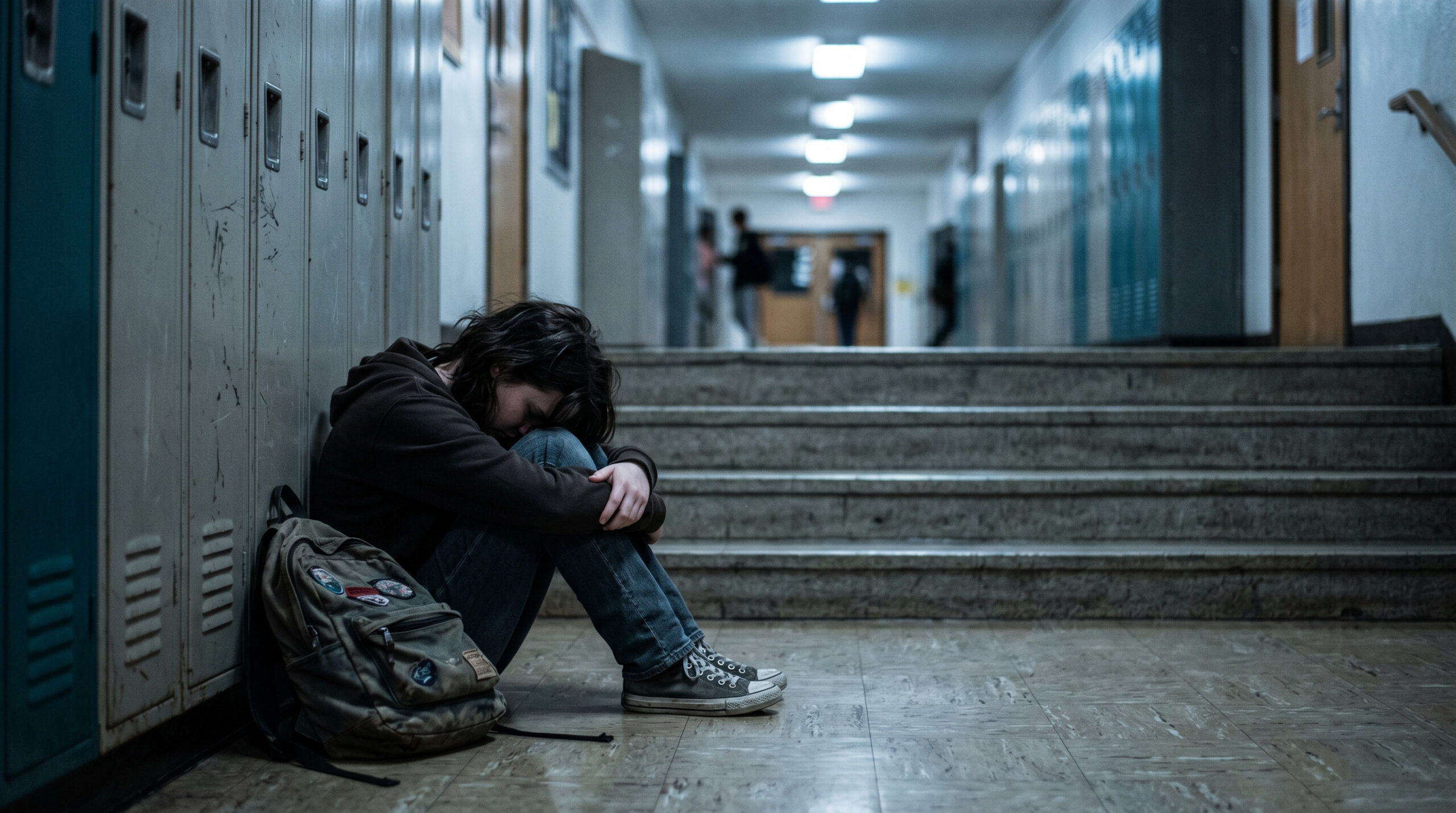
The effects of GPA obsession in public schools are not hypothetical. They are documented, measurable, and consistent across multiple independent studies. What follows is what the research actually shows about what happens to students inside high-GPA-pressure environments.
GPA obsession in public schools does not produce isolated symptoms. The six effects above do not operate independently. They cascade. A student who begins losing sleep to protect their GPA (Damage #5) becomes cognitively impaired which makes genuine learning harder, which increases the temptation to cheat (Damage #2), which deepens the gap between their grades and their actual knowledge, which increases the performance anxiety driving the insomnia, which deepens the sleep deprivation. The cycle is self-reinforcing, and it is built into the architecture of the system.
Parents often notice the symptoms before they identify the cause. A child who used to love reading stops reading for pleasure because every hour is scheduled for homework. A student who was genuinely curious about history narrows to what will be on the AP exam. A teenager who wanted to take ceramics or drama or woodshop drops the elective because it won't improve their weighted GPA. These are not failures of individual motivation. They are rational adaptations to an irrational system.
What the research consistently shows across Luthar and Kumar's clinical studies, across the Stanford homework studies, across the Josephson Institute surveys on academic dishonesty is that high-GPA-pressure environments produce students who are very good at school and increasingly poor at learning. The distinction sounds abstract. It becomes concrete the moment these students reach a college classroom where the professor expects independent thought and there is no answer key to find.
Students who optimize for grades in high school consistently arrive at college without the ability to work through genuine difficulty because the system trained them to avoid it rather than push through it.
GPA Obsession Public Schools and Grade Inflation: Grades Up, Learning Flat
If rising GPAs reflected actual improvement in student knowledge and skill, they would be worth celebrating. The data shows the opposite: grades have risen steadily across American high schools while every independently verified measure of actual learning has remained flat or declined. This is the grade inflation paradox, and it is the engine driving the GPA arms race.
The mechanism behind grade inflation is not mysterious. Under the No Child Left Behind Act (2002) and its successor the Every Student Succeeds Act (2015), schools were held accountable for student performance metrics that included graduation rates and, in many districts, grade distributions. A school where large numbers of students fail or receive Cs generates administrative scrutiny. The incentive is clear: pass more students, give higher grades, avoid the scrutiny. Individual teachers face the same pressure from a different direction a parent who receives a C for their child's work is far more likely to challenge that grade than a parent whose child received a B. Over time, the statistical pressure produces a systematic upward drift.
The result is a credential that has been hollowed out. A 3.5 GPA in 1990 meant something specific and verifiable about a student's performance. A 3.5 GPA in 2026 is hard to interpret without knowing the school, the course level, the grading culture of the department, and whether the student took genuinely challenging electives or the easily-graded alternatives. This ambiguity benefits no one not colleges trying to make admission decisions, not employers looking at transcripts, not students trying to accurately understand their own preparation. Everyone in the system knows this, and no one in the system has a structural incentive to fix it.
Sources: National Center for Education Statistics (NCES), 2016 High School Transcript Study; National Assessment of Educational Progress (NAEP) Long-Term Trend data. GPA data reflects unweighted averages. Grade inflation is consistent across public and private schools, urban and suburban districts.
What a School Without GPA Obsession Actually Looks Like
The antidote to GPA obsession in public schools is not telling students to stress less. It is removing them from the structural environment that creates the incentive to obsess in the first place. Accredited online high schools like High School of America operate on a fundamentally different premise: grades should reflect what a student knows and can do, not where they rank relative to everyone else in their zip code.
The social comparison mechanism is the part of GPA obsession public schools create that traditional school reform cannot reach. You can change homework policies. You can cap the number of AP courses a student takes. You can train teachers to give more qualitative feedback. But as long as 300 students are sitting in the same building for seven hours a day, watching each other's grades, competing for limited honors society slots and class rank positions and teacher recommendations the comparison pressure remains. It is baked into the physical and social structure of the institution.
Online school does not lower the bar. HSOA's courses are accredited, rigorous, and accepted by colleges across the country. What changes is the context in which a student does that rigorous work. There is no GPA leaderboard. There is no class rank. There is no peer visibility of each other's scores. A student who struggles through a difficult concept and ultimately masters it is evaluated on what they know not on whether they figured it out faster than the person sitting next to them. That change in context is, for many students, the difference between an education and a four-year anxiety management exercise.
- Class rank creates constant peer comparison pressure
- Course selection driven by weighted GPA strategy, not interest
- Grade visibility among peers reinforces social hierarchy
- Test prep and practice tests crowd out genuine instruction
- Students average 6.2 hours sleep under homework load
- Extracurriculars chosen for college resume, not personal growth
- No class rank students evaluated on their own progress
- Course selection guided by genuine interest and future goals
- No peer GPA comparison every student's path is individual
- Flexible schedule allows depth in subjects that matter to the student
- Healthy sleep schedule supported without homework load arms race
- Portfolio-based learning builds real skills colleges actually value
The Diploma Still Gets You In. The Environment Gets You Out.
A common concern from parents considering online school: will colleges accept an HSOA diploma? The answer is unambiguously yes. HSOA is a fully accredited institution. Students earn a real diploma with a real transcript, and HSOA graduates have been accepted to four-year universities across the country including large state universities, competitive liberal arts colleges, and community colleges with transfer pathways.
What HSOA offers that traditional public school does not: a student who arrives at college having spent their high school years actually learning curious, self-directed, and capable of working through difficult material without a competitive leaderboard to orient themselves against. That student performs better in college, not because they had a higher high school GPA, but because they were educated rather than optimized.
If your child is showing signs of GPA obsession in public schools, grade anxiety, perfectionism, sleep deprivation, loss of interest in learning, the solution is not to help them manage the arms race better. The solution is to leave the arms race entirely. Enrollment at HSOA is open year-round.

What Families Who Left the GPA Arms Race Say
My daughter was crying every Sunday night about her GPA. She had a 3.8 and it wasn't enough. She switched to HSOA and within two months the Sunday anxiety was just gone. She started reading books again for fun. I didn't know she used to do that until it came back.
My son was taking six AP courses to stay competitive with his classmates. He was sleeping four hours a night and had stopped finding anything interesting. HSOA changed the entire framework. He takes three rigorous courses he actually cares about and is doing better work than he ever did chasing a 4.0.
The GPA obsession at our public school was affecting our whole family. My son would come home and immediately start calculating how different grades would affect his average. At HSOA he just does the work. The grade tells him how he's doing, not what he's worth.
My daughter got into a good four-year university through HSOA. The admissions counselor told us they loved that her application showed genuine depth in two areas she had actually spent years developing not the standard pile of AP courses and padded club memberships. The lack of GPA pressure created space for real work.
Frequently Asked Questions
GPA obsession is a pattern in which a student's self-worth, daily decisions, and mental health become almost entirely organized around grade point average. It is reinforced by college admissions competition, parental pressure, and school ranking systems that reward high-GPA students. A 2023 Pew Research Center survey found 59% of U.S. high school students identify grades as a significant source of stress, with 40% calling it overwhelming. The problem is structural: the competitive college admissions environment created a grade arms race that individual students cannot opt out of on their own.
The honest answer is that "good" has been inflated beyond usefulness. In 1990 the average U.S. high school GPA was 2.68; by 2016 it had risen to 3.11 and the trend has continued. A 3.0 is now considered average rather than good, and a 3.75 is typically the floor for selective college admission. Among students admitted to top-25 universities in 2025, the median reported unweighted GPA was above 3.9. This is grade inflation, not educational improvement test scores and international learning benchmarks have remained flat over the same period.
Significantly and documented across multiple independent studies. A 2018 study of high-achieving public high schools by researchers Suniya Luthar and Nina Kumar found students at high-academic-pressure schools had rates of clinical anxiety and depression 2 to 3 times higher than national norms. This held even for academically successful students maintaining a high GPA in a competitive environment was itself the stressor, not failure. Common effects include sleep deprivation, loss of intrinsic motivation, increased academic dishonesty, social comparison anxiety, and perfectionism paralysis where students avoid challenging work because the risk of a B feels worse than a guaranteed A in an easy class.
A 4.0 is not a universal requirement, but in practice the bar at selective schools has drifted that direction. Over 75% of students admitted to the top 50 U.S. universities in 2025 reported a 4.0 unweighted or equivalent weighted score. Having a 4.0 does not guarantee admission but not having one significantly reduces odds at highly competitive schools. This creates a structural problem: students are pressured to achieve a 4.0 even though it provides no competitive advantage once everyone in the applicant pool has one.
Grade inflation is the systematic increase in average grades without a corresponding increase in actual learning. In American high schools it is largely driven by institutional incentives: teachers face pressure to maintain high grades to avoid parent complaints; schools compete for state performance rankings tied to average GPA; and guidance counselors advise students to choose courses where high grades are attainable. A 2016 NCES analysis found U.S. high school GPAs rose 0.43 points between 1998 and 2016 while SAT scores remained flat and NAEP reading scores actually declined.
This question reveals the trap. Most students take AP courses to boost their weighted GPA, not because they are genuinely interested in college-level material. The result is a GPA arms race where students feel compelled to take 6, 7, or even 8 AP courses simultaneously. College admissions counselors and the American Association of Guidance Counselors consistently recommend no more than 4–5 AP courses total across all four years for most students a guideline widely ignored in competitive environments. Colleges prefer 3–4 courses genuinely chosen for depth over 8 taken for GPA purposes with mediocre engagement.
Yes, in a counterintuitive way. Admissions officers at selective universities have been explicit: a transcript full of easy-A courses that inflates GPA at the expense of intellectual challenge is a red flag. Course rigor is evaluated separately from grade average at most selective schools. A student with a 3.85 who took a genuinely challenging curriculum is typically viewed more favorably than one with a 4.0 who avoided difficult classes. Students who spend high school optimizing for GPA often arrive without genuine intellectual curiosity, resilience, or the ability to work through difficulty traits that predict college success far better than high school GPA alone.
Accredited online high schools like High School of America operate outside the social comparison pressure that drives GPA obsession in traditional public school. There is no class rank, no GPA leaderboard, and no peer visibility of each other's grades. Students are evaluated on genuine mastery of coursework rather than performance relative to classmates. Grades reflect learning, not social standing. HSOA's advising approach encourages students to pursue courses that genuinely challenge and interest them rather than courses chosen strategically to inflate weighted GPA. Students still earn a fully accredited diploma in an environment that rewards actual learning rather than grade optimization.
Your Child Deserves an Education, Not an Optimization
High School of America is a fully accredited online high school that evaluates students on mastery, not rank. No GPA arms race. No class comparison. Just a real diploma and a genuine education.