
Physical Bullying
in Public
Schools
Physical bullying in public schools harms one in five students and disrupts learning for everyone in the building. Four decades of research document where it happens, why bystanders do nothing, and why the schools most committed to stopping it so rarely do.
What Physical Bullying Is, and What It Is Not
Physical bullying in public schools is the intentional, repeated use of physical aggression against a student who cannot adequately defend themselves because of a power imbalance. It includes hitting, kicking, shoving, restraining, damaging belongings, and theft. The three defining criteria, intentionality, repetition, and power imbalance, were established by Dan Olweus in the 1970s and are recognized today by StopBullying.gov as the foundation for identifying bullying in school settings. They matter because they distinguish bullying from ordinary peer conflict, and the distinction has practical consequences for how schools should respond.
A fight between two students of similar social and physical standing is not bullying. A student shoving another in a one-time dispute is not bullying. Calling something bullying when it is not produces both over-reaction and under-reaction: schools that treat every conflict as bullying lose credibility and resources, while the definition's dilution makes it easier to dismiss sustained targeting as "just conflict." Physical bullying in public schools is specifically characterized by the fact that the victim cannot escape it through normal social means, changing seats, avoiding the person, or simply asserting themselves, because the power differential makes those strategies unavailable.
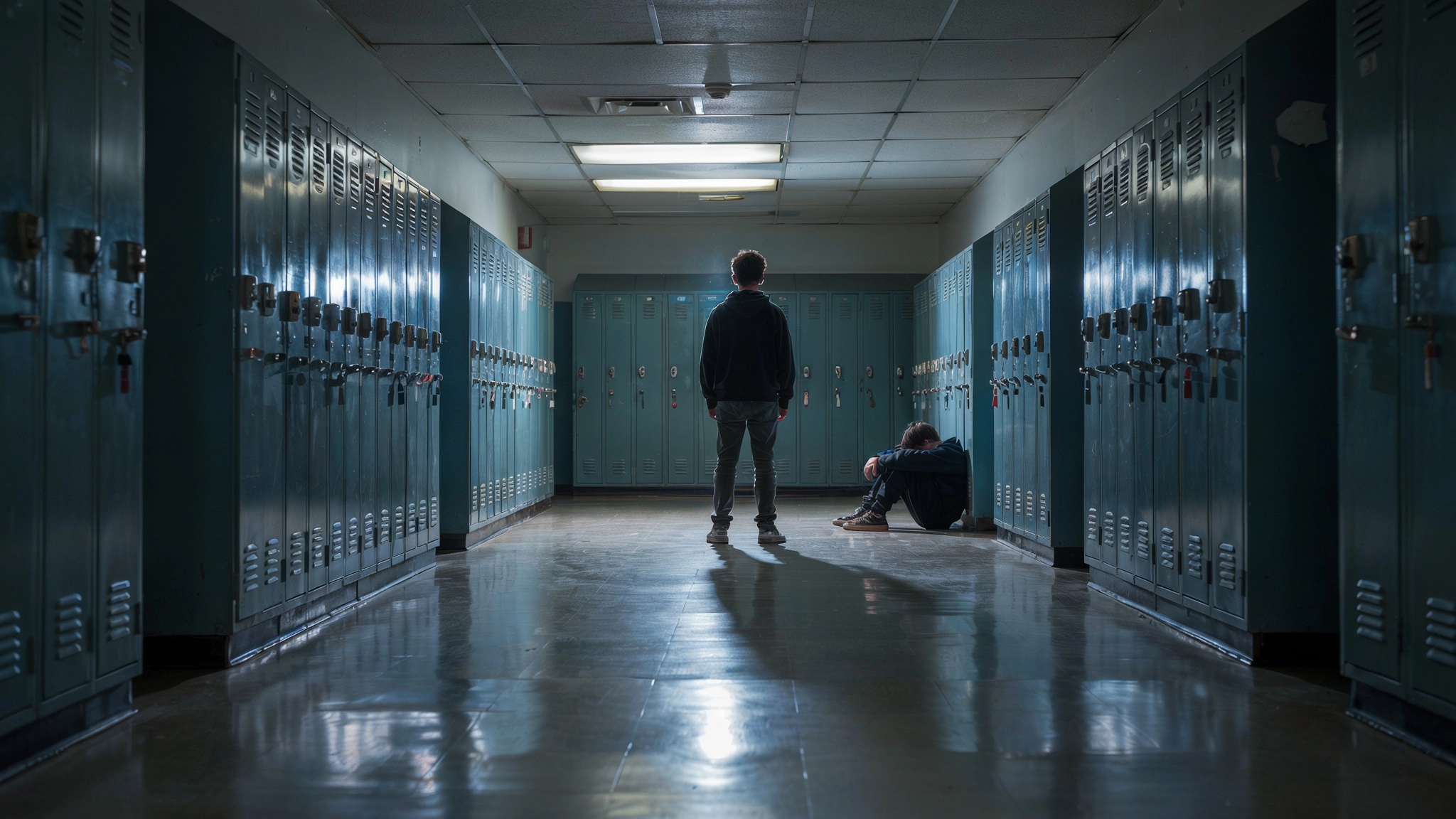
The other defining feature of physical bullying in school environments is its social dimension. Unlike private violence, school bullying almost always has an audience. Research consistently shows that bystanders are present in the vast majority of incidents, which transforms physical bullying from a bilateral act into a performance of social hierarchy. The perpetrator is not merely attacking a victim; they are demonstrating to observers where they stand relative to that person. This public dimension is one of the reasons school-based physical bullying is so resistant to intervention, stopping the physical act does not automatically change the social dynamic that motivated it.
Six Evidence-Based Findings on Physical Bullying
The research on physical bullying in public schools spans more than four decades and crosses disciplines: developmental psychology, educational sociology, public health, and criminology all have substantial bodies of work on the topic. The six findings below represent the most robustly replicated results, the ones that have held across different school systems, age groups, countries, and methodological approaches. They describe not just what physical bullying does but how it works and why standard interventions so often fail to stop it.
What the Data Shows About Scale and Scope
The following figures are drawn from peer-reviewed research, federal surveillance data, and institutional reports. They represent consistent findings across multiple data sources. The percentages are significant not just as abstract statistics but because each one describes a population of students whose learning and development is being materially disrupted by the physical environment their school creates.

Why 88% of Witnesses Do Nothing, and What That Costs
The bystander problem is the central challenge of physical bullying intervention in public schools. More than three-quarters of bullying incidents involve multiple witnesses, and most of those witnesses do not intervene. Understanding why requires looking beyond individual moral failure to the social and structural conditions that make non-intervention the rational default for most students in most school environments. The behaviors below are not character flaws, they are predictable responses to a social system that punishes intervention and rewards silence. They also interact with other patterns described in the grade comparison culture post: schools that rank students by academic performance also create visible social hierarchies that bullying then exploits and enforces.
The Four Phases of Physical Bullying in Schools
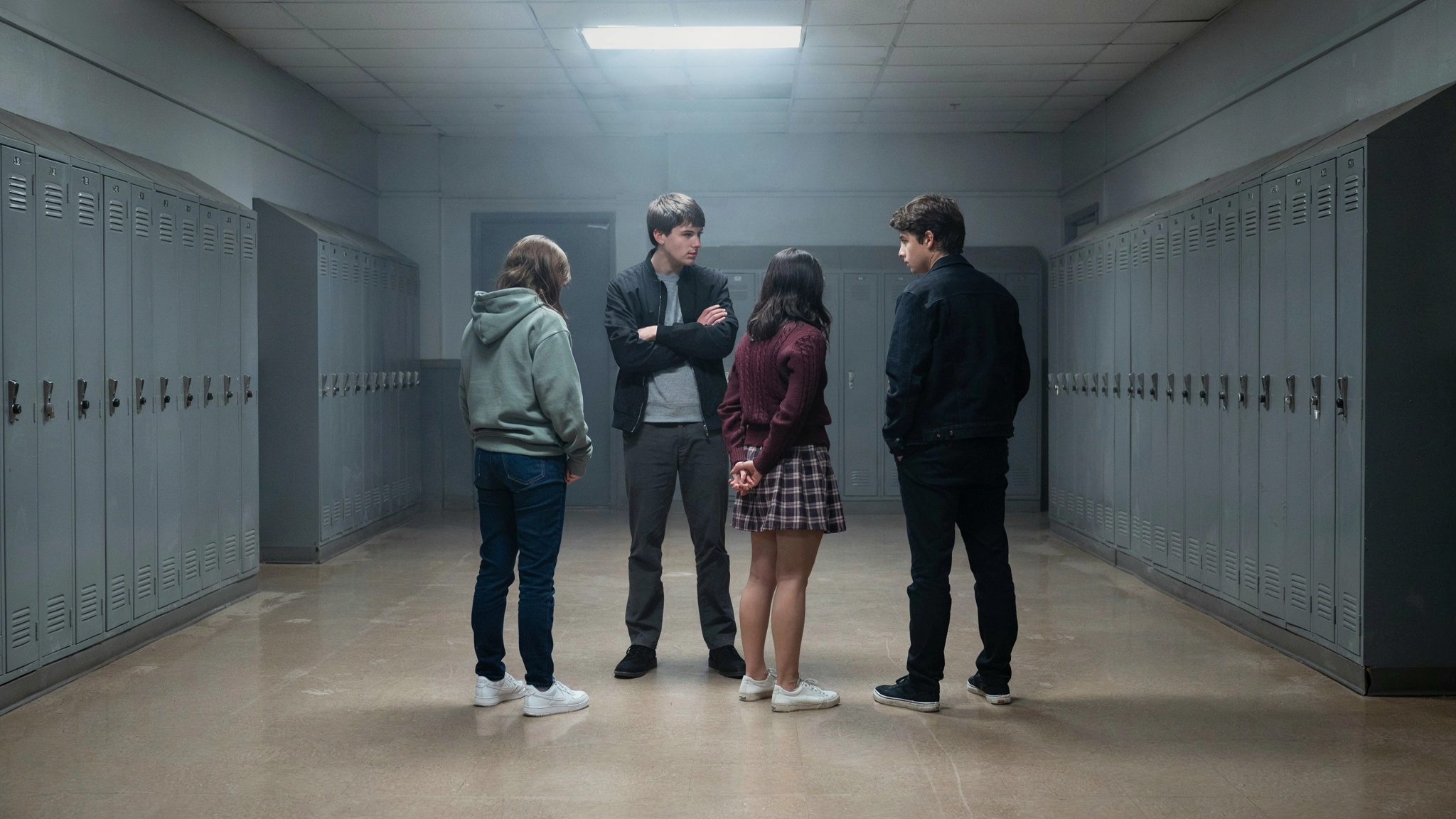
Physical bullying rarely appears fully formed. It escalates through predictable phases, each of which involves different social dynamics and requires different responses. Most school interventions focus on Phase 3 or 4, by which point the social structure supporting the bullying is already well established. Effective prevention requires addressing the conditions at Phase 1 and 2, before the behavior has been normalized by an audience and encoded in the school's social hierarchy.
How Physical Bullying Degrades Learning for Everyone
The academic cost of physical bullying in public schools is not limited to its direct victims. Research documents measurable effects on both the students being targeted and on the broader school population. The two-column breakdown below separates these findings: the left column describes effects on victimized students specifically; the right column describes how high-bullying school environments affect student performance and school climate overall, including for students who are never directly targeted.
- Chronic absenteeism, victims are significantly more likely to miss school frequently, driven by anticipatory fear rather than academic disengagement
- Measurable test score decline observed within a single academic year of sustained bullying, independent of prior performance level
- Reduced course selection ambition, victimized students avoid courses that require social exposure or place them in unfamiliar peer groups
- Lower post-secondary attainment, longitudinal studies find victims less likely to complete college degrees, controlling for socioeconomic factors
- Persistent hypervigilance consuming cognitive load that would otherwise support learning, memory consolidation, and academic focus
- Depression and anxiety that compound academic disruption and are frequently undiagnosed or untreated during the school years
- Schoolwide test scores negatively correlated with bullying prevalence, even students who are not targeted perform worse in high-bullying environments
- Reduced intellectual risk-taking across the student body, students in physically threatening environments avoid standing out academically as well as socially
- Teacher effectiveness decreases in high-bullying schools, instructional time lost to monitoring, intervention, and student emotional management
- Peer collaboration and knowledge-sharing decline as social trust erodes, students share less, explain less, and learn less from each other
- Staff morale and retention problems more common in schools with high bullying rates, leading to instructional instability
- Families of high-performing students begin avoiding or leaving high-bullying schools, concentrating disadvantage among remaining students
Physical Bullying in Public School vs. Online School
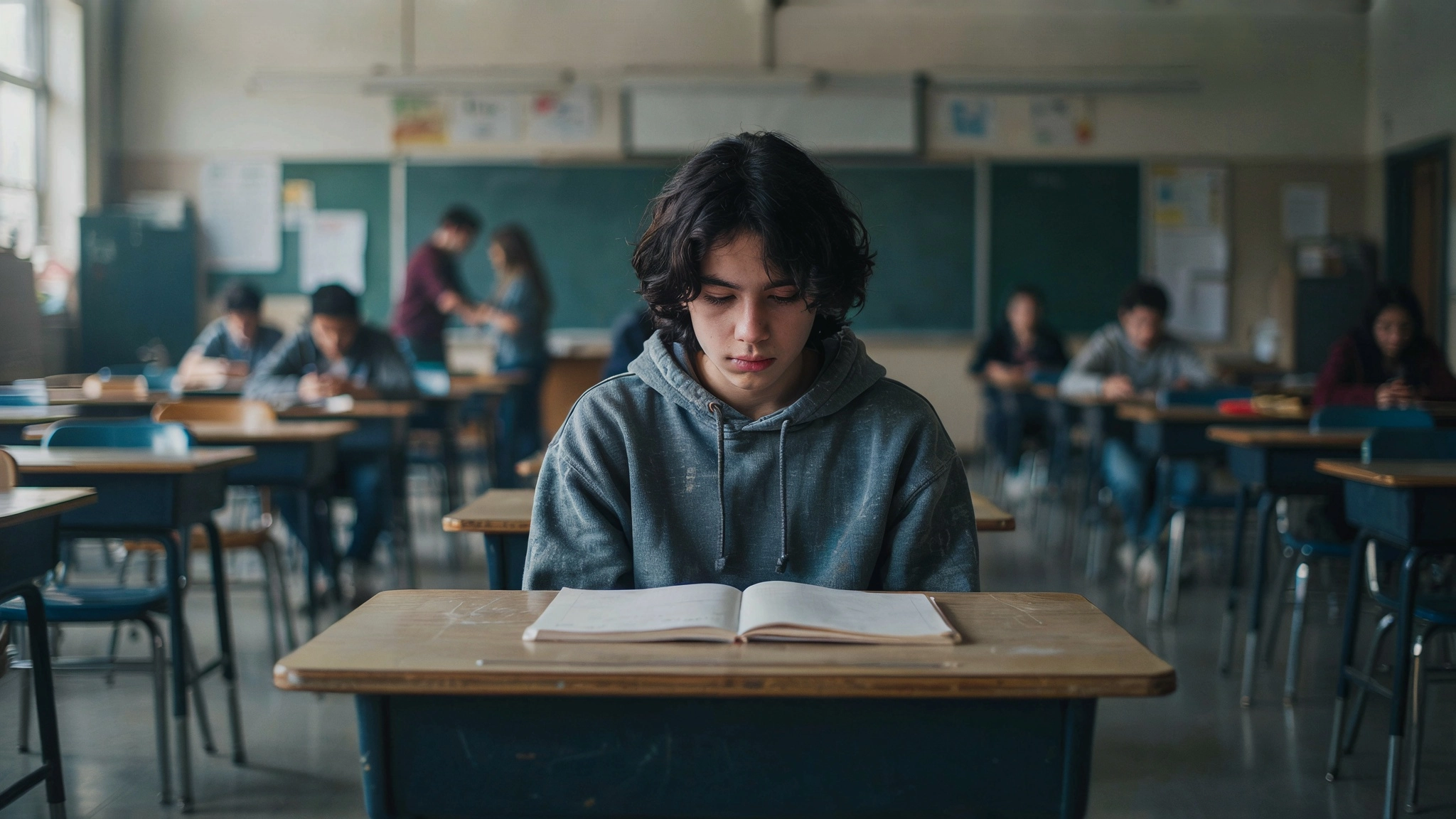
Physical bullying requires physical proximity, shared unstructured space, and a social hierarchy enforced through daily in-person contact. These are features of public school buildings, not of education itself. The comparison below maps each structural feature of the public school environment that enables physical bullying against the corresponding condition in an online school. These are not policy responses to bullying, they are the absence of the conditions that make bullying possible in the first place.
What Students and Parents Say After Leaving

Common Questions About Physical Bullying in Public Schools
Physical bullying in public schools is the intentional, repeated use of physical aggression against a student who cannot adequately defend themselves because of a power imbalance. It includes hitting, kicking, shoving, restraining, damaging belongings, and theft. The three defining criteria, intentionality, repetition, and power imbalance, were established by Dan Olweus and remain the research-consensus standard for distinguishing bullying from ordinary peer conflict. The distinction matters: a single fight between matched students is not bullying; the sustained targeting of a student who lacks the social or physical resources to resist is. Physical bullying in school environments is almost always a public act, it occurs in the presence of bystanders and functions as a performance of social hierarchy as much as an act of aggression.
The National Center for Education Statistics reports that approximately 20 percent of students in grades 6 through 12 experience some form of bullying during a school year. Physical bullying is the most immediately visible form, though verbal and social forms account for greater total volume. UNESCO's 2019 Behind the Numbers report found that roughly one-third of students globally experience bullying monthly, with higher rates in schools with weaker supervision and inconsistent intervention. The CDC estimates that 160,000 students skip school every day in the United States specifically because of fear of bullying, a figure representing a significant academic disruption even before the direct effects on bullied students are counted. Because 40 percent of incidents go unreported, official counts substantially understate actual prevalence.
Victims of physical bullying show measurable declines across academic domains. They are significantly more likely to be chronically absent, to show declining test scores and GPAs, and to report lower academic self-efficacy. The disruption persists even after bullying stops: the sustained hypervigilance required to navigate a threatening school environment consumes cognitive resources that would otherwise support learning. Research documents declining performance within a single academic year of sustained victimization, independent of prior academic trajectory. Longer-term, bullied students show lower rates of post-secondary educational attainment compared to matched non-bullied peers, a gap that appears to be driven by a combination of missed school, disrupted academic development, and the mental health sequelae of chronic victimization.
Research by Hawkins, Pepler, and Craig found bystanders present in 85 to 88 percent of bullying incidents but intervening in fewer than 20 percent of cases. Several mechanisms drive this gap. First, bystanders fear becoming targets themselves: intervening signals solidarity with a student designated as low-status. Second, the bystander effect, established by Darley and Latané in 1968, is amplified in school settings where diffusion of responsibility means each witness assumes someone else will act. Third, in environments where bullying is frequent and sustained, bystanders normalize what they observe: they categorize it as background social reality rather than a violation requiring response. Fourth, most students have not been taught the specific verbal and social tools needed to intervene safely. Training that addresses these specific barriers, rather than simply exhorting students to "stand up for others", produces measurable improvements in intervention rates.
No. The American Psychological Association's Zero Tolerance Task Force, in its 2008 comprehensive review, found no evidence that zero-tolerance policies reduce bullying rates or improve school safety. What the evidence showed instead is that zero-tolerance approaches increase suspension and expulsion rates, often dramatically, without producing corresponding improvements in school climate, student safety, or bullying incidence. Zero tolerance policies also tend to be applied disproportionately to students of color and students with disabilities. More effective approaches include school-wide Positive Behavioral Interventions and Supports, structured bystander training programs, consistent adult supervision in unstructured spaces, and restorative practices that address the relationship dynamics underlying bullying. The critical difference between effective and ineffective approaches is whether the intervention targets the social and environmental conditions that enable bullying or only the perpetrator's behavior after the fact.
Longitudinal research following bullying victims into adulthood documents persistent mental health effects that outlast the bullying itself by decades. Takizawa, Maughan, and Arseneault tracked a cohort from age 8 to age 50 and found significantly elevated rates of depression, anxiety disorders, and suicidal ideation in victimized individuals at every measurement point through midlife, effects that persisted after controlling for socioeconomic status, IQ, and childhood adversity. Victims were also more likely to report lower life satisfaction, weaker social relationships, and lower economic attainment at midlife compared to non-bullied peers. The pathway appears to run through both direct psychological trauma and through disrupted educational and social development: students who miss school, narrow their academic choices to minimize social risk, and develop learned helplessness about their own standing carry those patterns forward regardless of whether the bullying eventually stopped.
Physical bullying requires physical proximity. Accredited online schools like High School of America remove that condition entirely: students attend classes, complete coursework, and engage with instructors from their home environment rather than in a building where social hierarchies enforce themselves through threat and intimidation. The specific conditions that enable physical bullying, shared hallways and locker areas, unstructured transition time, bystander audiences, visible daily power hierarchies, are simply absent. Online school does not merely reduce physical bullying; it removes the environmental conditions under which it occurs. Students who transferred to HSOA after experiencing physical bullying consistently report being able to re-engage with learning once the constant background threat of physical harm was no longer a feature of their school day. See our K-12 online homeschool program for details.
Your Child Deserves a School Where Learning Comes Before Social Survival
Physical bullying requires physical proximity. High School of America is a fully accredited online diploma program where students learn from home, no shared hallways, no unstructured time, no enforced social hierarchy. The environmental conditions that make physical bullying possible simply do not exist.