
Most summaries of Washington’s home school law lead with forty-five college credit hours, and a lot of families stop reading there. Two of the three ways to qualify need no college at all, and the third one is not a document. It is a person.
deemed sufficiently qualified to provide home-based instruction by the superintendent of the local school district in which the child resides
RCW 28A.225.010
Every other state in this series that asks about the parent asks for a credential you either hold or do not. New Mexico wants a high school diploma or its equivalent. Tennessee wants a diploma or an approved equivalency. South Carolina wants a diploma or a GED. Each is a yes or no about a piece of paper, and a family without the paper is out.
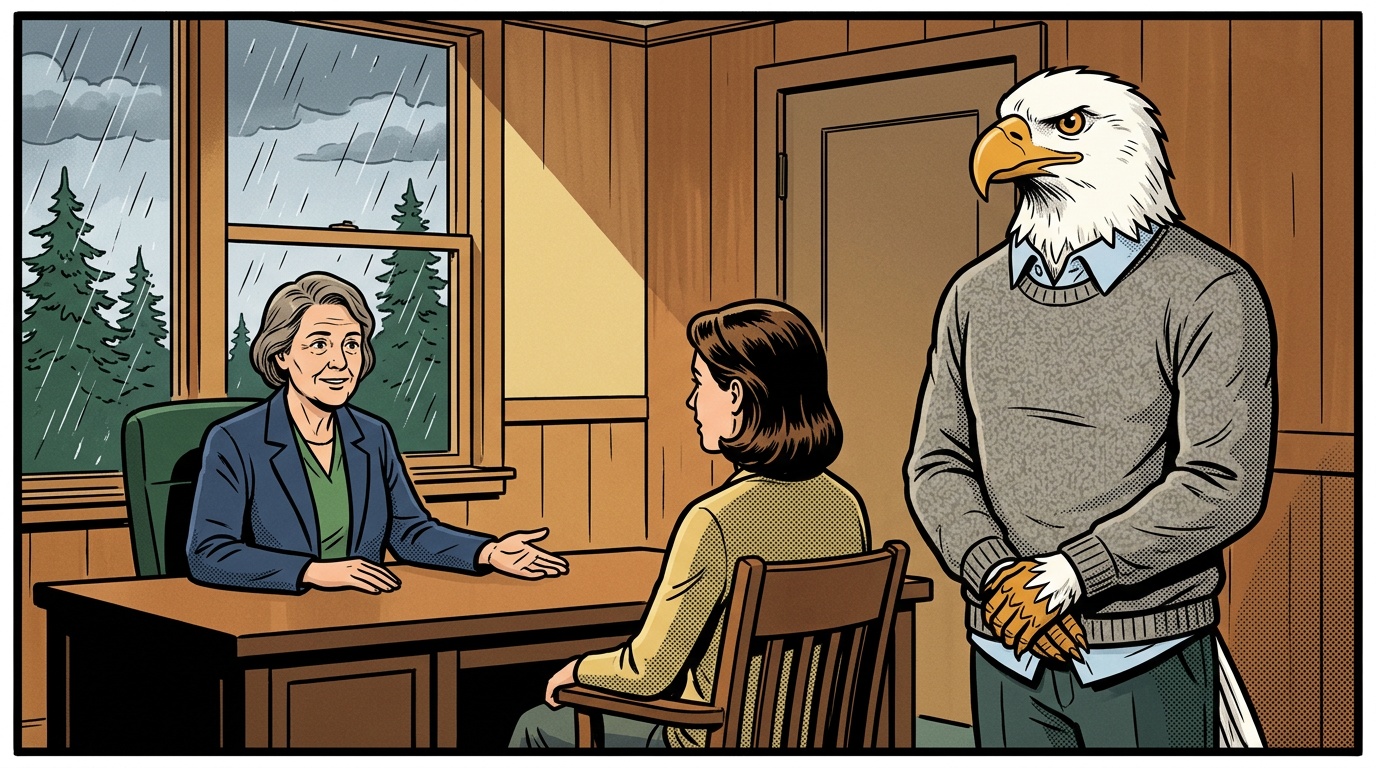
Washington wrote three routes and made one of them a decision. Your own district’s superintendent may look at you and say you are qualified. That is the only door in this series that opens because somebody decided rather than because something was produced.
The three ways to be qualified
You need one of them. Not all three, and not necessarily the one everybody quotes.
- Supervised by a certificated person
A certificated teacher plans the objectives with you, spends an average of at least one contact hour per week each month with your child, and evaluates progress. That person may supervise no more than thirty children. No college of your own is involved. - Forty-five college-level quarter credit hours
Or the equivalent in semester hours. This is the clause every summary leads with. It also counts if you have completed a course in home-based instruction at a postsecondary institution or a vocational-technical institute, which is a much shorter road than a degree. - Deemed sufficiently qualified by your district superintendent
The third route, and the one almost nobody mentions. If neither of the first two fits, this is the question to ask, in writing, of the superintendent of the district where your child lives.
Ask before you assume the answer.
A parent who did not finish college reads the credit hours clause and concludes Washington is closed to them. It is not. Put the question to the superintendent in writing, keep the reply, and you have either a route or a clear answer, which is more than you had.
Eleven subjects, named in the law
Washington is unusually specific about what gets taught. The statute lists them: occupational education, science, mathematics, language, social studies, history, health, reading, writing, spelling, and the development of an appreciation of art and music.
That last one is a legislature legislating appreciation, and it is not a joke at anyone’s expense. It is the clearest signal in the statute that Washington means a whole education rather than a test score.
The testing that goes nowhere
Each year, one of two things happens: a standardized achievement test approved by the state board, given by a qualified individual, or a written assessment of your child’s academic progress by a certificated person currently working in education.
The result goes into the child’s permanent record, and you are the one who keeps it. Nothing is submitted to the district. Nobody reviews it. It reaches a school only if your child later enrols in one, and at that point the scores, the immunization records and the rest of the file are forwarded along.
That is worth knowing before you start, because a family who believes the scores are filed somewhere will spend a year teaching to a report nobody is going to read.
The declaration of intent, and when it is due
Filed with the superintendent of your district of residence, annually, by September 15. It carries your child’s name and age and says whether a certificated person will be supervising.
If you are leaving mid-year, the deadline is not September. It is within two weeks of the beginning of any public school quarter, trimester or semester, which is the clause that matters to most families reading this page, and the one most guides bury.
Where Washington sits in the series
| State | What it asks of the parent | What happens if you do not have it |
|---|---|---|
| New Mexico | A high school diploma or equivalent | Nothing else is offered |
| Oklahoma | Nothing at all | Not applicable |
| South Carolina | A diploma or a GED | Nothing else is offered |
| Tennessee | A diploma or approved equivalency | Nothing else is offered |
| Utah | Nothing at all | Not applicable |
| Washington | One of three routes | Ask the superintendent, who may deem you qualified |
Not sure which Washington route fits you?
Fifteen minutes on the phone covers the withdrawal letter, which of the three qualification routes is realistic for your household, and what to put in the declaration of intent. No records required to have the conversation, and deciding against it costs nothing.
What leaving actually requires
- Settle your qualification route first
It goes on the declaration, and the supervision route in particular takes time to arrange because you need a certificated person willing to do it. Sorting this before the withdrawal letter is the difference between a clean fortnight and an awkward one. - A withdrawal letter to the school, in writing
Name the last day of attendance and deliver it so receipt can be shown. The school keeps your child on its roll until somebody tells it otherwise, and an unexplained empty seat is what starts a truancy call. - The declaration of intent to your district
By September 15, or within two weeks of the start of the quarter, trimester or semester you are leaving in. Keep a dated copy. - A plan that covers eleven subjects
Not eleven textbooks. Eleven areas, including occupational education and an appreciation of art and music, which most households are already covering without calling it that. - A date in the diary for the annual test or assessment
Once a year, and the result is yours. Booking it early is easier than finding a certificated assessor in June. - The transcript and immunization records
Request both in the withdrawal letter, along with course descriptions for anything half finished. Schools release them readily while the student is fresh in mind and slowly a year later.
Doing it in order
Work out which of the three routes is yours
If neither the supervision route nor the credit hours fit, write to your district superintendent and ask to be deemed sufficiently qualified. Do it early; it is a person’s decision and people take time.
Pick the last day and the first day
The last day at the public school and the first day of instruction at home, ideally adjacent, so the student is never marked absent and never off every roll at once.
Send the withdrawal letter so receipt can be shown
Email the principal and the registrar together; the reply is your proof. Ask in the same letter for the transcript, immunization records, and course descriptions for any course in progress.
File the declaration of intent
With the superintendent of the district where your child lives. Mind the two week clock if you are leaving inside a term rather than over the summer.
Put the annual test or assessment in the calendar now
It is once a year and the result never leaves your house. That makes it easy to forget, which is exactly why it goes in the diary on day one.
The withdrawal letter, ready to send
Short is correct. This goes to the school your child attends now, addressed to the principal and copied to the registrar. The declaration of intent to your district is a separate document and does not replace this one.
Dear Principal [name],
This letter is formal notice that our child, [student full name], date of birth [DOB], currently in grade [grade], is withdrawn from [school] effective [last day of attendance]. Beginning [start date], [he/she/they] will receive home-based instruction, and a declaration of intent is being filed with the superintendent of [district].
Please update your enrollment records accordingly and confirm receipt of this letter by reply. Please also send a complete transcript, immunization records, and course descriptions for any course in progress to [address / email].
Thank you for your help.
[Your name]
[Address]
[Telephone]
What we can and cannot tell you
High School of America is an accredited private school based in Florida, not a Washington school. This page has quoted the qualification clause, named all three routes, listed the eleven subjects, said where the test results go and set out both filing deadlines. What it will not do is tell you which route to take, or suggest that enrolling here satisfies or replaces your declaration of intent. Washington has its own separate arrangement for children enrolled in an approved private school extension program, and this page does not claim to be it. The declaration is owed to your district of residence, and the choice belongs to your household, least of all to a school that gains from your enrollment. Ask the superintendent in writing, and keep the reply.
If you want a person to talk it through with, that is what the counselor call is for, and it is not a sales appointment. Bring whatever records you have, or none.
The qualification clause is at the legislature’s own page for RCW 28A.225.010, and the state’s home-based instruction page sits at OSPI. The wider picture sits on the requirements state by state, and if you are early enough to still be deciding, the three-route comparison weighs this against staying exactly where you are.