

How to Start Homeschooling in 2026: Everything the Other Guides Leave Out
You already know you want to do this. You are not here for a definition of homeschooling or a list of reasons it might be good for your family. You have the reasons. What you need is the actual information: what does your state require, what are your real options, what does the first week look like, and what will you wish someone had told you three months in.
Here is what 3.4 million American families already figured out.
What This Guide Covers
- The numbers behind the movement
- The paperwork (it takes 15 minutes)
- Two paths: who teaches your child?
- The deschooling period nobody warns you about
- What a homeschool day actually looks like
- Managing multiple kids at different levels
- The college question (answered definitively)
- What this costs (including what you stop paying)
- 10 mistakes new families make
- Specific guidance for military, working, and single-parent families
This Is Not a Pandemic Fad. The Numbers Prove It.
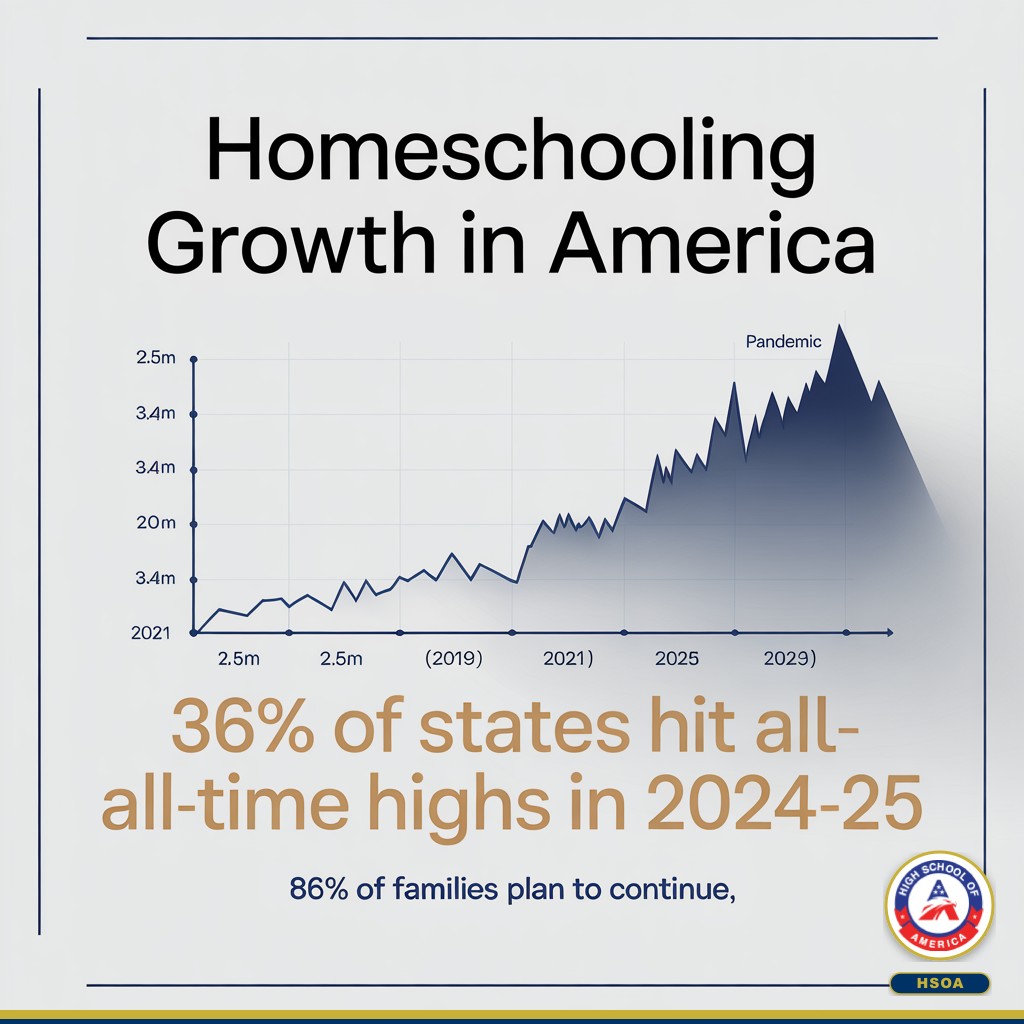
Homeschooling had 2.5 million students in 2019. The pandemic pushed that to roughly 5 million by 2021. Skeptics predicted a mass return to classrooms once buildings reopened.
That did not happen.
The 2024-25 school year saw 3.4 million homeschooled students, growing at 4.9% per year, nearly three times the pre-pandemic growth rate. 36% of reporting states recorded their highest homeschool enrollment numbers ever, surpassing even pandemic peaks. This is not families who started homeschooling in a panic and never switched back. This is families who tried it, discovered it worked, and stayed.
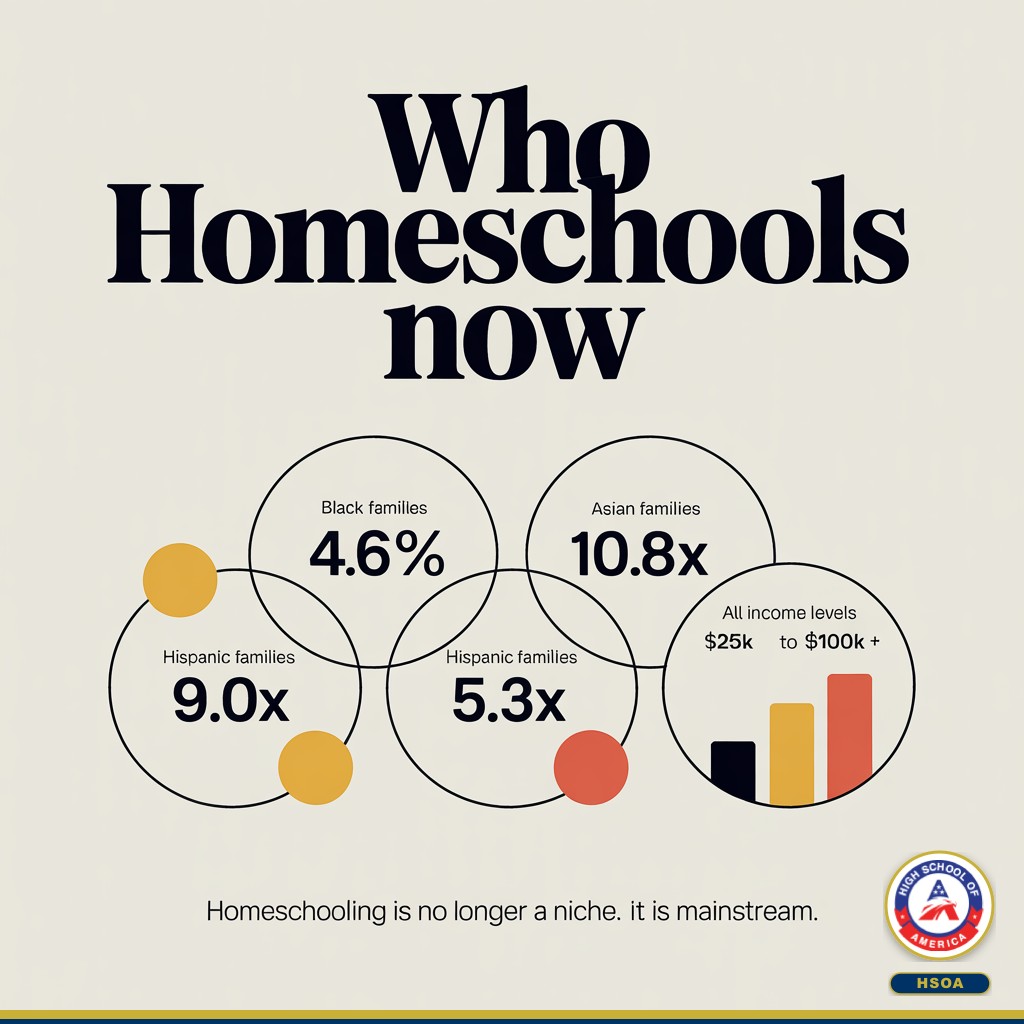
The demographics have shifted dramatically. A decade ago, homeschooling was predominantly white, Christian, and suburban. That is no longer true. 41% of homeschool families are now non-white. Black households increased by a factor of 9.6x. Asian households by 10.8x. Hispanic households by 5.3x. Homeschooling now cuts across every income level: a third of families earn over $100,000, and 20% earn under $25,000.
The reasons families cite have not changed much: 83% express concern about their child’s school environment, 75% want to direct values instruction, and 72% want more emphasis on family life (Pew Research, 2025). But the practical triggers are more varied than surveys capture. A military family that PCSes every two years. A nurse working 12-hour shifts who cannot make the 3:15 pickup. A student athlete training 20 hours a week. A teenager with anxiety who performs better without 1,200 students in a hallway.
There is no single “homeschool family” profile. There are 3.4 million families with a specific problem that homeschooling solves.
The Paperwork Takes 15 Minutes. Not 15 Days.
The biggest myth about starting homeschool is that it requires a bureaucratic marathon. In most states, the total paperwork is a single form. In 11 states, there is no form at all.
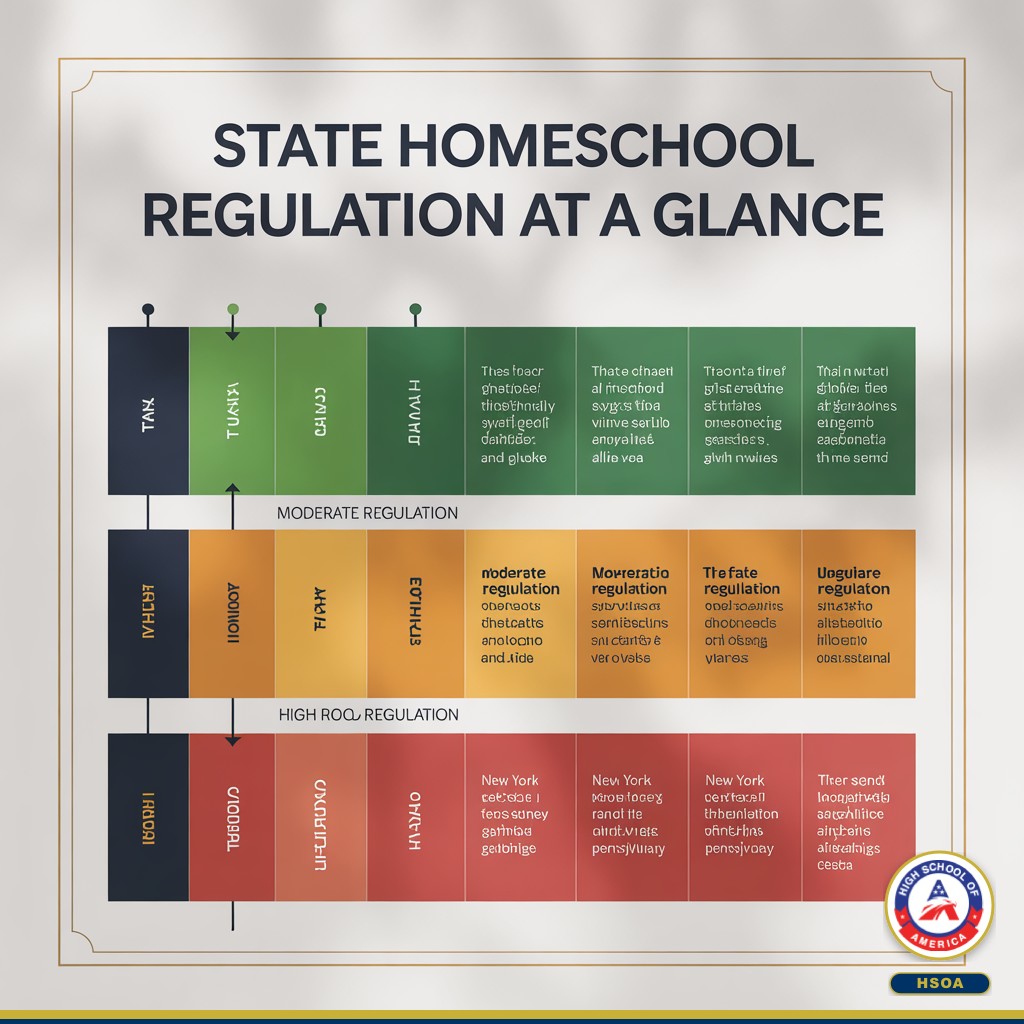
Low-Regulation States (No or Minimal Filing)
Texas: No form. No filing. No notification. You withdraw your child and begin. The state requires reading, spelling, grammar, math, and good citizenship. Nobody reviews or approves your curriculum. 195,000 Texas families homeschool under this framework.
Alaska, Idaho, Oklahoma, Missouri, Iowa, Illinois, Indiana, Michigan, New Jersey, Connecticut: Same story with minor variations. Little to no paperwork. You start when you are ready.
Moderate-Regulation States
Virginia: File a Notice of Intent with your local school division by August 15. One page: your child’s name, your qualification, your intended curriculum. Enrolling in an accredited program checks the curriculum box automatically. Evidence of progress due by August 1 of the following year: standardized test (4th stanine or above) or portfolio evaluation. That is the entire annual obligation.
Florida: Notify your county superintendent within 30 days. Annual evaluation by a certified teacher or standardized test. Simple.
California: File a Private School Affidavit online between October 1 and 15, or enroll through a public charter or private school satellite program. 300,000 California families manage this process every year.
High-Regulation States
New York: Individualized Home Instruction Plan, quarterly reports, annual assessment. More paperwork, but tens of thousands of New York families handle it every year. It is manageable.
Pennsylvania: Notarized affidavit, portfolio review, and standardized testing in specific grades.
How to Actually Withdraw Your Child
Write a formal withdrawal letter to the school principal (email works, keep a copy). Then file your state’s homeschool notification if required. The withdrawal is a notification, not a request for permission. You do not need the school’s approval to educate your child at home. 11 states require no notification at all.
The Real Decision: Who Teaches Your Child?
Filing paperwork takes 15 minutes. Choosing how your student actually learns every day is the decision that shapes the next several years.
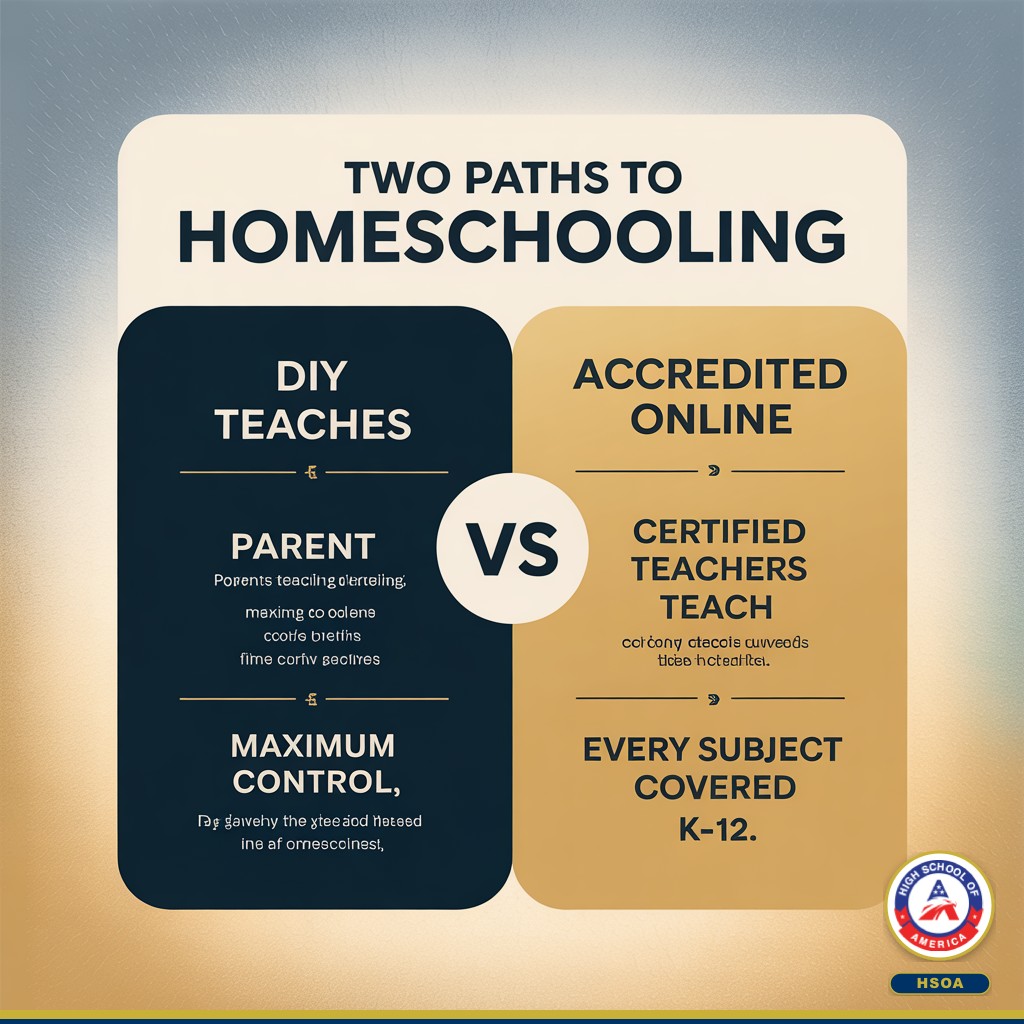
Path 1: You Teach (DIY Homeschooling)
You select curriculum materials. You deliver the lessons or sit beside your child while they work. You grade the work. You maintain records. You handle state compliance. Some families thrive here. The parent knows the child better than any teacher will, and that knowledge translates into instruction that fits perfectly.
The trade-offs are real. The transcript is parent-issued, not institutional. Some colleges and employers treat that differently than an institutional transcript. The parent carries 100% of the academic weight, which works until advanced math shows up or the student needs a lab science with proper equipment. Math is the #1 subject parents stress about, and most families end up outsourcing at least one subject by middle school.
Path 2: Certified Teachers Teach, You Supervise (Accredited Online)
Your student enrolls in an accredited online home school program with certified teachers, structured coursework, and an institutional transcript. The school handles curriculum, instruction, grading, feedback, and record-keeping. Your student works at home, on a flexible schedule they control, but with professional educators behind every course from the first days of kindergarten through senior year.
You stay involved. You see every grade on the parent dashboard. You are not outsourcing your child’s education. You are partnering with people who do this for a living. The transcript comes from an accredited institution, which means college admissions, military enlistment, and employers process it without questions.
Be Honest With Yourself
Neither path is wrong. But they are not the same, and pretending they are leads to frustration six months in. If you want maximum control and are willing to do the teaching work, DIY is powerful. If you want the flexibility of homeschooling with the credentialing and instruction of a school, an accredited program is the smarter choice. Many families start DIY and switch to accredited when the subjects get harder or they realize the transcript matters.
The Deschooling Period Nobody Warns You About
Every “how to start homeschooling” article skips this. It matters more than any paperwork.
Your child has spent years in an institution that tells them when to sit, when to stand, when to eat, when to speak, and when to be silent. Removing those structures overnight creates disorientation before it creates freedom. The rule of thumb in the homeschool community: one month of deschooling for every year your child was in traditional school. A student who spent five years in public school may need five months before formal homeschooling feels natural.
During deschooling, very little formal “schoolwork” happens. The student reads what they want. They explore hobbies. They sleep. They get bored (boredom is productive, not a problem to solve). They gradually learn that curiosity is not something that gets punished for being off-topic.
Parents need to deschool too. Your school-shaped expectations often take longer to shed than your child’s. You will feel guilty when your student is not “doing school” at 10 AM on a Wednesday. You will worry they are falling behind. They are not. They are recalibrating. So are you.
Tell Your Child About the Transition
Be honest that homeschooling has a break-in period. Frame it as an adjustment, not a vacation. Set a loose schedule with minimal academics (reading, journaling, light math) and build intensity gradually. The families who skip deschooling and jump straight into six hours of workbooks on day one are the families who burn out by Thanksgiving.
What a Homeschool Day Actually Looks Like
Nobody writes about this part with any honesty. Here it is.
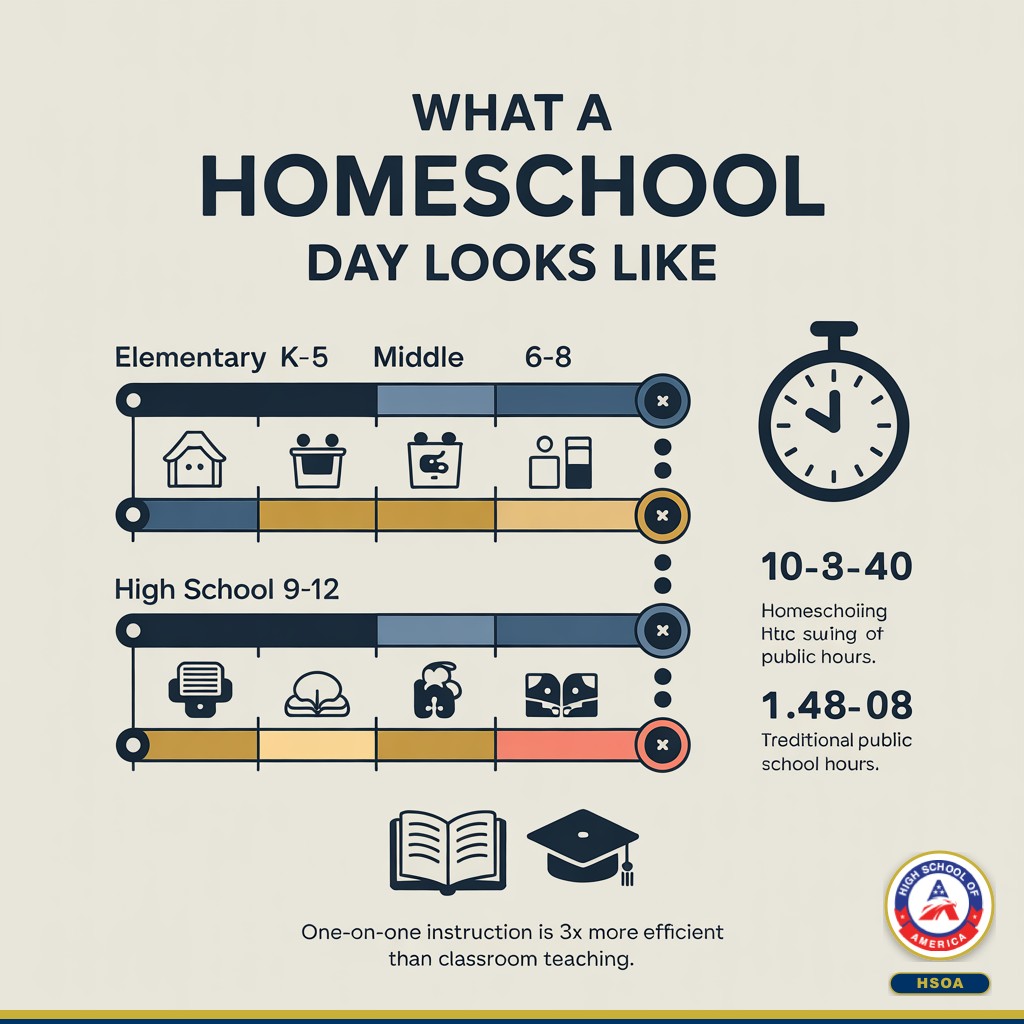
Elementary (K-5): 1.5 to 3 hours of focused instruction. Reading, writing, math. Science and social studies woven into projects and read-alouds. The reason it takes a fraction of a classroom day: you are not managing 25 students, waiting for transitions, or re-explaining material for the third time. One-on-one instruction is dramatically more efficient. Your student finishes by lunch. The afternoon is theirs.
Middle School (6-8): 2 to 4 hours. Growing independence. Less hand-holding on reading as students become stronger. More structured science and history. This is where study habits form and where structured online programs shine, because a student who excels in English but struggles in math gets the right amount of time on each without one holding back the other. Explore 7th grade and 8th grade programs to see what middle school coursework looks like.
High School (9-12): 4 to 6 hours. College-prep coursework: math through Algebra II, lab sciences, U.S. and world history, government, economics, and dozens of electives. Browse 9th grade, 10th grade, 11th grade, or 12th grade course options. High school is where an accredited program earns its value, because the transcript needs to hold up to college scrutiny.
The First Two Weeks
Week 1 is weird. The house is quiet at 9 AM on a Tuesday. There is no bus to catch. No teacher telling anyone to sit down. The freedom feels disorienting before it feels liberating. Do not panic. Do not recreate a classroom with a whiteboard and a bell. That defeats the purpose.
By week 2, something shifts. The student stops asking “is this going to be on the test?” and starts actually engaging with the material. The parent stops watching the clock and starts watching the learning. The kitchen table feels less like a makeshift classroom and more like the place where your family figured something out.
Managing Multiple Kids at Different Grade Levels
This is the question families with two or three children always ask, and the answer is simpler than it seems.
Teach together, differentiate depth. History, science, and literature can be taught family-style to all ages simultaneously. Read about the Civil War together. The 8-year-old draws a map. The 12-year-old writes a paragraph. The 15-year-old writes an essay. Same topic, three levels of engagement.
Math and reading are individual. These are skill-based subjects where each child works at their own level. An online program with independent course tracks handles this automatically because each student’s coursework runs on its own timeline.
Build independence progressively. A kindergartner needs you beside them. A 10-year-old can work independently for 30-minute blocks. A high schooler can manage their own day with check-ins. Each year, the children become more self-directed, which frees you to focus attention where it is needed.
Write Tomorrow’s Assignments Tonight
Spend 10 minutes each evening writing each child’s next-day assignments in a notebook or on the whiteboard. Older kids start independently in the morning while you work with younger ones. This single habit eliminates 80% of the “what do I do next?” interruptions.
The College Question, Answered Definitively
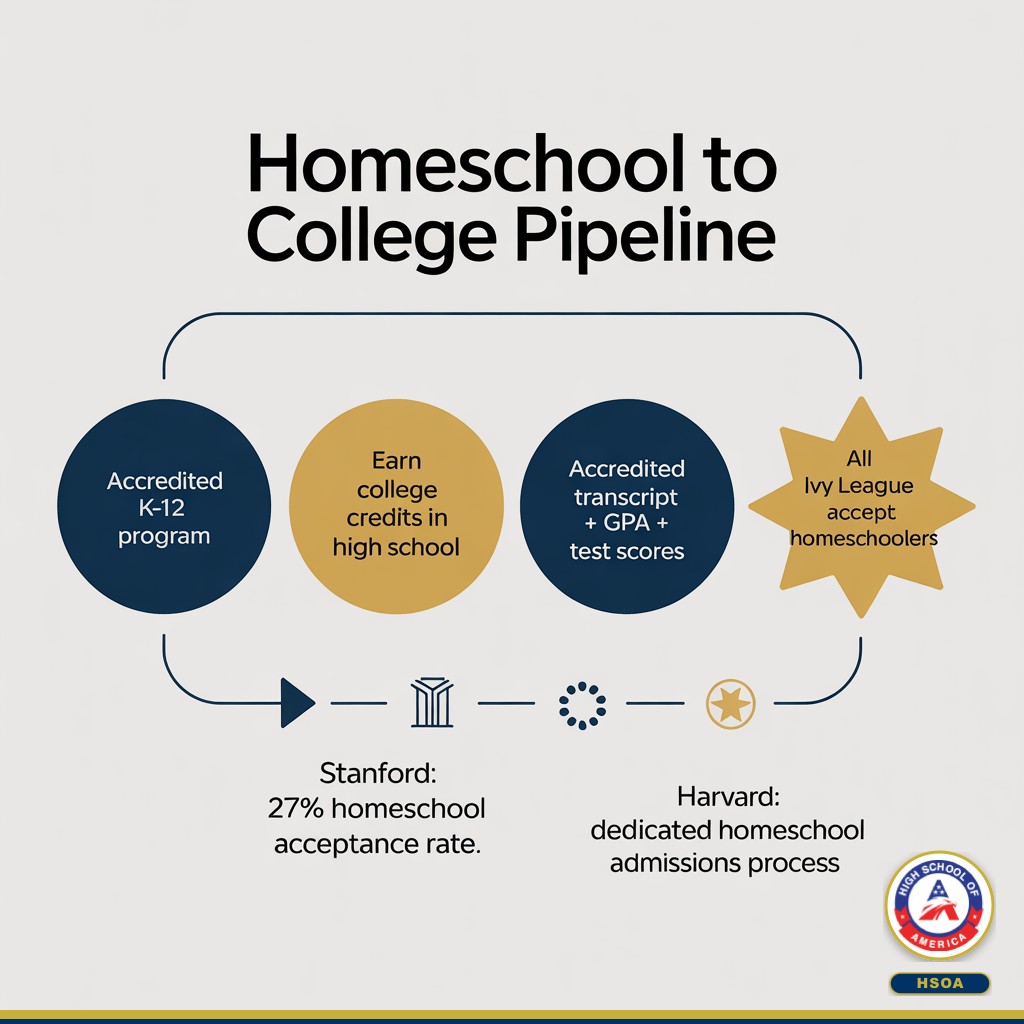
Every university in America accepts homeschooled applicants. All eight Ivy League schools. Stanford. MIT. Your state university. Your community college. This is not a debate. It is settled.
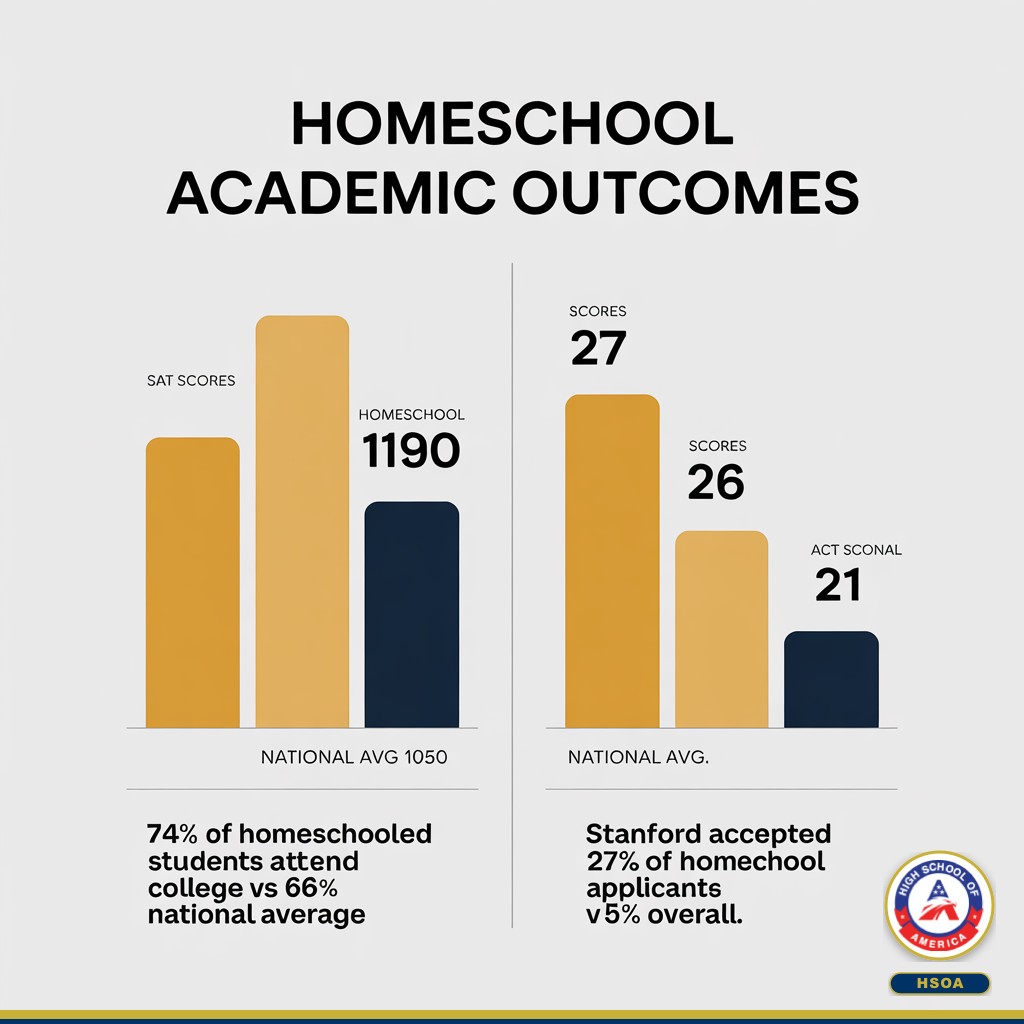
Stanford accepted 27% of homeschool applicants in one studied cohort, compared to 5% overall. Harvard has a dedicated homeschool admissions process. Colorado State actively encourages homeschool applications. The University of Dallas and Houghton University have homeschool-specific admissions counselors.
Homeschooled students average 1,190 on the SAT versus a 1,050 national average. 26 on the ACT versus 21. 74% attend college versus 66% of public school students. They outperform in college GPA, retention, and graduation rates.
The question is not whether colleges will accept your homeschooled student. The question is whether your student will have the transcript, GPA, and the right number of credits to be competitive. An accredited program with certified teachers produces those automatically. A parent-maintained portfolio requires you to build the transcript yourself, which is doable but adds significant work.
Dual Enrollment: Start College While Still in High School
Most states allow homeschool juniors and seniors to take community college courses for dual credit. A student using a program that lets them set their own daily schedule can complete morning coursework and take afternoon classes at the local community college. The self-paced schedule makes this coordination possible in a way a traditional school schedule cannot.
Tim Tebow Laws: 31 States Allow Public School Sports
Named after Tim Tebow, who was homeschooled and played public school football before winning the Heisman Trophy. 31 to 33 states now allow homeschooled students to participate in public school sports and extracurriculars. Requirements typically include meeting the same academic standards as public school athletes. If your student wants to play varsity basketball while homeschooling, check your state’s law. It may already be legal.
What This Costs (Including What You Stop Paying)
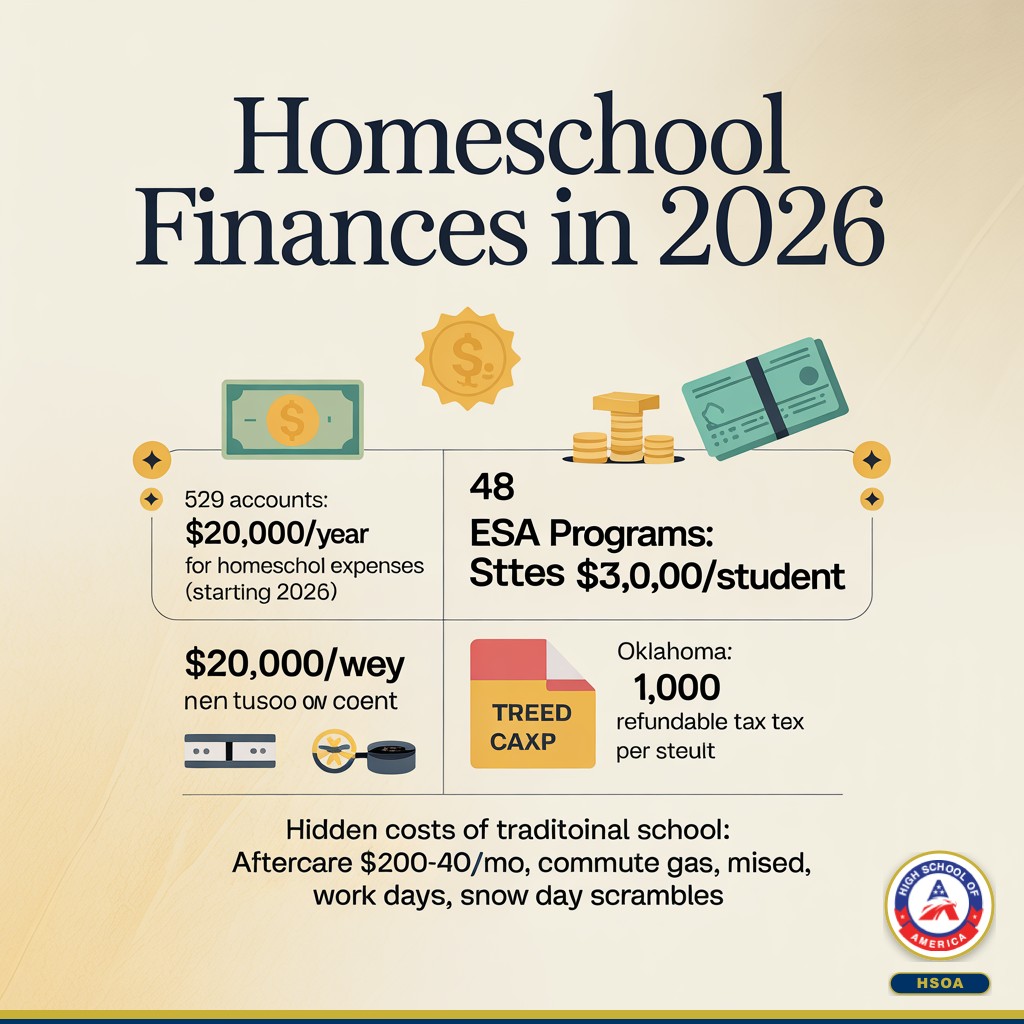
DIY homeschooling ranges from nearly free (library books, Khan Academy, free printables) to $2,000-$3,000 per year for packaged curricula with lesson plans and materials.
Accredited online programs vary. High School of America has plans to fit any family’s budget, including pay-in-full discounts. Call (888) 242-4262 to discuss what works for your family.
New in 2026: 529 Accounts Cover Homeschool
The One Big Beautiful Bill Act expanded 529 education savings account usage to cover homeschool expenses. Starting in 2026, families can use up to $20,000 per year from 529 accounts for homeschool costs, including curriculum, online programs, and educational materials. This is tax-advantaged money that was previously restricted to college and K-12 tuition at institutions.
ESA Programs in 18 States
18 states now offer Education Savings Accounts that fund homeschool expenses. Award amounts range from $3,000 to $15,000 per student annually. Arizona, Florida, Iowa, Utah, and West Virginia have universal programs with no income limits. Texas passed a $1 billion ESA program providing $10,000 per year for private school tuition and $2,000 per year for homeschool students.
What Nobody Calculates: The Hidden Costs You Stop Paying
After-school care: $200 to $400 per month. Gas for the daily commute. Lost income when a sick child means a missed shift. Snow day scrambles when school closes with two hours’ notice. Time off work for midday pickups, assemblies, and conferences scheduled during business hours. These costs are real. They just do not show up on a tuition bill. When you homeschool, most of them disappear.
10 Mistakes New Homeschool Families Make
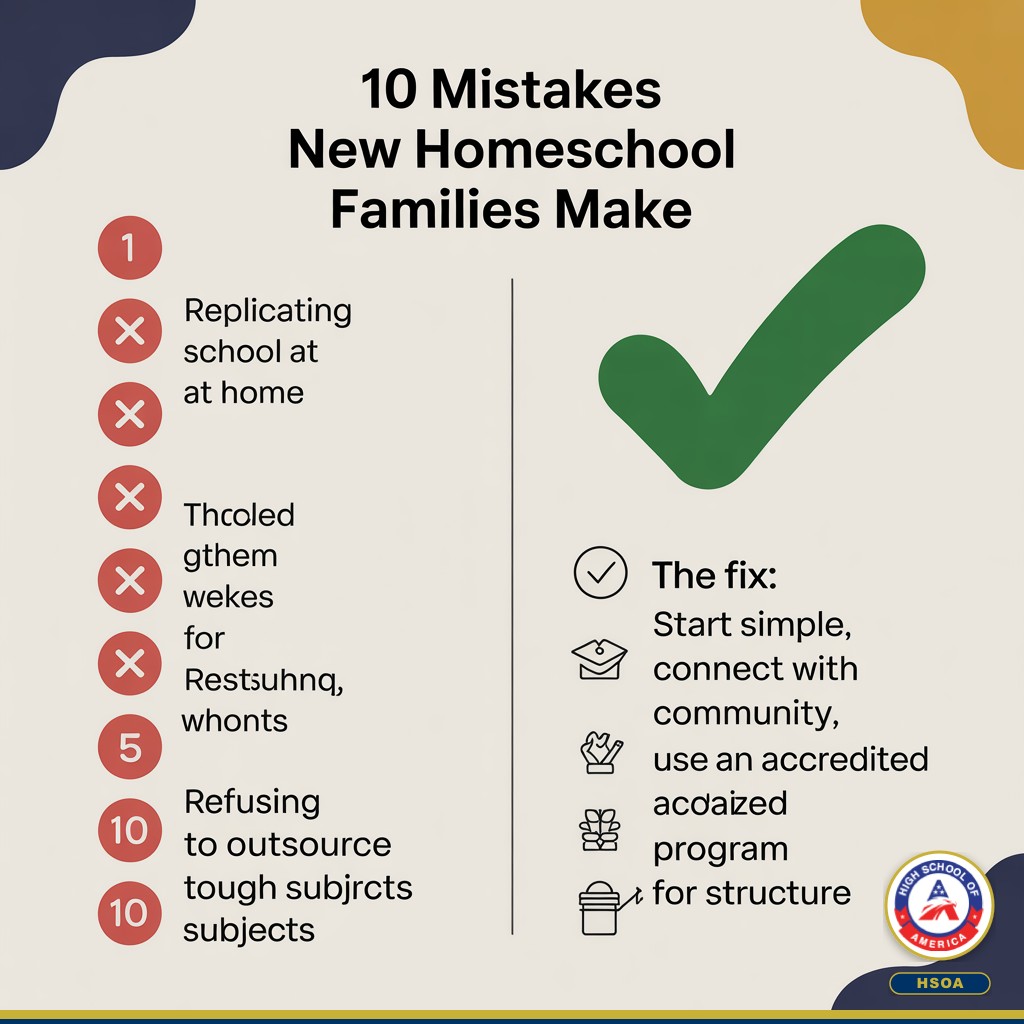
1. Replicating school at home. Setting up desks, creating bell schedules, assigning six hours of seat work. Homeschooling works because it is not school. One-on-one instruction is three times more efficient. Elementary school can be done in 1.5 to 3 hours. Trying to fill six hours leads to burnout.
2. Buying too much curriculum. New families panic-buy every curriculum they see. Start with just math and language arts for the first semester. Add other subjects gradually. Kids are often at different grade levels in different subjects. This is normal and actually a feature of homeschooling, not a bug.
3. Over-scheduling the first year. Filling every day with co-ops, art classes, gymnastics, field trips, AND cramming academics into mornings. Leave white space. The first year should be lighter than public school, not heavier.
4. Skipping the deschooling period. Jumping straight into rigid academics the day after withdrawing. One month of adjustment for every year in school. The families who skip this are the families who quit by February.
5. Ignoring state compliance requirements. Every state is different. Not knowing your rules can result in truancy concerns. Check before you start.
6. Going it completely alone. Refusing to outsource subjects, refusing to join a community, refusing to ask for help. The strongest homeschool families use a mix of parent teaching, online classes, co-ops, tutors, and community resources.
7. Comparing to traditionally schooled peers. Your child will not be on the same page, in the same book, at the same time as their public school peers. That is the entire point. Progress is measured against the child’s own trajectory.
8. Letting the curriculum drive you instead of the other way around. If a child does not understand material, pushing through to “finish the lesson” defeats the purpose. Back off, take breaks, circle back. Mastery matters more than completion.
9. Not keeping records from day one. Many families only realize they need records when applying to college or facing a legal inquiry. Start a simple attendance log and work samples folder from the first day. Five minutes daily. Nearly impossible to reconstruct retroactively.
10. Not planning for the tough subjects. You do not need to know calculus to homeschool a high schooler. But you do need a plan for when the hard subjects show up: advanced math, laboratory sciences, foreign languages. An accredited program with certified teachers behind every course handles this. Outsourcing protects the parent-child relationship. When you remove daily conflict over algebra, you preserve the joy of homeschooling.
Specific Guidance for Your Situation
Military Families
12% of military families homeschool, double the civilian rate. Military children move 6 to 9 times during a school career. An accredited K-12 online home school provides one school, one transcript, every duty station. Mid-year enrollment is open any day. The program is Military Tier 1 recognized. When PCS orders come, your student’s education does not skip a beat.
Working Parents (Both Full-Time)
It is possible. The key is choosing the right model. An online program with no mandatory live sessions lets students learn during the day while parents work, with evening check-ins via the parent dashboard. The program handles curriculum, instruction, grading, and record-keeping. Your job is to review progress after work, not to teach calculus at 7 AM before your commute.
Single-Parent Families
Primary challenges: time and money. Solutions: use structured “open and go” curriculum that requires minimal prep. An accredited online program handles the teaching. Four-day school weeks with Fridays for errands and enrichment. ESA programs in 18 states provide $3,000 to $15,000 per year. HSLDA offers scholarship funds for single-parent families. Build community aggressively through co-ops and online groups. You are not doing this alone even if it feels that way.
Families with Special Needs
No state requires homeschoolers to have an IEP or 504 plan. But you can still pursue those documents for formal accommodation tracking. Some states allow homeschooled children to receive free special education services (speech therapy, OT, PT) through the local public school district. Self-paced programs let students take the time they need: extended test time, quiet environment, sensory breaks, scheduling around therapy appointments. Homeschooling is not a workaround for special needs. It is often the ideal fit.
The Only Step That Matters
You can read homeschool blogs for six more months. You can join Facebook groups and ask the same questions everyone asks. You can buy a planner and color-code a schedule you will abandon by October.
Or you can start.
File the paperwork. Enroll in a program or choose your curriculum. Clear a space at the table. Open the laptop. The first day is awkward. The second week is better. By the second month, you will not understand why you waited.
Ready to Start?
High School of America is an accredited K-12 online home school with certified teachers for every grade, elementary through high school. Year-round enrollment means the start date is whenever you decide it is. Want to see if it is right for your family? Read the guide for students and parents or request an info packet.