
The question underneath most Maine withdrawals is not about paperwork. It is whether a fifteen year old loses the team, the band and the chemistry lab on the day you sign the letter. In Maine the answer is written into the statute, and it is no.
Students receiving home-school instruction are eligible to try out for extracurricular activities sponsored by the local school unit
Title 20-A, Section 5021
Maine put the home instructed student back into the building on purpose. Under Section 5021 that student may enroll in day school classes, is eligible for cocurricular activities, may try out for extracurricular activities, is eligible for special education services, and may use the school’s facilities, equipment, textbooks and library books.
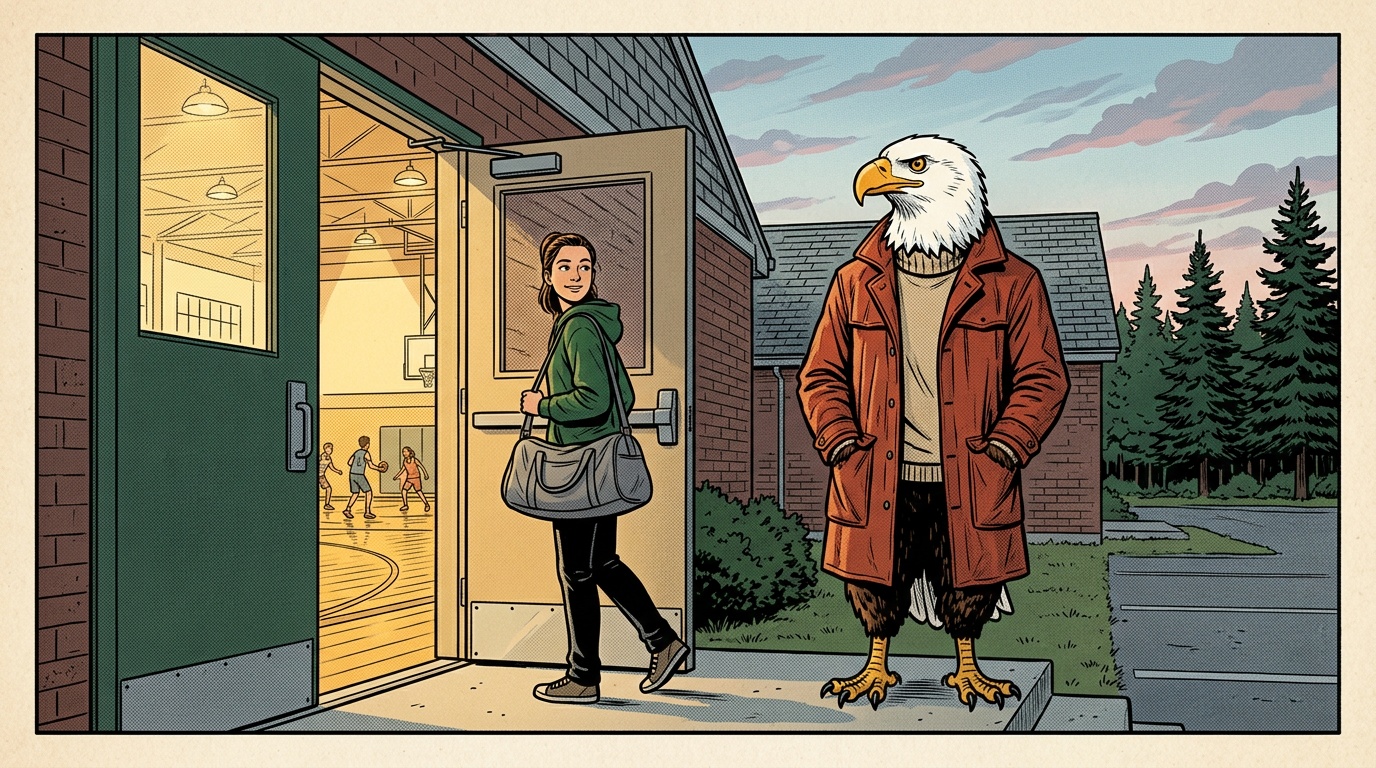
The two doors work differently, and the difference matters
These are not one rule. Getting them the wrong way round is how a family either asks permission it never needed or assumes a yes it has to apply for.
- Day school classes: apply in writing, and get it in writing
The student applies in writing to the superintendent and receives written approval. The statute limits the refusing rather than granting the asking: approval may not be unreasonably withheld. Conditions attach, including satisfactory prior academic achievement, following the same behaviour, attendance and classroom rules as everyone else, completing the assignments and tests, and arranging transport. - Extracurricular tryouts: no superintendent approval
For trying out for an extracurricular activity sponsored by the local school unit, the superintendent’s approval is not required. The student applies in writing and the tryout is the tryout. - Cocurricular activities
Section 5021 makes the home instructed student eligible for these as well, on the requirements the section sets out. - Special education services
Eligibility continues under federal regulations, in accordance with Section 5001-A. - Facilities, equipment, textbooks and library books
Available on the same basis as other students, subject to the conditions in the section on availability, disruption and returning what you borrow.
One honest warning about sport.
Section 5021 is the law. An athletic association’s eligibility rules are not the law, and they can carry conditions of their own that the statute says nothing about. If a team place is part of why you are staying connected to the school, ask the athletic director what their association requires, in writing, before the season rather than during it. This page can tell you what Maine’s statute provides. It cannot tell you what a sporting body’s handbook says this year.
Why the school has a reason to say yes
This is the part almost nobody knows, and it changes the tone of the conversation with a principal. The district is paid for the time your child spends on site. Section 5021 entitles the school administrative unit to state subsidy for a student who takes on site academic courses without being a full time student, at a rate set in increments of 0.25 up to 1.0 full time equivalent, based on the average amount of time per day the student receives on site academic services. Units keep a count of those students and include their full time equivalency in the annual count.
So a request to sit two classes is not a favour you are asking. Maine built the funding to match, which is worth knowing when you are the one making the call.
The filing itself, which is short
a written notice of intent to provide home instruction simultaneously to the school officials of the administrative unit in which the student resides and to the commissioner within 10 calendar days of the beginning of home instruction
Title 20-A, Section 5001-A, subsection 3
Read that twice, because two details in it are easy to miss. It goes to two places at once, the local administrative unit and the commissioner, and the clock runs from the beginning of home instruction rather than from any approval. There is no application here and nothing to be granted. Maine notifies; it does not license.
The notice carries your name, signature and address, the student’s name and age, the date the program begins, and two assurances: at least 175 days annually of instruction in English and language arts, mathematics, science, social studies, physical education, health education, library skills and fine arts, with Maine studies in one grade from 6 to 12 and computer proficiency in one grade from 7 to 12, and an assurance that the year will be assessed.
Then once a year, by September 1
Every subsequent year you file a letter saying you intend to continue, and you enclose one annual assessment. Maine gives you five ways to produce it, and the fifth is the one no other state in this series has.
| The five annual assessments | Who actually does the assessing |
|---|---|
| A standardized achievement test | Through your administrative unit, or other arrangements approved by the commissioner |
| A test developed by school officials | Your local unit, made appropriate to your program |
| Review and acceptance of progress | Someone holding a current Maine teacher’s certificate |
| A portfolio presentation | A local area homeschooling support group whose membership for this purpose includes a currently certified Maine teacher or administrator |
| Review by a local advisory board | Selected by the superintendent, and made up of one administrative unit employee and 2 home instruction tutors |
Count the seats on that last one. The superintendent picks the board, and the statute then fixes its composition so that two of the three people on it are home instruction tutors. The school is present and the school is outnumbered, by law, on the panel that reviews your year.
One more thing worth saying plainly, because worry fills the gap when a statute is silent: the test option carries no percentile and no passing mark. Maine sets no cut score in this section. The requirement is that the year is assessed and the result is filed.
Working out what to keep and what to let go?
Fifteen minutes on the phone covers the notice of intent, which classes are worth asking to keep, and how the September letter fits around a course taken at the school. No records required to have the conversation, and deciding against it costs nothing.
Where Maine sits in the series
| State | What happens to the school connection |
|---|---|
| Utah | The board sends back a certificate excusing attendance, and that is the end of it |
| Wisconsin | The department neither approves nor monitors the program |
| Oklahoma | Nothing is filed and nothing comes back |
| Maryland | You pick who reviews the year, the school system or an umbrella |
| Maine | Classes, tryouts, services, books and the building stay available, and the district is funded for the hours |
What leaving actually requires
- A withdrawal letter to the school, in writing
Name the last day of attendance and deliver it so receipt can be shown. The school keeps your child on its roll until somebody tells it otherwise, and an unexplained empty seat is what starts a truancy call. - The notice of intent, to both offices
Within 10 calendar days of the day instruction begins, to your administrative unit and to the commissioner. Send them the same day so the word simultaneously takes care of itself. - A dated copy of everything you sent
Yours to keep until the program concludes, and produced to the commissioner on request. This is the only part of the record you control. - The transcript and immunization records
Request both in the withdrawal letter, along with course descriptions for anything half finished. Schools release them readily while the student is fresh in mind and slowly a year later. - A separate written request for anything you want to keep attending
The class request goes to the superintendent. The tryout does not need that approval. Two different asks, two different people, and neither one belongs inside the withdrawal letter. - A calendar entry for September 1
The continuation letter and one assessment. It is the only recurring obligation Maine puts on you.
Doing it in order
Pick the last day and the first day
The last day at the public school and the first day of instruction at home, ideally adjacent, so the student is never marked absent and never off every roll at once.
Send the withdrawal letter so receipt can be shown
Email the principal and the registrar together; the reply is your proof. Ask in the same letter for the transcript, immunization records, and course descriptions for any course in progress.
File the notice of intent within 10 calendar days
To the administrative unit and to the commissioner. The clock started on the first day of home instruction, not on the day you posted the withdrawal letter.
Make the participation requests separately
A written application to the superintendent for any day school class, and a written application for a tryout, which does not need the superintendent’s approval. Keep them apart from the withdrawal so nobody reads one as conditional on the other.
Choose the assessment route early, not in August
Booking a certified teacher or getting on a support group’s calendar in June is a different experience from doing it in the last week of the holiday.
The withdrawal letter, ready to send
Short is correct. This goes to the school your child attends now, addressed to the principal and copied to the registrar. The notice of intent is a separate document, goes to two other places, and does not replace this one.
Dear Principal [name],
This letter is formal notice that our child, [student full name], date of birth [DOB], currently in grade [grade], is withdrawn from [school] effective [last day of attendance]. Beginning [start date], [he/she/they] will receive home instruction, and written notice of intent is being provided to [administrative unit] and to the Commissioner of Education under Title 20-A, Section 5001-A.
Please update your enrollment records accordingly and confirm receipt of this letter by reply. Please also send a complete transcript, immunization records, and course descriptions for any course in progress to [address / email].
Thank you for your help.
[Your name]
[Address]
[Telephone]
What we can and cannot tell you
High School of America is an accredited private school based in Florida, not a Maine school. This page has quoted the notice of intent clause, said which two offices it goes to and inside what window, set out the 175 days and the subjects, listed all five annual assessments and named the composition of the advisory board, and quoted what Section 5021 keeps open at the local school. What it will not do is tell you which route to take, or suggest that enrolling here satisfies or replaces the notice of intent. That notice is owed to your administrative unit and to the commissioner whatever school your child attends next, and the choice belongs to your household, least of all to a school that gains from your enrollment.
Two limits worth stating rather than implying. Nothing here promises you a place in any class: a superintendent’s approval is a decision, and the statute constrains an unreasonable refusal without turning the request into a right. And nothing here describes an athletic association’s rules, which are not part of the statute and change without it. Ask the school in writing, and keep the reply.
The home instruction section is at Title 20-A, Section 5001-A on the Maine Legislature’s site, the participation section is at Title 20-A, Section 5021, and the state’s own requirements page sits at the Maine Department of Education. The wider picture sits on the requirements state by state, and if you are early enough to still be deciding, the three-route comparison weighs this against staying exactly where you are.