
Most summaries of West Virginia’s home school law quote half a sentence, and it is the wrong half. The whole sentence is the most generous thing any state in this series says about a child’s test score.
within or above the fourth stanine or shows improvement from the previous year’s results
W. Va. Code 18-8-1
Read the word or. There are two ways for your child’s progress to be acceptable, and only the first one is a line on a chart.
The fourth stanine starts at the 23rd percentile, which is the number to hold on to, because a stanine is a nine point scale almost no parent has ever needed before. So a child at or above the 23rd percentile has met the standard.
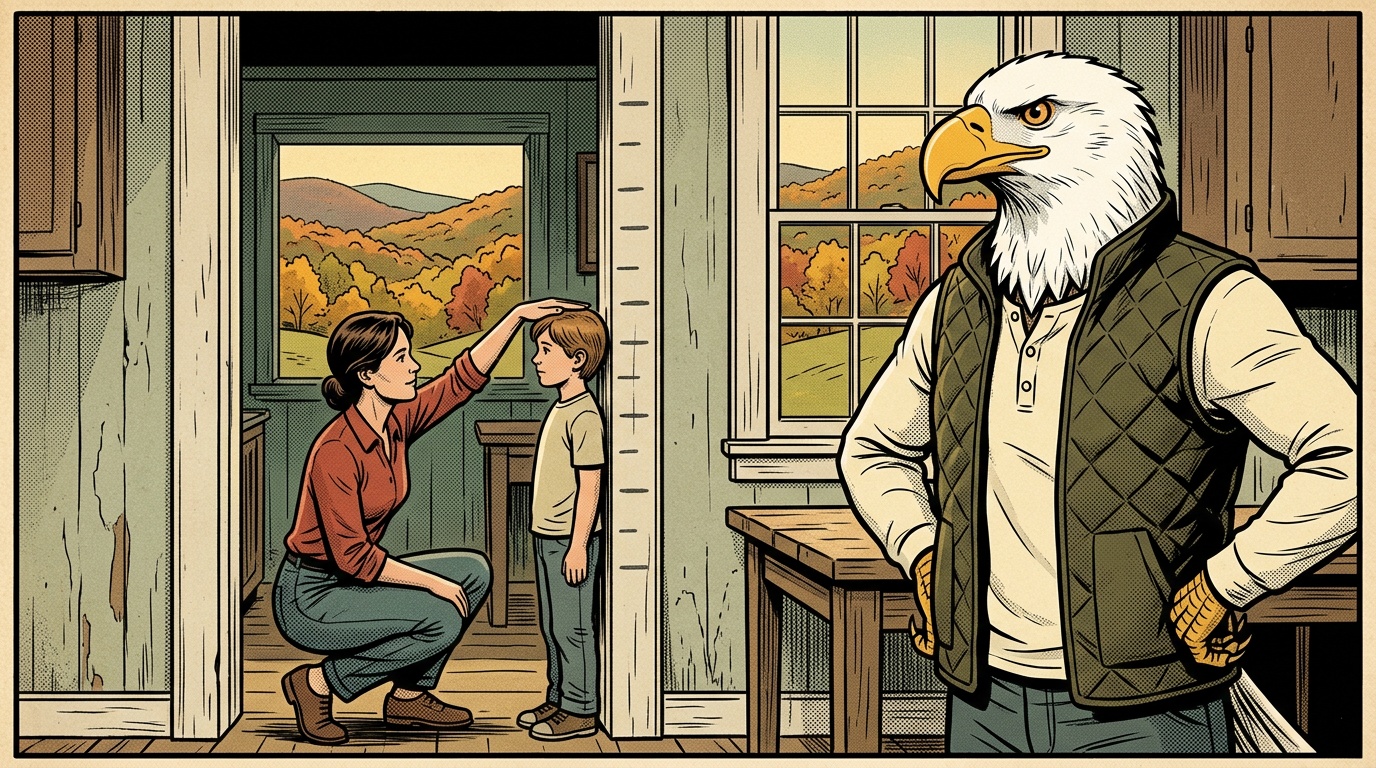
And so has a child below it who did better than they did last year. Improvement, on its own, satisfies the statute as written. Nothing else in this series works that way.
Why that half matters more than the number
Families arrive at home education from every direction, and a good share of them arrive because school was not working. A child two years behind on paper is exactly the child whose parents are reading this page, and West Virginia has already answered the question they are afraid to ask.
The state is not asking your child to be average this year. It is asking them to be further along than they were.
Which is why the first year’s result is worth keeping carefully.
It is the baseline the improvement half is measured against. Keep every assessment for three years, which the law asks anyway, and the second year’s answer is arithmetic rather than anxiety.
Assess every year. Hand it in four times.
Both halves of that catch people, in opposite directions.
You assess every year you home school, and you keep the result. You submit it to the county superintendent only at the end of grades 3, 5, 8 and 11, by June 30. A parent who assumes they file annually does paperwork nobody asked for. A parent who assumes they never file is surprised in grade 3.
Two ways to produce it. A nationally normed standardized test, published or normed within the last ten years and given by someone qualified under that test’s own published guidelines. Or a written statement from a certified teacher who has reviewed a portfolio of your child’s work and found the progress in keeping with the child’s abilities. Both cover the same five subjects.
The notice, and it is only once
Presented to your county superintendent or county board when you begin, not every August. It carries your child’s name, address and age, evidence that whoever teaches holds a high school diploma or its equivalent, an assurance that instruction will cover reading, language, mathematics, science and social studies, and an assurance that the child will be assessed annually.
Where West Virginia sits in the series
Oregon is the near miss, and worth naming so the difference is clear. Oregon’s testing clause also names a percentile. The two numbers do opposite work.
| State | What the number does | Is improvement an answer? |
|---|---|---|
| Oregon | Below the 15th percentile means another examination within a year | No |
| South Carolina | Statewide testing under one of its three sections | Not addressed |
| Tennessee | Testing in grades 5, 7 and 9 | Not addressed |
| Utah | No testing at all | Not applicable |
| Washington | Annual test or assessment, kept by the family | Not addressed |
| West Virginia | Fourth stanine, the 23rd percentile | Yes. It is written into the statute |
Working out what West Virginia will ask of you?
Fifteen minutes on the phone covers the withdrawal letter, what goes in the one-time notice, and which of the two assessment routes suits a child who has had a hard year. No records required to have the conversation, and deciding against it costs nothing.
What leaving actually requires
- A withdrawal letter to the school, in writing
Name the last day of attendance and deliver it so receipt can be shown. The school keeps your child on its roll until somebody tells it otherwise, and an unexplained empty seat is what starts a truancy call. - The notice of intent to your county superintendent
Once, when you begin. Include the child’s name, address and age, evidence of the diploma or its equivalent, and the two assurances. Keep a dated copy. - A plan that covers the five subjects
Reading, language, mathematics, science and social studies. Named in the statute, and short enough to check against. - A first assessment, treated as a baseline
Whichever route you pick, this year’s number is what next year’s improvement is measured against. That makes the first one worth doing properly rather than late. - Three years of assessments in one place
The law asks you to keep them, and the improvement clause is the reason you will want them anyway. - The transcript and immunization records
Request both in the withdrawal letter, along with course descriptions for anything half finished. Schools release them readily while the student is fresh in mind and slowly a year later.
Doing it in order
Read the progress clause yourself
It is one sentence and it is the sentence that decides how the rest of your year feels. Most summaries quote the stanine and stop, which is how families end up believing a threshold is the only way through.
Pick the last day and the first day
The last day at the public school and the first day of instruction at home, ideally adjacent, so the student is never marked absent and never off every roll at once.
Send the withdrawal letter so receipt can be shown
Email the principal and the registrar together; the reply is your proof. Ask in the same letter for the transcript, immunization records, and course descriptions for any course in progress.
File the one-time notice with the county
The county superintendent or the county board, when you begin. It does not repeat, so file it properly once and keep the copy.
Book the first assessment early in the year
Not in June. Booking a qualified administrator or a certified teacher for a portfolio review is easier in the autumn, and an early baseline gives the improvement clause room to work.
The withdrawal letter, ready to send
Short is correct. This goes to the school your child attends now, addressed to the principal and copied to the registrar. The notice to the county superintendent is a separate document and does not replace this one.
Dear Principal [name],
This letter is formal notice that our child, [student full name], date of birth [DOB], currently in grade [grade], is withdrawn from [school] effective [last day of attendance]. Beginning [start date], [he/she/they] will receive home instruction, and notice of intent is being provided to the [county] County Superintendent under W. Va. Code Section 18-8-1.
Please update your enrollment records accordingly and confirm receipt of this letter by reply. Please also send a complete transcript, immunization records, and course descriptions for any course in progress to [address / email].
Thank you for your help.
[Your name]
[Address]
[Telephone]
What we can and cannot tell you
High School of America is an accredited private school based in Florida, not a West Virginia school. This page has quoted both halves of the progress clause, put a number on the fourth stanine, named the five subjects, said when the notice is filed and when results are submitted, and set out both assessment routes. What it will not do is tell you which route to take, or suggest that enrolling here satisfies or replaces your notice or your annual assessment. The notice is owed to your county superintendent whatever school your child attends, and West Virginia names who may administer the assessment. Ask the county in writing, and keep the reply.
If you want a person to talk it through with, that is what the counselor call is for, and it is not a sales appointment. Bring whatever records you have, or none.
The section is at Justia for W. Va. Code 18-8-1, and the state’s own home school code page sits at the West Virginia Department of Education. The wider picture sits on the requirements state by state, and if you are early enough to still be deciding, the three-route comparison weighs this against staying exactly where you are.