Redding Online Home School K-12
Redding sits at the north end of the Sacramento Valley. Mt. Shasta rises forty miles north. The Sacramento River runs through downtown. Shasta Lake holds the watershed above. The geography defines the city, and an accredited K-12 online home school built for Redding respects it. The school year matches the calendar a North-state family actually keeps.
Or request information. No commitment. No spam.

Plate I · Sundial Bridge40°35’04″N · 122°23’29″W
Five Households on the North-State Map
Redding families come to this school for a handful of specific reasons. A counselor on a fifteen-minute call usually hears them by minute five.
The calendar set by hunting, fishing, and the lake
Shasta Lake in summer. The Sacramento River year-round. Fall hunting seasons. Snow at the higher elevations through spring. North-state outdoor families plan their weeks around the watershed and the seasons, not the bell schedule. The K-12 work absorbs all of it.
Twelve-hour rotations at Mercy or Shasta Regional
Mercy Medical Center and Shasta Regional anchor the North-state healthcare corridor. Twelve-hour rotations, swing shifts, the on-call cycle. The school day flexes to the parent’s actual hours so the student keeps moving forward regardless of which shift the household is running.
After the Carr Fire, the family that’s still moving back
The 2018 Carr Fire displaced thousands of Redding families. Some are still rebuilding. Others moved farther out, then closer back. The cumulative record updates without resetting when the address does, so a year of upheaval doesn’t cost the student a year of school.
Cal Fire seasons, working ranches in Shasta County
Cal Fire seasonal employment. Working ranches in Cottonwood, Shingletown, Anderson. Forestry contractors. Long days when the work is on, slower stretches when it isn’t. The school year adapts to the seasonal rhythm instead of asking the family to abandon it.
Wednesday ministry, Sunday gatherings, mid-week mission prep
Redding has one of the largest faith-community footprints of any city its size in California. Weekday programs, weekend service, mission trips, retreats. The K-12 work sits inside the congregation calendar instead of competing with it.
The plan that doesn’t need a metro to count
Redding is three hours north of Sacramento, five from the Bay Area. The K-12 plan at HSOA is built so a North-state family doesn’t have to drive to a metro to get serious academic work. The substance is the same here as it is anywhere on the California map.
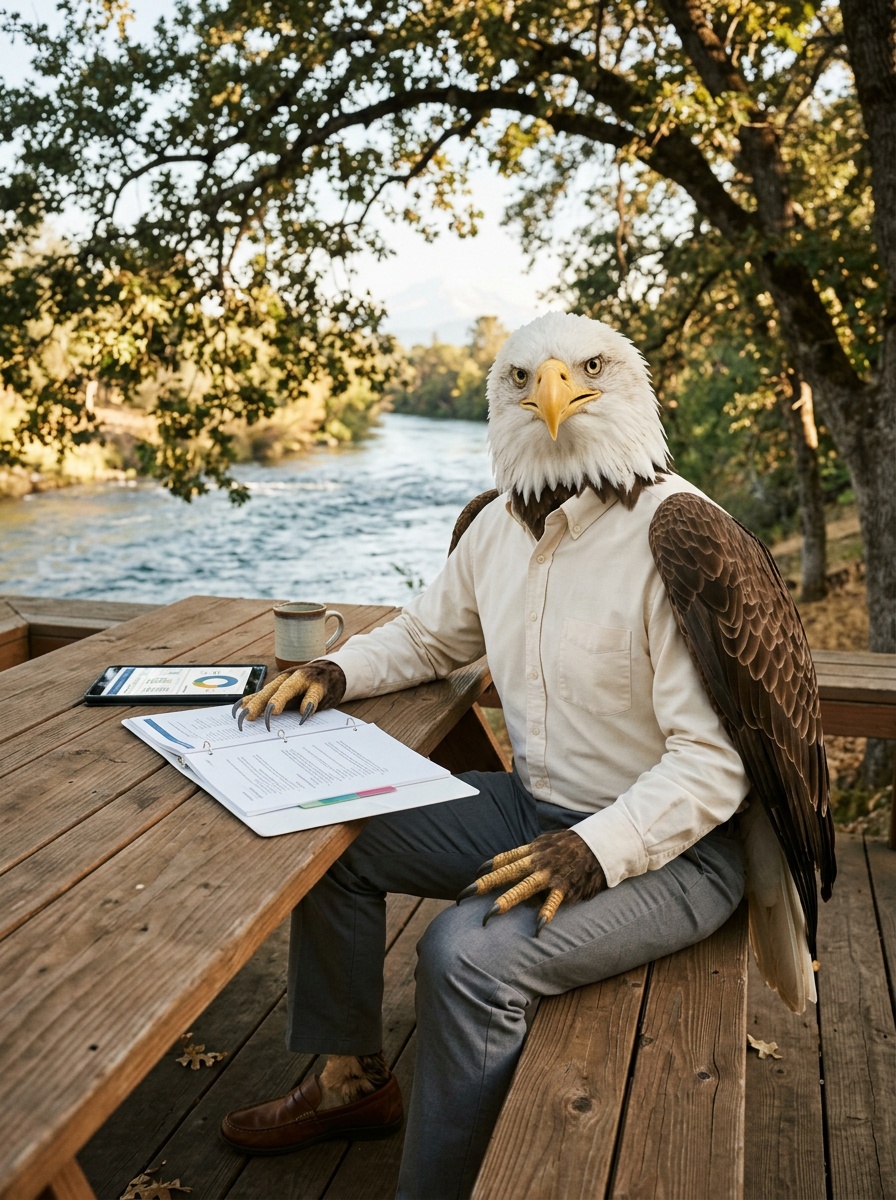
Plate III · The Day’s WorkSacramento River · Riverbank Deck
The K-2 sequence that decides the next ten years
A student who reads well by the end of third grade has a school year that opens doors. The K-2 reading sequence is sequential and explicit: phonemic awareness, phonics, fluency, comprehension. Around third grade the student stops learning to read and starts reading to learn. The curriculum shifts with them.
Mastery, not spiral
A student finishes one topic before the next one starts. Single-digit math facts automatic before two-digit work. The student who needed two more weeks on fractions in fifth grade is the same student who walks confidently into algebra in eighth.
The progression nobody skips
First-graders write a sentence. Second-graders write a paragraph. By fourth grade a real essay; by middle school analytical writing with a thesis; by high school longer-form work that makes a sustained argument. Skipping any of it is how students arrive in tenth grade able to read but not write.
The lab problem, solved by shipped materials
Science at K-12 online has one problem to solve: the lab. The curriculum separates the parts that need physical experience from the parts that don’t. The hands-on parts arrive in the mail at whatever address the family is at, whether that is a Redding rental, a Cottonwood ranch, or a temporary apartment during a fire-season displacement.
By grade level
Every grade has its own page with the subjects it covers. The counselor walks through course selection in detail.
The school year, diagrammed
What the thirteen years actually look like, in four bands. Each band has its own pace, its own milestones, and its own promotion at the end.
How a self-paced K-12 year holds together in the North State

Plate IV · The North StateMt. Shasta in background
Self-paced is a method, not the absence of structure. Here is what holds a Redding family’s school year together, subject by subject and week by week, on one accredited cumulative record that travels with the student wherever the family goes.
HSOA is an accredited K-12 online program. The cumulative record carries the student’s actual coursework, course descriptions a registrar recognizes, and a cumulative GPA, and it transfers cleanly to any receiving California school if the family ever moves the student back. What follows is how the work gets done in between.
Course catalog, at a glance
An index of the program, year by year and band by band. Every row links to where the substance actually lives on this site.
| # | Topic | Where to read |
|---|---|---|
| 01 | Reading, K through 2. The science-of-reading sequence: phonemic awareness, phonics, fluency, comprehension. | K ELA → |
| 02 | Elementary mathematics, K through 5. Mastery progression. One topic finished before the next starts. | Elementary → |
| 03 | Elementary writing, 1 through 5. Sentence to paragraph to essay. Fifth-grade promotion certificate. | 5th → |
| 04 | Middle school core, 6 through 8. Pre-algebra, life and physical science, world history, analytical writing. | Middle → |
| 05 | Sixth grade, the transition year. Pre-algebra, ancient-civilization history, life science, analytical reading. | 6th → |
| 06 | Eighth grade, promotion year. Algebra I, life or physical science, world cultures. Eighth-grade promotion certificate at completion. | 8th → |
| 07 | High school, 9 through 12. The four-year arc. English, math through advanced courses, lab science, and social sciences, with honors and AP-equivalent options as coursework. | HS → |
| 08 | Ninth grade, transition. Algebra I or II, biology, English literature, world history. The course choices that anchor the high school years. | 9th → |
| 09 | Eleventh grade, the heavy year. Pre-calculus or calculus, chemistry or physics, American literature, U.S. history. | 11th → |
| 10 | Twelfth grade, the capstone. Calculus or statistics, English literature or AP-equivalent, government or economics, science elective. | 12th → |
| 11 | The American Curriculum framework. The standards backbone HSOA aligns to. | Framework → |
| 12 | The self-paced model, in detail. Pacing principles, mastery checkpoints, accountability mechanics. | Model → |
| 13 | High school credit requirements. The credit-count question every transferring family asks. | Credits → |
| 14 | The K-12 program overview. The parent page tying the whole thirteen-year program together. | K-12 → |
Reading at 11, math at 6
HSOA accommodates students with active IEP or 504 plans and works with families on the specific accommodations the plan calls for. The starting point for any Redding family bringing an existing plan is a counselor call. The counselor reviews the plan with the parent, walks through how the accommodations land in the K-12 curriculum, and aligns the student’s pacing and supports to what the plan asks for.
Twice-exceptional learners are students simultaneously advanced in some subjects and needing extra support in others. For them, the self-paced mastery model does work that a fixed-grade classroom cannot. A student can be reading at an 11th-grade level and working through 6th-grade math at the same time, on the same day, without either pace becoming the wrong pace.
What HSOA does NOT do: replace clinical specialists, therapists, or service providers a family already works with. The school works alongside that ecosystem. The school’s job is the K-12 academic work, accommodated to fit the plan and the student.
From the Head’s Desk
On the K-12 plan that doesn’t need a metro to count.
Plenty of Redding parents tell me, on the first call, that they worry their student is at an academic disadvantage simply because the city is three hours from Sacramento and five from the Bay Area. The big school districts are down south. So are most of the resources. The argument: a North-state kid is going to fall behind because so little of it is up here.
The argument is wrong and the geography is the proof.
Mastery pacing doesn’t care which county the student lives in. The K-2 reading sequence works the same way in Redding as it works in San Jose. The mailman delivers the seventh-grade life-science kit to Cottonwood the same week he delivers it to Cupertino. The counselor reviews pacing the same way for a North-state student as for one in the Bay. The accredited cumulative record reads the same at any receiving California school, not by the zip code it came from.
What I tell Redding families: the school is on the map, but the school is not the map. The North-state K-12 student finishes with the same accredited record a Bay Area or SoCal student finishes with, ready for whatever comes next. The geography is a feature of the household, not a constraint on the student.
The school year doesn’t need a metro to count.
What enrollment actually costs
The financial side is a real conversation, and the right place to have it is a counselor call, not a tuition table on a webpage. Costs vary by grade level, course load, and how a family wants to phase enrollment.
For exact numbers and a written plan for your family’s situation: schedule a counselor call. Fifteen minutes by phone. No pressure.
Sixty seconds with the Head of School
Sixty seconds on how HSOA works for Redding families: the school year, the cumulative record, the counselor call.
Talk to a Redding counselor
A K-12 school decision shouldn’t be made in an afternoon. The first fifteen minutes are a phone call with a counselor. If the family decides this isn’t the right school, that’s a real answer. The door doesn’t close.
Pick a time
Fifteen minutes by phone. No commitment after.
Or call (888) 242-4262 directly. Same counselor, no slot needed.
Redding, California
A landmark for context. The school itself is online, available wherever a Redding family lives or moves to.
Frequently asked questions
Will my Redding student be at an academic disadvantage compared with Bay Area or SoCal students?
I work twelve-hour rotations at Mercy or Shasta Regional. Can the school day flex around that?
Our family was affected by the Carr Fire and we are still moving back. Can HSOA absorb a mid-year transfer with a complicated address history?
Our family hunts, fishes, and lives by Shasta Lake. Can the school year flex around seasonal outdoor rhythms?
Is “self-paced” watered down, or is it the full K-12 program?
My child is ahead in some subjects and behind in others. How does that work here?
Our family is active in a Redding congregation. Can the school year accommodate weekday ministry and mission weeks?
How long is the counselor call, and what does it cost?
HSOA in nearby California cities
Each city has its own page. The school is online, available wherever a family lives in California.
Helpful resources for Redding & California homeschool families
A short reading list. Three pieces written by HSOA, four authoritative outside sources.
From HSOA
What is a self-paced online high school?
How a self-paced K-12 school day actually runs: pacing, mastery, accountability.
HSOA articleHow many credits to graduate high school?
The credit-count question every transferring family asks, answered cleanly.
HSOA articleThe American Curriculum explained
The standards framework HSOA aligns to, and what it means for the cumulative record.
Trusted authority resources
NCES Fast Facts: Distance Learning
Federal data on distance learning enrollment and trends.
NHERIResearch facts on homeschooling
National Home Education Research Institute: demographics, academics, outcomes.
U.S. State DeptHomeschooling & online education
Department of State guidance for U.S. families abroad on accredited online K-12.
HSLDA · legalState homeschool laws
Home School Legal Defense Association: California’s legal posture, summarized.
The North-State community calendar
Online doesn’t mean isolated. Redding families have a real socialization slate: city parks, outdoor recreation, faith community, homeschool co-ops, and online cohorts inside HSOA.