
Flower Mound, Texas K-12
Flower Mound K-12 Online Home School
An accredited, self-paced K-12 program for Flower Mound families who want a clear, steady plan for their student, not a one-size-fits-all classroom. Here is exactly how that plan comes together.
Start here
A Master-Planned Town Deserves a Plan to Match
Flower Mound is a master-planned town on the north edge of the Dallas-Fort Worth metroplex, known for its parks, trails, and the families who move there for the schools and the space. Many parents commute into the metroplex, students keep full activity calendars, and a one-size school day rarely fits. A self-paced, accredited K-12 program does: the work is set for your student, the schedule belongs to your family, and you can see exactly where things stand. Want the overview first? Here is how self-paced online high school works, and a plain summary of the accredited K-12 program.
The program runs the full K-12 path for families across Flower Mound, Lewisville, Highland Village, Grapevine, and the north metroplex, with the same plan and the same accredited record behind it. More about Flower Mound.
The program at a glance

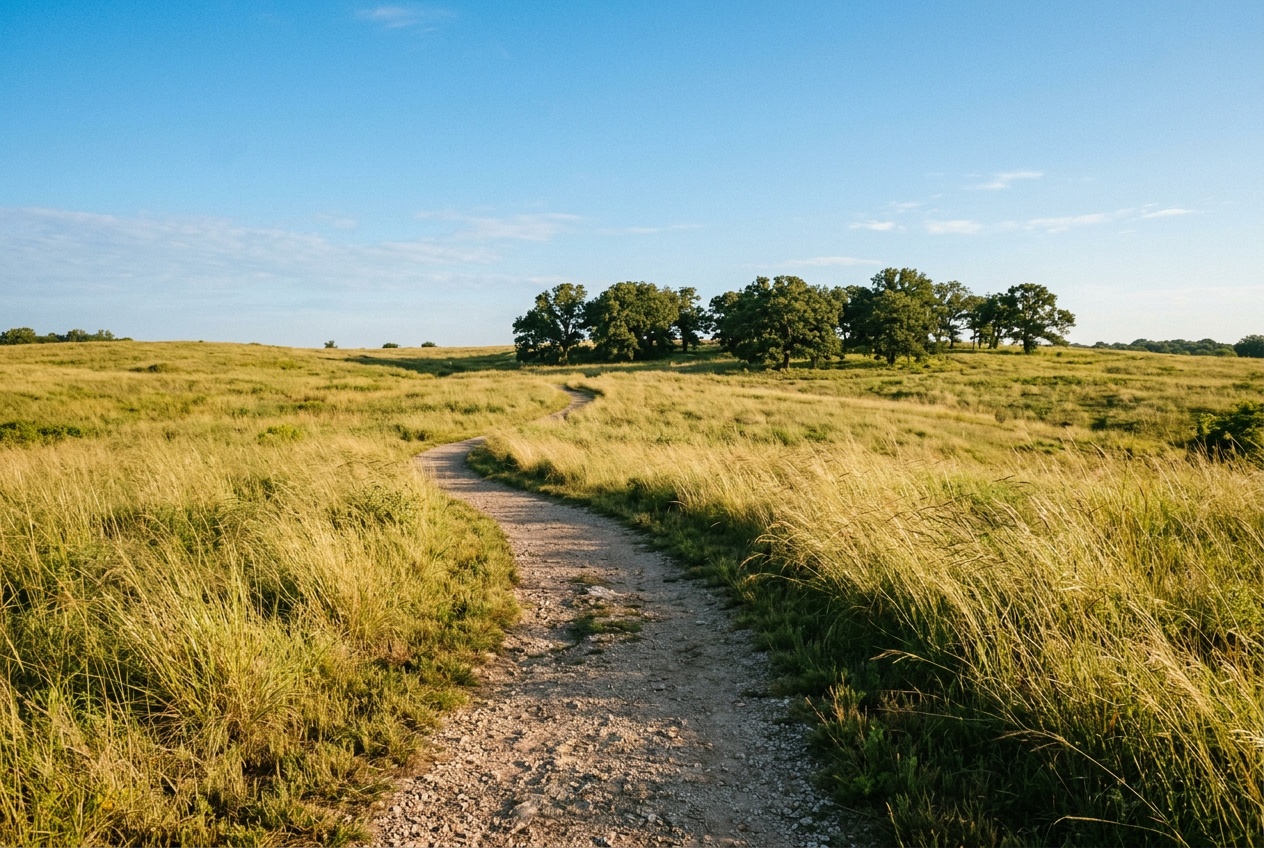
Flower Mound, a master-planned town of parks and prairie.
Why families here choose it
Room for the Way Flower Mound Actually Lives
Between metroplex commutes, club sports and activities that fill evenings and weekends, and a town built around its parks and trails, a fixed 7:45 bell fights the way Flower Mound families really live. Self-paced coursework lands in the hours you actually have, a student works around practice or a trail morning, and a commuting parent can see the whole week’s progress from anywhere.
School that fits a busy, active, master-planned life.
Two ways to run a school day

A note from the Head of School
Do not wait for a semester to start. The most useful first move for a Flower Mound family is the fifteen-minute counselor call with your student’s most recent records in hand. We place by skill, subject by subject.
Answering the socialization question from relatives
Where the social life actually happens
Co-ops and group classes
Daytime co-ops and classes fill the hours a campus would.
Club and rec sports
Community teams and leagues, on a schedule that fits.
Scouts, church, clubs
The same groups any family joins after school.
The neighborhood
Friends nearby, with daytime free to actually see them.
Learn more: how online students build a social life
Hands-on science with shipped lab kits
What shows up, and where you work
One online platform
Lessons, assignments, and the gradebook in one place.
Materials at the house
Books and supplies arrive where you live.
Hands-on lab kits
Real science kits shipped for the kitchen table.
A clear weekly target
You always know what is due and what is next.
Learn more: the curriculum
Who it fits
The Students Who Do Well Here
The commuter household. When the workday means a drive into the metroplex, a campus drop-off only stretches the morning. A self-paced day removes it, and either parent can open the record from anywhere.
The activity-packed family. Club sports, the trails, and a full calendar fill Flower Mound evenings and weekends. The coursework moves to the hours the family has, so the activity never costs class time.
The student who needs the right pace. Whether a student is ready to accelerate or needs to build a subject up, placement is by demonstrated skill, so each subject starts where the student actually is.
Independence as a skill the model teaches
What grows besides grades
Learn more: the K-12 program
A day that fits
A Day That Fits the Commute, the Calendar, and Home
When a parent commutes into the metroplex, when practice or the trails are calling, or when a one-size schedule just does not fit, the coursework opens on your time and the student picks up exactly where they left off. Nothing is marked late, and no cohort moves ahead without you.
A short counselor call maps that first week to your family’s real schedule.

A self-paced day fits a busy, active Flower Mound family.
How placement works
Placed by Skill, Not by Birthday
Your student is not dropped into a grade by age. A counselor reviews recent work and places them by demonstrated skill, subject by subject, so a child who is ahead in math and building confidence in writing starts each at the right level on day one. It is the heart of how self-paced learning works.
An example: one student, placed by skill the same day, not by birthday
Each subject starts where the student actually is.
Grade by grade
How the Grades Build on Each Other
The program runs from kindergarten through senior year, and the level is set by what the student can actually do, so each grade is a real step forward, not a date on a calendar.
One continuous path, one record
K-5Foundations
6-8Analytical turn
9-12Four-year sequence
DiplomaAccredited
Grade pages: Kindergarten, 4th, 5th, 6th, 7th, 8th, 9th, 10th, 11th, 12th.
What they’ll study
Subjects and Electives at a Glance
A full course load, online and self-paced, from the early grades through senior year. Tap a subject to see the course.
Elementary, K-5
Middle School, 6-8
High School, 9-12
The deeper answer
The arts are not an afterthought
Somewhere along the way, a rumor started that the arts were a reward for finishing the “real” subjects. Wrong. Visual art, music, and design are not the dessert at the end of a long academic meal; they are part of the meal itself. When a student learns to read a musical score, they are practicing pattern recognition and sequencing. When they work through a design brief, they are applying iterative problem-solving in a way that a multiple-choice worksheet simply cannot replicate. When they study color theory or composition, they are doing spatial reasoning with a paintbrush. These are transferable skills that show up in math, in writing, in science, and in every creative corner of a developing mind.
Online learning is actually a surprisingly strong environment for arts education, because the schedule can breathe. A student who needs ninety minutes to finish a charcoal study does not have to abandon it when a bell rings. A student obsessed with music production can follow a thread of curiosity without waiting for the one elective slot in a crowded timetable. That flexibility matters because creative work rarely respects a forty-five-minute block. The arts also do something quieter and equally important: they give students a genuine sense of authorship over their own learning. Building that internal confidence, the kind that comes from making something and standing behind it, turns out to be one of the most durable things a K-12 education can produce.
Learn more: the curriculum
A week in practice
What a School Week Looks Like
No bell and no fixed homeroom, but a clear rhythm: set the week’s targets, work in short focused blocks, and watch the record fill in as the work lands.
A self-paced week, set by the family
- Targets set
- Math
- Reading
- Science
- Writing
- History
- Co-op
- Math
- Art
- Catch-up
- Review
How a struggling week gets caught and fixed
How a student catches up
Start where they arePlaced by skill, not by grade label
Target the gapsFocus on the subjects that need it
Rebuild confidenceWins stack up assignment by assignment
Back on trackOn level by subject, no shame attached
Learn more: the K-12 program
A 40-second look
How It Works for Texas Families
The legal basics
Homeschooling in Texas, in Plain English
Is online home school legal in Flower Mound?
Yes. Under Texas law, a home school is treated as a private school (Texas Education Code 25.086). Authority: the Texas Education Agency.
What records should we keep?
A course list, progress reports, and a withdrawal letter if you are leaving a Lewisville ISD campus. Our accredited program keeps the cumulative record for you.
Do we report to the state or take state tests?
Texas does not require home-schooled students to register with the state or sit the state tests. You teach the required subjects in good faith and keep your own records.
Questions families ask
Flower Mound Online Home School FAQ
How fast can my student start?
Any week of the year. There is no semester start to wait for. After the counselor call, placement and the first lessons can be ready within days.
Is the program accredited?
Yes. The coursework is accredited, and the record supports applications to Texas colleges and universities.
What if we move or travel?
The accredited record is one continuous document that follows your family to a new address, another state, or overseas, with no semester lost.
Can a student who is ahead move faster?
Yes. Because the work is self-paced, a student who has mastered a unit moves straight into the next one, with honors-level options inside the same structure.
What technology do we need?
A reliable laptop and internet are the main requirements to get started.
What about friends and socialization?
Self-paced school frees up the daytime hours, which families fill with co-ops, club sports, scouts, church groups, and the parks near home. Here is how online students build a social life.
Do you support students with an IEP or 504 plan?
Yes. The self-paced structure already does much of what an accommodation asks for: extra time, a quiet space, and a flexible pace per subject. Bring the current plan to the counselor call and we build the routine around it.
How should we think about cost?
A home program removes a lot of the hidden spending around a daily commute, and it keeps the schedule open for a working parent. A counselor walks through what enrollment includes, and we are fully transparent about cost.
Can my student still do sports, clubs, or activities?
Yes. A self-paced day frees up the hours a fixed schedule eats, which is exactly why athletes, performers, and busy families choose it. Community sports, co-ops, and clubs fit around the coursework.
How much time does the school day take?
Less than a traditional day for most students, because there is no waiting on a class of thirty. The hours are focused, and then the student is done.
What if my student is behind in a subject?
Then that subject starts where the student actually is, not where a grade level says they should be, while they stay on level in the subjects where they are strong.
How enrollment works
From First Call to First Lesson
Four steps, any week of the year
Book a callA free 15-minute counselor call
Place by skillWe review recent work
Get a planA written plan per subject
Start any weekFirst lessons within days
Read next
Resources for Flower Mound Families

Two ways in
Get Started in Flower Mound
Whether your student is transferring mid-year or starting fresh, the first step is the same fifteen-minute conversation.