
San Antonio, Texas K-12
San Antonio K-12 Online Home School
An accredited, self-paced K-12 program for San Antonio families who want a clear, steady plan for their student, not a one-size-fits-all classroom. Here is exactly how that plan comes together.

Start here
A Big Bilingual Military City Deserves a Plan That Moves With You
San Antonio is one of the largest, proudest cities in the country, a deeply bilingual place shaped by generations of Hispanic heritage and by the military, with Joint Base San Antonio anchoring families across the city. Between assignments that can move a family on short notice, the long drives a sprawling metro demands, and homes where Spanish and English share the day, a fixed 7:45 bell rarely fits a San Antonio household. A self-paced, accredited K-12 program is built for that. The work is set for your student, the schedule belongs to your family, and the accredited record follows you wherever the next assignment leads. Want the overview first? Here is how self-paced online high school works, and a plain summary of the accredited K-12 program.
The program runs the full K-12 path, and it works the same whether your family is on the North Side, near the missions on the South Side, out toward the Hill Country, or close to one of the bases. Families across San Antonio, Schertz, Converse, and the surrounding counties use it the same way, with the same plan and the same accredited record behind it.

San Antonio, where the River Walk winds past the old missions.
How placement works
Placed by Skill, Not by Birthday
Your student is not dropped into a grade by age. A counselor reviews recent work and places them by demonstrated skill, subject by subject, so a child who is ahead in math and building confidence in writing starts each at the right level on day one. Here is the shape of the path.
| Stage | What the work looks like | Where it leads |
|---|---|---|
| Elementary, K-5 | Short, clear, repeatable lessons that build reading, writing, and math without long, exhausting days. | Elementary program |
| Middle, 6-8 | Stronger independence and study habits, with the pace easing up or speeding up as each subject clicks. | Middle school |
| High, 9-12 | Accredited coursework with honors-level options inside one structure, on a schedule that fits real life. See the San Antonio online high school page. | Online high school path |
An example: one student, placed by skill on the same day, not by birthday
The curriculum, grade by grade
How the Grades Build on Each Other
The program runs the whole way from kindergarten through senior year, and each stage is built to hand the student to the next one ready. The level is set by what the student can actually do, so the move from one grade to the next is a real step forward, not a date on a calendar.
Elementary, K-5
The early years stay short and steady. Reading, writing, and math come in clear, repeatable lessons that build a foundation without the long, draining days a young child does not need. Confidence is the real subject here, and a calm morning of focused work leaves the rest of the day open. A parent stays close to the daily work at this age, which is exactly what it calls for, and the lessons are simple enough to run without a teaching degree.
Grade pages: Kindergarten, 4th grade, 5th grade.
Middle school, 6-8
These grades are where independence and real study habits form. The work asks more of the student, the pace eases up or speeds up subject by subject, and a counselor keeps an eye on the whole picture so nothing slips while a young teen is finding their feet. A student who was bored or lost in a crowded room often steadies here, because the work finally meets them where they are instead of dragging them along or leaving them behind.
Grade pages: 6th grade, 7th grade, 8th grade.
High school, 9-12
The high school years are accredited coursework with honors-level options inside one structure, arranged around training, travel, and whatever else the family’s calendar holds. A counselor maps the path year by year so the student stays on track to finish, with no surprise gaps at the end. The result is a record built to carry the student cleanly into whatever comes next, with the work organized so the final year is a finish line, not a scramble. See the San Antonio online high school page.
Grade pages: 9th grade, 10th grade, 11th grade, 12th grade.
What they’ll study
Subjects and Electives at a Glance
A full course load, online and self-paced, from the early grades through senior year. Here is the shape of what your student will actually study, with electives and honors-level options growing as they move up.
Elementary, K-5
The early grades build the foundation in short, steady lessons. The goal here is solid reading, clear writing, and real number sense, with room for art and music alongside the core so school stays something a young child enjoys.
Middle School, 6-8
The middle grades grow independence and study habits, with the pace set subject by subject as the core work gets more demanding. Electives keep school interesting, and a counselor watches the whole picture so nothing slips while a young teen finds their feet.
High School, 9-12
The high school years are accredited coursework with a wide elective slate and honors-level options inside one structure, so a student can go deeper where they are strong and still cover everything the high school path asks for. Tap a subject to see the course.
A week in practice
What a School Week Actually Looks Like
There is no bell and no fixed homeroom, but there is a clear rhythm. Most families settle into a simple weekly shape that keeps the work moving without filling the whole day.
| Part of the week | What happens |
|---|---|
| Set the targets | At the start of the week you and your student see what each subject needs, then decide which mornings or afternoons the work lands in. |
| Focused blocks | The student works in short, real sessions instead of a six-hour day. Lessons are interactive, not just pages to read, so attention holds. |
| Review and adjust | You see every finished assignment and grade as it lands, from anywhere, and shift the plan when a week gets busy. |
How a focused school day tends to split
What’s included
What Comes With the Program
Enrollment is not just a login and a pile of links. Every family gets the same core pieces, whether the student is in second grade or finishing twelfth.
| What you get | What it means day to day |
|---|---|
| A full course load | Core subjects plus electives, all online and built for self-paced work, so a student is never waiting on a shipment or a classroom to catch up. |
| A personal plan | A written, subject-by-subject plan set at enrollment and revisited as the student moves, so you always know what is finished and what is next. |
| Academic support | Help is there when a lesson does not click, by message or a scheduled call, instead of waiting for office hours the next day. |
| Progress you can see | A live record of finished work and grades that a parent can open from anywhere, at any hour. |
| One accredited record | The transcript is kept for you and follows the student through every move and every year. |
Why families here choose it
Room for the Way San Antonio Actually Lives
Between military assignments that move a family on short notice, the long drives a sprawling city demands, and homes where Spanish and English share the day, a fixed 7:45 bell rarely fits a San Antonio family’s real week. Self-paced coursework lands in the hours you actually have, the home language keeps building alongside English, and the accredited record follows the family to the next base or neighborhood without losing a step.
One bilingual, accredited plan that moves with the family.

A note from the Head of School
Do not wait for a semester to start. The most useful first move for a San Antonio family is the fifteen-minute counselor call with your student’s most recent records in hand. We place by skill, subject by subject, so a student who is ahead in one area and steady in another begins each at the right level on day one.
Who it fits
The Students Who Do Well Here
Self-paced school is not for one kind of student. In San Antonio it tends to fit a few families especially well.
The military family. With Joint Base San Antonio anchoring the city, many families move on a few months’ notice. The accredited record is one continuous document, so a PCS move does not cost a semester or restart the student’s progress.
The bilingual household. In San Antonio, Spanish and English live side by side. A flexible routine keeps the home language an asset while English and the core subjects build at the student’s own pace.
The family across a sprawling city. A drive clear across San Antonio can eat an hour. A self-paced day removes the daily campus commute, and a parent can still see the week’s progress from anywhere in town.
From the front lines
What We Hear From San Antonio Families
San Antonio families often call with one of two things on their mind, and usually both: a move on the horizon, and a home that runs in two languages. A parent may be stationed at one of the bases, the household speaks Spanish and English in the same breath, and a capable student is either bored in a crowded room or bracing for the next assignment to undo a year of progress. It does not have to. Once the plan is set to the student, the home language stays an asset, the accredited record travels with the family, and an assignment across the country stops breaking the school year. The families who settle in fastest are the ones who had watched a PCS move or a long cross-town commute cost real ground before, and were relieved to find it no longer has to.
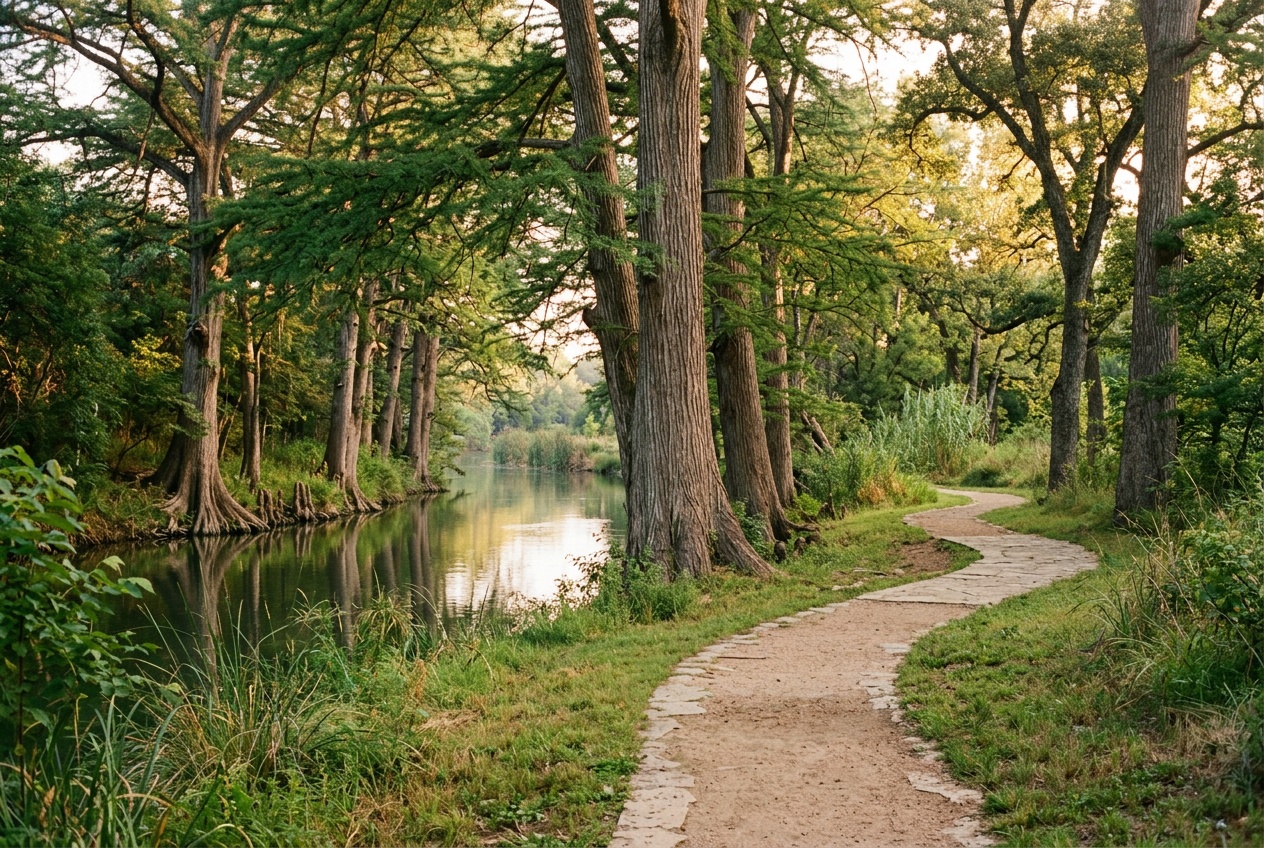
A quieter stretch of the San Antonio River, away from downtown.
The record that lasts
An Accredited Record That Holds Up
The reason families pick an accredited program over a loose curriculum is the paperwork at the end. Coursework here is accredited, which means the transcript is a professional document built to recognized standards, not a homemade list. It carries grades, course titles, and progress in a form a Texas university admissions office or an employer reads without a second thought.
The high school path leads to a real diploma earned through completed, accredited work, with honors-level options inside the same structure for students who want them. A counselor builds the four-year plan subject by subject, so the record is complete and the student is never short at the end.
That record is the quiet reason families stay. A transcript built to recognized standards is read the same way whether the next step is a local high school, a move to another state, or an application years down the road. The work a student does this year keeps its value long after the year is over.
Changing schools
Switching in the Middle of the Year
Most families do not arrive at the start of a semester. They arrive when something stops working: a schedule that will not bend, a class moving too slow or too fast, a move across town or across the country. Switching mid-year does not mean starting over.
A counselor reviews the most recent records, places the student by skill, and carries forward the work that already counts, so a strong semester is never thrown away. Because the coursework is self-paced, the student picks up at the right point instead of repeating a finished unit or sitting through one they have not reached yet.
The legal basics
Homeschooling in Texas, in Plain English
Is online home school legal in San Antonio?
Yes. Under Texas law, a home school is treated as a private school (Texas Education Code 25.086). Families teach in good faith a curriculum that includes reading, spelling, grammar, math, and good citizenship. Authority: the Texas Education Agency.
What records should we keep?
Keep it simple: a course list, progress reports, and a withdrawal letter if you are leaving a San Antonio ISD campus. Our accredited program keeps the cumulative record for you.
What does a compliant home school actually need?
Three things: teach in good faith, cover the basic subjects (reading, spelling, grammar, math, and good citizenship), and use a written curriculum. An accredited program satisfies all three and documents it for you.
Do we have to report to the state or take state tests?
Texas does not require home-schooled students to register with the state or sit the state standardized tests. You teach the required subjects in good faith and keep your own records, and our program handles that record-keeping for you.
A day that fits
A Day That Fits Assignments, the Commute, and Two Languages
When an assignment moves the family, when the drive across the city eats the morning, or when the household balances two languages, the coursework opens on your schedule and the student picks up exactly where they left off. Nothing is marked late, and no cohort moves ahead without you. The accredited record stays one continuous document, at this base or the next.
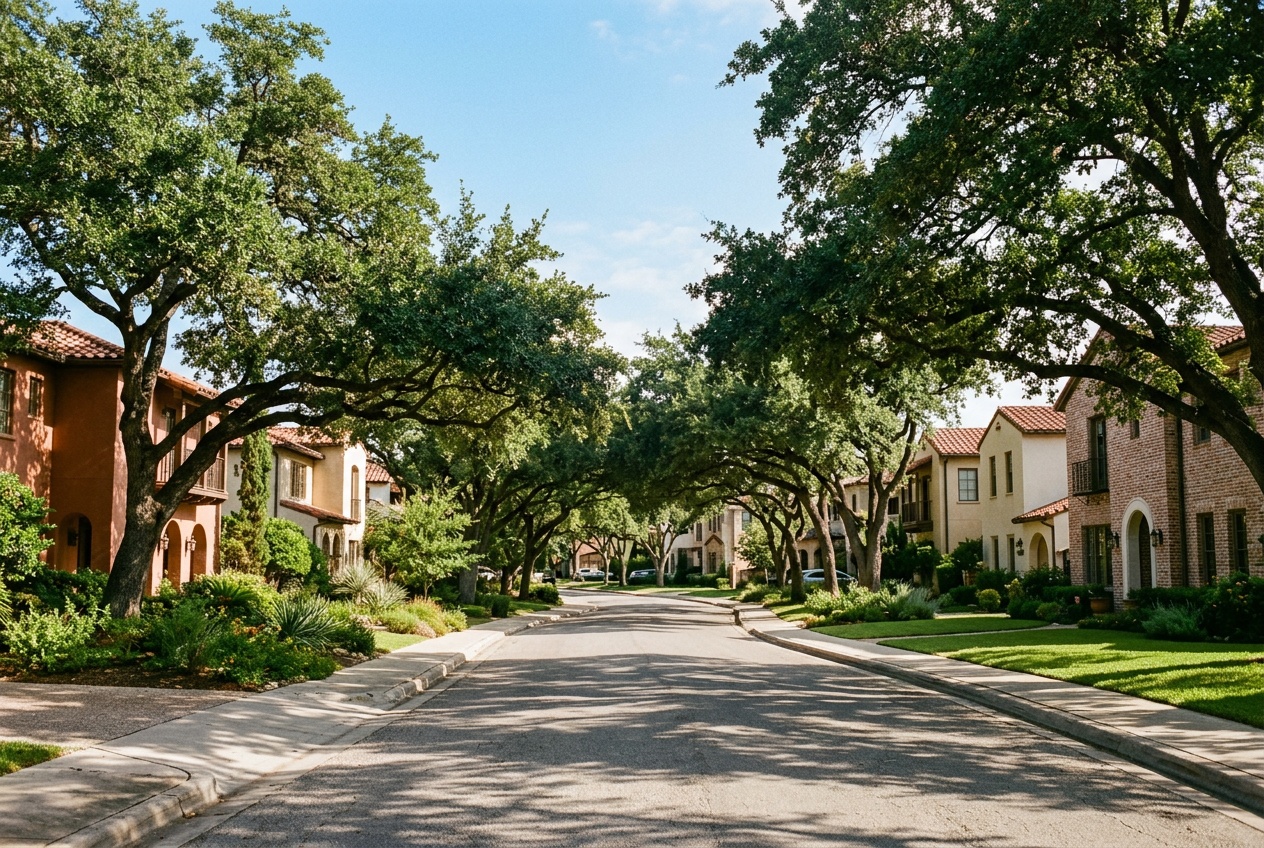
A self-paced day fits a bilingual San Antonio family through moves, commutes, and home.
A 40-second look
How It Works for Texas Families
From families like yours
What San Antonio Families Say
★★★★★“The plan made it click. Our daughter finally works at her real level instead of waiting on the class.”
A San Antonio parent
★★★★★“My dad travels for work and still sees everything I finish each week. School comes with us.”
A San Antonio student
★★★★★“We switched in October and did not lose a thing. The counselor mapped it out and our son was settled in about a week.”
A San Antonio parent
Worth knowing
A Few Things Worth Knowing
The early grad who’s ready to move faster
Some students hit the gas earlier than the calendar expects, and that is not a problem to manage; it is a profile to honor. An accredited K-12 structure actually handles early advancement better than most people assume, because every course completed, every credit earned, and every grade posted lands on an official cumulative record that travels with the student wherever they go next. Acceleration is not just about finishing sooner; it is about finishing with documentation that holds up. A high school program built for real flexibility can let a motivated learner compress timelines without compressing rigor, moving through coursework at the pace their ability and drive actually support rather than the pace a school bell dictates.
Here is where the accredited part pulls serious weight. When a student accelerates inside a recognized K-12 institution, the transcript is not a homemade document or a portfolio that needs explaining. It is an official academic record produced by an accredited school, and the courses on it carry the same credibility as any traditional school’s record. A self-paced model gives early grads the mechanism, but accreditation gives the outcome meaning. Families sometimes worry that moving faster will raise questions later; the real answer is that a clean, accredited transcript raises zero questions. It speaks for itself. If your student is genuinely ready to move ahead of schedule, the structure exists to make that happen on the record, officially, the right way.
Gifted and advanced learners in a self-paced K-12
Here is a truth most traditional schools quietly sidestep: when a bright student finishes the material in October, they still sit in that chair until June. The self-paced model does not work that way. Mastery is the key that opens the next door, not the calendar. An advanced learner who genuinely understands a concept moves forward the moment the work proves it, period. There is no waiting for classmates to catch up, no reviewing material for the fourth time because the pacing guide says so, and no artificial ceiling keeping a capable mind from accelerating through subjects where they shine. That is not a special gifted track bolted onto the side of the school. It is simply how the model operates for every student, at every level.
What that means in practice is significant. A student who burns through math can be years ahead of their age group in one subject while moving at a comfortable rhythm in another, and the cumulative record reflects exactly what they actually learned, not what the grade level suggests they should have learned. Parents often wonder about how enrollment works before committing, and the short answer is that the structure welcomes students who have outgrown the traditional pace just as naturally as it supports students who need more time. Acceleration is not a privilege here. It is a built-in feature of a model that treats mastery as the only logical finish line.
Questions families ask
San Antonio Online Home School FAQ
How fast can my student start?
Any week of the year. There is no semester start to wait for. After the counselor call, placement and the first lessons can be ready within days.
Is the program accredited?
Yes. The coursework is accredited, and the record supports applications to Texas colleges and universities.
What if we move or travel?
The accredited record is one continuous document that follows your family to a new address, another state, or overseas, with no semester lost.
Can a student who is ahead move faster?
Yes. Because the work is self-paced, a student who has mastered a unit moves straight into the next one, with honors-level options inside the same structure.
What technology do we need?
A reliable laptop and internet are the main requirements to get started.
How do we withdraw from a current school?
Send a withdrawal notice to your current campus, request the records, and begin the home routine. A counselor walks you through it.
What about friends and socialization?
Self-paced school frees up the daytime hours, which families fill with co-ops, club sports, scouts, church groups, and the parks and community spaces near home. The social life happens out in the community instead of a hallway. Here is how online students build a social life.
Do you support students with an IEP or 504 plan?
Yes. The self-paced structure already does much of what an accommodation asks for: extra time, a quiet space, and a flexible pace per subject. Bring the current plan to the counselor call and we build the routine around it.
How should we think about cost?
A home program removes a lot of the hidden spending around a daily commute and a packed school calendar, and it keeps the schedule open for a working parent. A counselor walks through exactly what enrollment includes on the call, and we are fully transparent about cost.
Can my student still do sports, clubs, or activities?
Yes. A self-paced day frees up the hours a fixed school schedule eats, which is exactly why competitive athletes, performers, and busy families choose it. Community sports, co-ops, and clubs all fit around the coursework instead of fighting it.
How much time does the school day take?
Less than a traditional day for most students, because there is no waiting on a class of thirty to catch up or move on. The hours are focused, and then the student is done, with the rest of the day theirs.
What if my student is behind in a subject?
Then that subject starts where the student actually is, not where a grade level says they should be. They build the missing pieces at their own pace while staying on level in the subjects where they are strong, so nothing stalls the whole year.
Getting started
What the First Two Weeks Look Like
The start is deliberately undramatic. After the counselor call, placement comes back within a few days and the first plan is ready to open. The opening days are about settling into a rhythm, not racing, so the student gets used to working in focused blocks and you get used to seeing the record fill in.
By the end of the first week, most families have found the hours that fit. By the end of the second, the questions usually shift from how does this work to what is next, which is exactly where a counselor wants you. Nothing about the first month is locked, and the plan is adjusted as real life shows you what actually fits your family.
Read next
Resources for San Antonio Families
More Texas cities
Texas Cities We Serve
High School of America works with families across Texas. A few more cities we serve:
Two ways in
Get Started in San Antonio
Whether your student is transferring mid-year or starting fresh, the first step is the same fifteen-minute conversation. Bring recent records if you have them; if you do not, a short skills check sets the starting point.