Richmond County · the CSRA · Georgia
Augusta Online High School
Accredited grades nine through twelve, for families on both banks of the Savannah. The river decides whose rules you file under. It does not decide who holds the transcript.
Two banks of the Savannah, one transcript
An accredited online school teaching ninth through twelfth grade, issuing its own diploma. Teachers own the courses. Credits land on one transcript. The school holds the record.
It sits inside our online high school program, beside the other Georgia online high school pages.
Which state’s law an Augusta address falls under
Augusta merged with Richmond County in 1996, one of only three consolidated governments in the state, per the Augusta city government and the Wikipedia entry for the city. That settled the boundary question inside its own limits.
One boundary it cannot merge is the Savannah River, and that one is a state line.
Augusta bank
Georgia’s home study statute. A declaration to the local superintendent. One hundred and eighty days.
North Augusta bank
South Carolina’s rules instead, which are a different set with different dates. Same metro, same commute, different statute.
Families searching for an accredited online high school in Augusta, or a high school online in Augusta from the far bank, land in the same place.
The declaration of intent, and Georgia’s requirements
Specific, and worth reading before deciding anything. These duties run for four years and a parent carries every one.
| Notice | A declaration of intent to the superintendent of the local school district, within 30 days of starting and by September 1 every year after. It names each child and their age, where the program is, and which 12 months count as that program’s school year. Georgia takes it online. |
|---|---|
| Who teaches | The parent or guardian must hold at least a high school diploma or a state-approved HSE diploma. Georgia asks nothing further of the teacher. |
| Time | Instruction equivalent to 180 school days in each 12 months, each day at least four and a half hours. |
| Subjects | Reading, language arts, mathematics, social studies and science, at a minimum. |
| Testing | A nationally standardized test at least every three years, beginning at the end of third grade. The results stay with the family; Georgia does not collect them. |
| Records | A written progress report each year, subject by subject, kept by the parent for at least three years. |
| Statute | O.C.G.A. § 20-2-690(c). |
Georgia wants the declaration within 30 days of starting and again by September 1 each year. Miss the date and you are late under the statute, not barred from it.
Whose job it becomes in Georgia
The list does not get shorter when a student enrolls in an online high school in Augusta Georgia. It changes hands.
If you are teaching at home yourself in Augusta: Georgia wants a declaration of intent filed with your local school superintendent within 30 days of starting, and again by September 1 each year you continue. It lists each child and their age, the address of the program, and the 12 months you are calling that program’s school year. You keep the testing and the yearly progress reports; the state does not collect them.
If your child enrolls in a school instead: that is the other route. The declaration, the 180 days, the four and a half hours and the third-grade testing cycle are duties of a home study program, and a school holds the record in their place. If you have already filed for this year, say so on the first call and a counselor will tell you what is left to do.
Where those duties go once an Augusta student enrolls
Accreditation is not a badge. It is what lets a school hold a record on a family’s behalf, and it is the whole mechanism behind everything below.
Where that leaves a parent
With the part nobody can delegate: knowing how the year is going and deciding what happens next. Everything in that left column is administration.
Ninth through twelfth at an Augusta online high school
Online high school classes in Augusta are taught rather than hosted. A teacher owns the section, sets the pace expectation and answers the student directly. The catalog runs four core sequences with electives around them, listed on the high school courses page.
In every enrollment, on either bank
who answers the student, not a ticket queue
issued by the school that taught it
the same person on the next call
None of this is an upgrade, an add-on or a tier.
Which year an Augusta student joins
Each year has its own shape: ninth grade lays the foundations, tenth grade deepens the core, eleventh grade is read hardest by admissions, and twelfth grade closes the path.
Arriving from a middle school year is a different on-ramp: middle school online covers it, through sixth grade, seventh grade courses and eighth grade courses.
Every grade is a door, not a gate
A student is placed on what the transcript shows, not on the grade printed on the last report card. Those two disagree more often than families expect, and the difference is worth finding before a course is assigned rather than after.
The diploma at the end of four years
An online high school diploma in Augusta is issued by the accredited school that taught the courses, on that school’s own graduation requirements. It is a high school diploma. Not a GED, not an equivalency certificate, not a certificate of completion.
The detail sits on the online high school diploma page, the arithmetic in how many credits a diploma takes, and the blunt version in whether an online diploma is real.
Three different things called an online high school
Three different things carry the name of online high school programs in Augusta, and they differ structurally rather than in marketing.
Public, at no cost
A district or state virtual program. Tied to that district’s calendar, enrollment window and residency rules. Cross a line and it usually goes with the line.
Private, accredited, tuition-based
What this is. Zoned to nothing, enrolling in any week, and holding the record itself. Tuition buys the record-keeping and the flexibility.
The side-by-side is drawn out in online school versus the alternatives, and the mechanics of the third one in how an online high school actually works.
When an online high school is the wrong answer
The honest version, including the parts that argue against enrolling.
Whether this is a fit, honestly
Claim
An online school is easier than the school we left
Reality
It is not easier. It is scheduled by you instead of by a bell, which suits some students and undoes others.
Claim
A student who is behind will catch up automatically
Reality
Nothing catches up on its own. What changes is that the gap is measured against the transcript first, so the work is scoped to what is missing.
Claim
Everything is done alone at a screen
Reality
A teacher owns each course and answers the student directly. The scheduling is solitary; the teaching is not.
Claim
Transferring back later is a problem
Reality
Credits travel on an accredited transcript. Acceptance is the receiving district’s call, and worth asking them in writing before you need the answer.
If two of those still read as concerns after a call with a counselor, this is not the right school for that student, and a counselor will say so.
Starting in October, and credits already earned
Rolling enrollment falls out of the structure. With no district calendar to line up with, October and February are ordinary starting points.
What moves, and when
Fifteen minutes. Grade, what happened last, what the record shows.
Read off the transcript before a single course is assigned.
The school becomes the school of record. The filing duties end.
A real week on your calendar, not a cohort start date.
Credit recovery works the same way. What is already earned is read off the transcript first, so the work is scoped to what is missing rather than a year repeated. People searching for a high school online near Augusta usually mean one that will take a student this month.
Two things worth reading first: what a mid-year transfer involves and recovering credits in the last quarter.
A start date and a graduation date are different questions. The second is answered from the credit count, which is why the count comes before the calendar.
Over eighteen, and finishing the diploma later
A separate route with separate paperwork, and a common call. An online high school for adults in Augusta answers a different question than this page does. Ask for the adult track by name, or read the diploma page first.
Under eighteen
Enrolls as a student. The parent is on the record, and the filing question above applies.
Over eighteen
Enrolls on their own signature. No declaration, no superintendent, no 180 days. Different intake, same diploma.
Self-paced, and what that actually means
A self paced online high school in Augusta is not an unsupervised one. The pace is yours; the deadlines, the teacher and the transcript are the school’s. How self-paced works sets out the difference, and an online high school for athletes is the version of that question we are asked most often on this side of the state.
Augusta tuition, and when you find out the number
Tuition for an Augusta GA online high school depends on grade level and program track. Monthly plans and pay-in-full both exist.
The figure is given on the first call, which carries no charge, and it is one number rather than a base price with additions behind it. Start at the tuition page, check the payment options, then ask a counselor for the real one. The direct answer is in is there tuition at this school.
Reading this at eleven at night? That is when these decisions get made. Text (888) 242-4262 with your student’s grade and what happened at their last school. You will get a real answer back, not a form receipt, and anything needing a person is booked for the morning.
Or leave the details here and we start from what you wrote.
An Augusta indenture, cut along the river
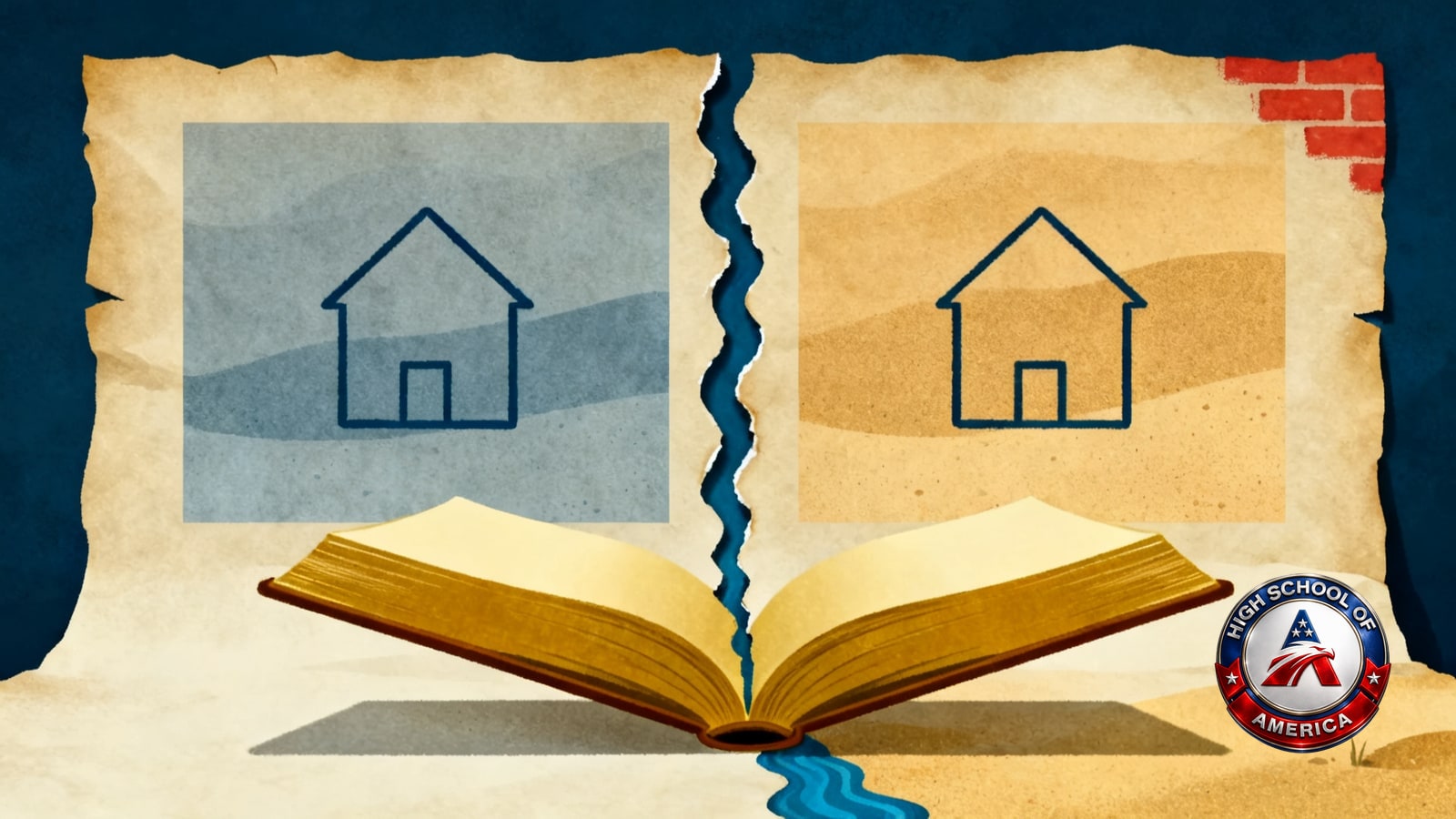
An online high school in Augusta Georgia has one advantage a zoned school cannot copy: nothing about it is decided by which side of the water a family sleeps on. The university across town reads an accredited transcript the same way from either bank, and so does every other admissions office.
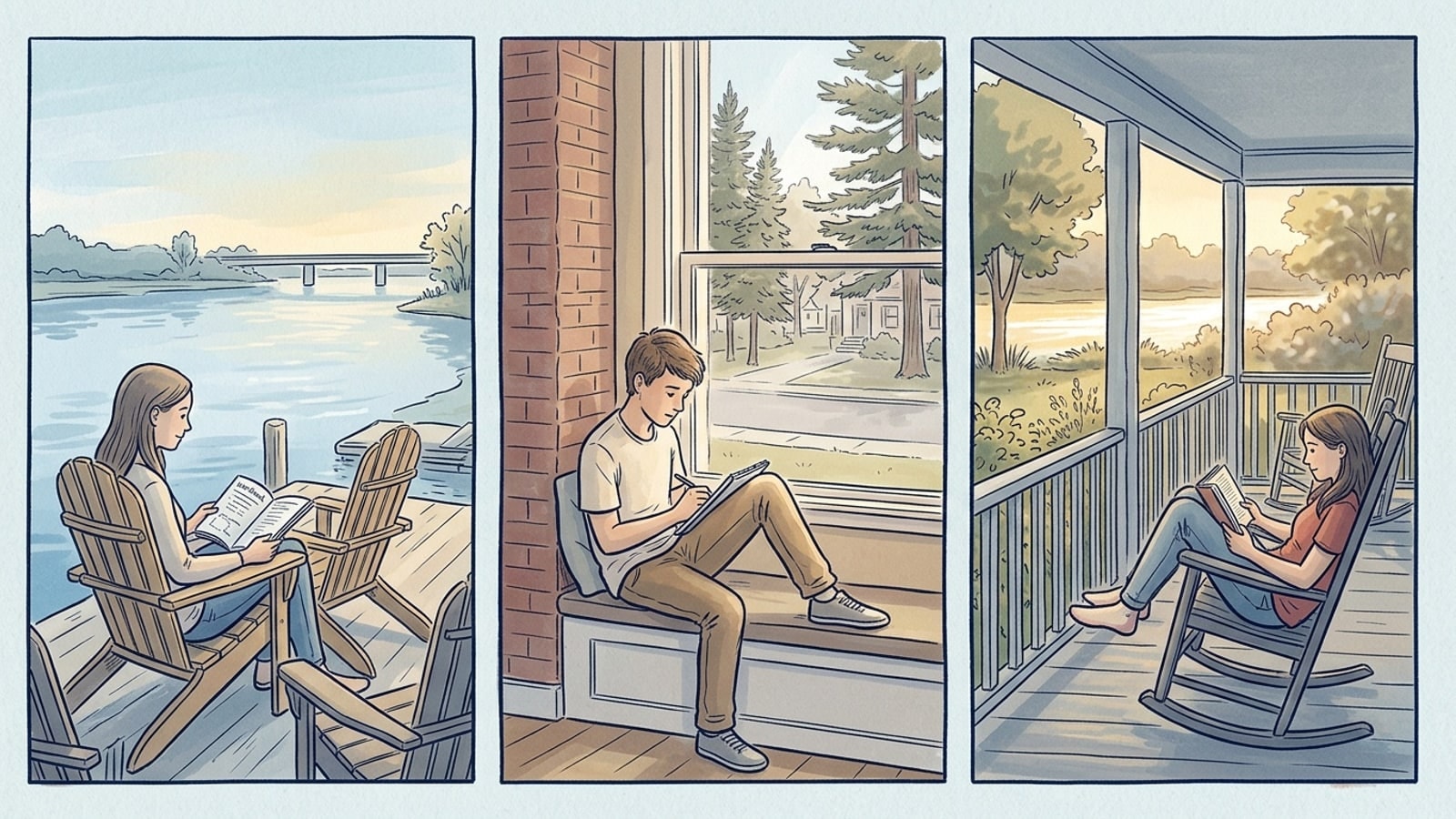
Three households, one ordinary week
Questions families ask
What does it cost?
Tuition depends on grade level and program track, and both monthly plans and pay-in-full options exist. Start at the tuition page; a counselor gives you the actual figure on the first call, which carries no charge.
Do I still file a declaration of intent if my child enrolls with you?
No. The declaration, the 180 days and the every-three-years testing belong to Georgia’s home study route under O.C.G.A. § 20-2-690(c). Enrolling in a school is the other route, and the school holds the record instead. If you have already filed for this school year, say so on the first call and a counselor will tell you what, if anything, is left to do.
We missed September 1. Is it too late to change anything?
The September 1 date belongs to the home study declaration, not to enrolling in a school. Enrollment here is rolling and tied to no district calendar, so a family that missed the date is not waiting until next fall to make a decision.
What happens to my child’s IEP or 504 plan?
An IEP or 504 plan belongs to the district that wrote it and does not travel off that district’s roll. What does travel is the federal right under IDEA to request a no-cost evaluation from your local district, enrolled there or not. Put that request in writing to the district serving Augusta. Tell a counselor what the plan provided before you enroll.
How many credits does my student already have, and how many are left?
The one question a general answer cannot settle. Send whatever the last school filed, even a photograph, and a counselor gives you both numbers before any assignment is set.
Will a diploma from an online school be taken seriously?
It is issued by an accredited school on that school’s own requirements, and admissions offices and employers treat it as one. It is not a GED.
Can my student transfer back to public school later?
Credits earned here travel on an accredited transcript, read like any transferring student’s record. Acceptance is always the receiving district’s call, so email the district you might return to and ask in writing how they treat credits from an accredited private school. Augusta families should check which district their address falls in first.
Can we start partway through the year?
Yes. Enrollment is rolling and not tied to any district calendar, so a student begins on a real week. Mid-year starts are ordinary here.
We live in North Augusta. Can our student still enroll?
Yes. Enrollment is not zoned and does not depend on which state you live in. What does depend on your state is the home study route, which is South Carolina’s to define for a South Carolina family and Georgia’s for a Georgia one. If you enroll, that route is not the one you are on.
We are moving across the river partway through the year. What happens?
Nothing, on our side. The transcript does not fork, the courses do not restart and the school of record does not change. Tell a counselor the new address for the file and carry on.
Our student is on a military family’s timetable. Does that change anything?
Only in your favor. Enrollment is rolling and the record travels, so a posting date and a school calendar stop having to agree with each other.
More of them, at length, in the full question guide, and what accreditation actually means if that is the open question.
An accredited online school serving students across Georgia, South Carolina and the United States. Speak to a counselor on (888) 242-4262, or start an enrollment when you are ready.
Other Georgia cities: Atlanta · all Georgia