
Orland Park, Illinois · K-12 Online Home School
School that fits an Orland Park family’s calendar.
An accredited, self-paced K-12 program for Orland Park families, for the high achiever who is bored, the busy household, and the student who needs the day shaped around them.
Start here
A comfortable suburb, a school day built per child
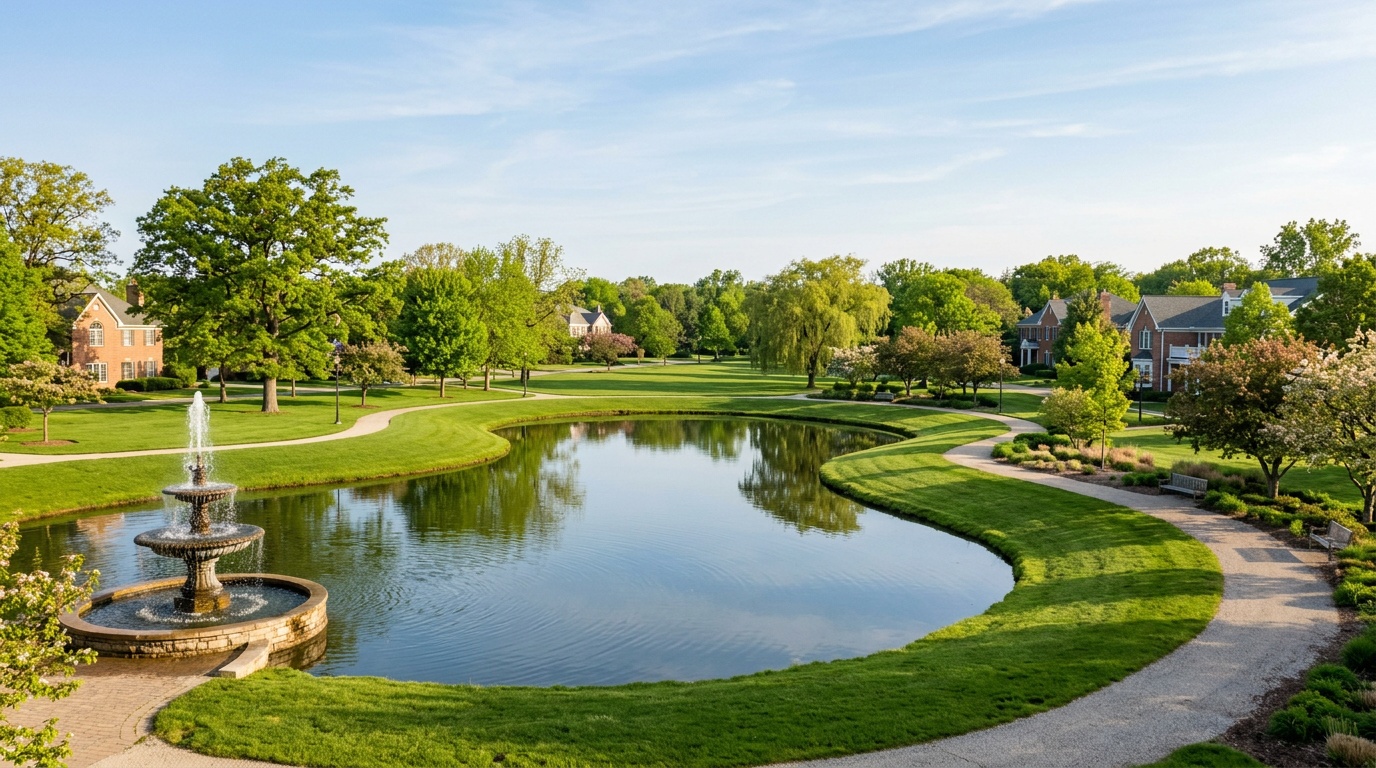
Orland Park is a comfortable southwest suburb of families, parks, and full activity calendars. A solid local school is still one pace for a crowded room, and a capable student often waits or drifts. A self-paced, accredited K-12 program sets the level per student, subject by subject, so the day fits the child rather than the average.
The program serves families across Orland Park, Tinley Park, and the southwest suburbs, with the same plan and the same accredited record behind every student. Start with how self-paced online high school works, or a plain look at online school versus homeschool versus public school. More about Orland Park.
The program at a glance
What summer can be: pause, keep moving, or get ahead
Two ways to handle a student who is ahead
Learn more: online summer school
Placed by skill
One student, placed where they actually are
A child can sit above level in reading, on level in math, and still be building writing, all on the same day. The grid is a map, not a cage. A counselor reviews recent work and sets the starting point in each subject, then adjusts it as the student moves, so nobody is parked in a grade by birthday.
An example: one student, placed by skill the same day
Each subject starts where the student is, not where a birthday says.
Every student also gets a written, subject-by-subject plan, real teachers who grade the work and answer questions on the student’s schedule, academic support when a lesson does not click, and one accredited record kept for the family year after year.
The serious musician or dancer
Built around a serious schedule
Learn more: the K-12 program
Why it fits here
A day that keeps pace with an Orland Park calendar
Between travel sports, a commute toward the city, and activities that fill the evenings, a fixed bell fights the way families here live. Self-paced coursework lands in the hours the family has, a strong student races ahead where ready, and a struggling subject gets time without a room of thirty watching.
Two ways to run a school day
The deeper answer
Why cramming fades and spacing sticks
Picture two students studying the same chapter. One reads it four times in a single evening, highlights everything, and feels confident until the test lands on their desk forty-eight hours later and most of it has quietly evaporated. The other reads it once, sleeps on it, revisits a few key ideas two days later, then again near the end of the week. Less drama, more retention. That second student just used spaced practice, and cognitive science has backed it for decades. The brain does not store information like a file save. It rebuilds a memory each time it retrieves one, and that rebuilding process is what makes the material stick. A cram session skips the retrieval workout entirely.
This is exactly where a self-paced schedule earns its keep. When a learner is not racing toward a single arbitrary test date, lessons can be spread across days and weeks the way spacing research actually recommends. Students can revisit a tricky algebra concept on Monday, practice a related skill on Thursday, and circle back again the following week without an anxious all-nighter wedged in between. Progress moves at the pace the material demands, not the pace the calendar dictates. That shift changes the entire emotional weight of learning. Instead of bracing for the cliff of a big exam, students build knowledge the way a mason lays bricks: one solid course at a time, each layer supporting the next.
Find your Orland Park family
Whatever brought you here, the model bends to it
The high achiever who is bored
A student who finished the chapter in September should not wait until June. Mastery moves them to the next course now, with honors-level depth.
Athlete, dancer, or performer
Travel teams and rehearsal schedules do not have to cost the school year. The accredited core compresses into focused blocks.
Two careers and a commute
When both parents work, the school day works around the hours you have, and either parent can open the record from anywhere.
how self-paced works
The anxious high achiever
Removing the room-of-thirty pressure helps a perfectionist breathe. The pace lowers, the standard stays high.
Switching mid-year
You do not have to wait for fall. A counselor reviews the records and the student picks up at their real level on a clean record.
Wants more than the district offers
When a solid district still is not the right shape for your child, here is how the options actually compare.
The deeper answer
Why mixing problem types beats doing twenty of the same
Here is the trap most math workbooks set: a child powers through twenty long-division problems in a row, finishes the page, feels like a champion, and forgets the method by Thursday. That satisfying stack of checkmarks is a mirage. When every problem on the page is identical, the brain stops asking “what do I need here?” and just runs the same motion on repeat, like muscle memory at a piano recital. The moment a test or a new chapter mixes things up, the wheels come off. Researchers call this the “blocking” effect, and it is one of the sneakiest reasons students who seem to understand a lesson stumble when it counts.
Interleaving flips the script. Instead of twenty division problems, a student works four division problems, then two fraction comparisons, then a geometry question, then back to division. Every shift forces a micro-decision: which tool do I grab? That decision-making is the actual skill parents want their students to build. It feels harder in the moment because it is harder, and that productive struggle is exactly where durable learning lives. Our American curriculum is built around this principle, deliberately mixing problem types so students practice choosing strategies, not just executing them on cue. The short-term discomfort of “this feels tricky” is the signal that long-term retention is happening. Slow down, shuffle the deck, and watch the understanding stick in ways that a hundred identical problems never will.
Kindergarten through senior year
One continuous record, every grade
The same program runs the whole way, and the level is set by what a student can do.
One continuous path, one record
K-5Foundations
6-8Analytical turn
9-12Four-year sequence
GraduationAccredited
Grade pages: Kindergarten, 4th, 5th, 6th, 7th, 8th, 9th, 10th, 11th, 12th.
The deeper answer
Why one pace for one child changes the outcome
For decades, researchers have quietly confirmed what every parent already suspects: when instruction matches the pace of the individual learner, outcomes rise. Not a little. Meaningfully. The classic one-to-one tutoring studies that educational psychologist Benjamin Bloom summarized in the 1980s showed students taught individually outperformed peers in conventional classrooms by a wide margin, and the core reason was simple. One student, one pace, one feedback loop. The crowded classroom was never built to replicate that. Thirty desks, one bell, and a teacher sprinting through a pacing calendar designed for nobody specific guarantees that some students get bored waiting and others get lost trying to keep up. Neither group wins.
That is the quiet promise behind a self-paced model built for real K-12 students. When a child moves forward only after mastering a concept, the learning stacks correctly, and nothing falls through the cracks. When a child already owns a skill, they do not sit through a week of review that teaches them patience but not math. A real, credentialed teacher still anchors the experience because pace without guidance is just speed, and speed without direction is just noise. The result edges closer to that one-to-one ideal than any shared gymnasium schedule ever could. If you are weighing your options, a side-by-side look at online school vs. homeschool vs. public school puts the structural differences in plain view.
The course catalog
A full course load, online and self-paced
From the early grades through senior year, the program covers the core subjects and a real slate of electives, all built for self-paced work.
Elementary, K-5
Reading, writing, and number sense built carefully, one mastered step at a time.
Middle School, 6-8
The analytical turn: pre-algebra, real writing, and a student learning to own a plan.
High School, 9-12
A full accredited course load with honors-level depth inside the same self-paced structure.
The deeper answer
Wildfire- and evacuation-displaced families
When smoke fills the air and evacuation orders turn a neighborhood into a ghost town overnight, the last thing a family should worry about is whether their students just fell off the academic calendar. That is exactly where an online school earns its keep. There is no physical building to shutter, no bus route to suspend, and no announcement that classes are “postponed until further notice.” A student who logs in from a relative’s living room three counties away picks up precisely where they left off, because the school itself never went anywhere. Lessons, grades, attendance records, and teacher relationships all ride in the cloud, not in a structure that can be boarded up or condemned.
The gap in the transcript is the quiet damage most families do not see until later. A week without instruction becomes a missing unit; a missing unit becomes a grade that does not reflect what the student actually knows; and a shaky record creates friction when the family tries to re-enroll somewhere new. An online school sidesteps that entire chain of events. Transferring credits into or out of the program stays clean because there are no attendance holes to explain and no makeshift instruction to apologize for. Continuity is not a feature here, it is the architecture. For families navigating displacement, that means one fewer crisis to manage at an already overwhelming moment, and a student who keeps learning no matter where the family lands next.
A week in practice
What a real week looks like
No bell and no homeroom, but a clear rhythm: set the week’s targets, work in short focused blocks, and watch the record fill in as the work lands. A counselor watches the weekly target, so a slow stretch is caught early and a strong week is confirmed rather than wasted.
A self-paced week, set by the family
- Targets set
- Math
- Reading
- Science
- Writing
- History
- Co-op
- Math
- Art
- Catch-up
- Review
The deeper answer
Will the next school accept the work?
Here is the worry that keeps parents up at night: a child spends a semester (or two, or three) doing serious academic work online, then tries to step back into a brick-and-mortar school and gets a blank stare from the registrar. Valid concern, wrong outcome. When your student’s coursework is backed by an accredited institution, the record carries real weight. Public schools, private schools, charter schools, and magnet programs all recognize accredited transcripts because accreditation is the universal handshake of K-12 education. The grades are real. The credits are real. The cumulative record is exactly what a receiving school needs to place your child correctly and keep their academic timeline on track. For a closer look at how the process actually works, the credit transfer page walks through what documentation matters and what to expect when you make the switch.
The smarter question is not “will they accept it” but “what does the record look like when it arrives.” A clean, accredited transcript with clear course titles, earned credits, and legitimate grades is a document any school administrator can read in thirty seconds and act on. No asterisks, no awkward conversations, no “we have to review this with our board.” If you are just getting started and want to understand what it takes to enroll before you worry about the exit, check the admissions requirements overview. The path in and the path out are both designed to work with the broader K-12 world, not around it.
Ready when you are
See if it fits your family
A short conversation is the fastest way to know, with no pressure, just answers.
The record that lasts
One accredited record, wherever life goes next
The coursework is accredited, so the transcript is a professional document read cleanly by the next school. It is one continuous record across every grade and every move, with no gap to explain.
What is on the accredited record
-
Course list and gradesEvery completed course, year by year
-
A cumulative GPACalculated and kept current
-
Descriptions a registrar readsStandards-aligned course descriptions
-
No gap across a moveOne continuous record, anywhere you go
The deeper answer
Words plus pictures: why two channels beat one
Your brain runs two separate input lanes at the same time: one for words (spoken or read) and one for images, diagrams, and spatial cues. Cognitive scientists call this dual coding, and the short version is that when both lanes carry the same idea simultaneously, memory traces form faster and stick longer than when only one lane is doing all the heavy lifting. A child who reads “the water cycle moves in a loop” and also sees an annotated diagram of evaporation, condensation, and precipitation is not just getting the same lesson twice. The two representations link up in working memory and create a richer, more retrievable mental model. Walls of text, on the other hand, jam a single lane until it saturates and starts dropping packets.
That insight drives the way lessons inside our American curriculum are actually built. Every concept that benefits from a visual gets one, whether that is a labeled anatomy chart, a color-coded timeline, an animated graph, or a step-by-step illustration that moves in sync with the narration. The goal is never decoration for decoration’s sake. The visual earns its place by carrying meaning the words alone would leave fuzzy. Students who might tune out a paragraph of explanation often snap to attention the moment a clear diagram appears alongside it, and that attention is the first ingredient learning actually needs. Two channels, used honestly, beat one every time.

A note from the Head of School
Do not wait for a semester to start. For a Orland Park family, the most useful first move is the fifteen-minute counselor call with your student’s most recent records in hand. We place by skill, subject by subject.
The day fits the family, not a bell, and the work is genuinely the student’s own.
Questions and answers
Orland Park online home school, in plain English
Is online home school legal in Illinois?
Yes. Illinois treats a home school as a private school. Families do not register with the state, seek approval, or sit state tests; you teach the same branches of education the public schools teach, in English. Authority: the Illinois State Board of Education.
Is the program accredited?
Yes. The coursework is accredited, so the transcript is a professional record built to recognized standards and read cleanly by the next school.
What about friends and activities?
A self-paced day frees up the hours a fixed schedule eats, which is why active families choose it. Co-ops, club sports, park-district programs, and city activities fill the daytime. Here is how online students build a social life.
Do you support an IEP or 504 plan?
Yes. The self-paced structure already provides extra time, a quiet space, and a flexible pace per subject. Bring the current plan to the counselor call and the routine is built around it.
How should we think about cost?
A home program removes much of the hidden spending around a daily commute and keeps the schedule open for a working parent. A counselor walks through what enrollment includes, and we are fully transparent about cost.
What if we try it and it is not working?
A struggling stretch gets caught by the weekly check and the counselor, the pace and support adjust, and the accredited record travels if a family decides to move on. No year is lost.
How much do I need to know to make this work?
Less than most parents fear. The school carries the instruction and the grading; the parent is a coach who keeps the rhythm, not a teacher who delivers the algebra. Not knowing the material yourself is fine, and on purpose.
What technology do we need to start?
A reliable laptop and a steady internet connection are the main requirements. Books and any hands-on materials are shipped to the house, so the day is a mix of on-screen and off-screen work.
The legal basics
Homeschooling in Illinois, in plain English
In Illinois a home school is treated as a private school. Families are not required to register with the state, seek approval, give notice, or sit state tests; you teach the same branches of education the public schools teach, language arts, mathematics, the sciences, social studies, fine arts, and health, in English, and keep your own records. Compulsory attendance runs from age 6 to 17. Authority: the Illinois State Board of Education.
More Illinois cities we serve
Families across Illinois, one program
Two ways in
Get started in Orland Park
Whether your student is transferring mid-year or starting fresh, the first step is the same short conversation.