
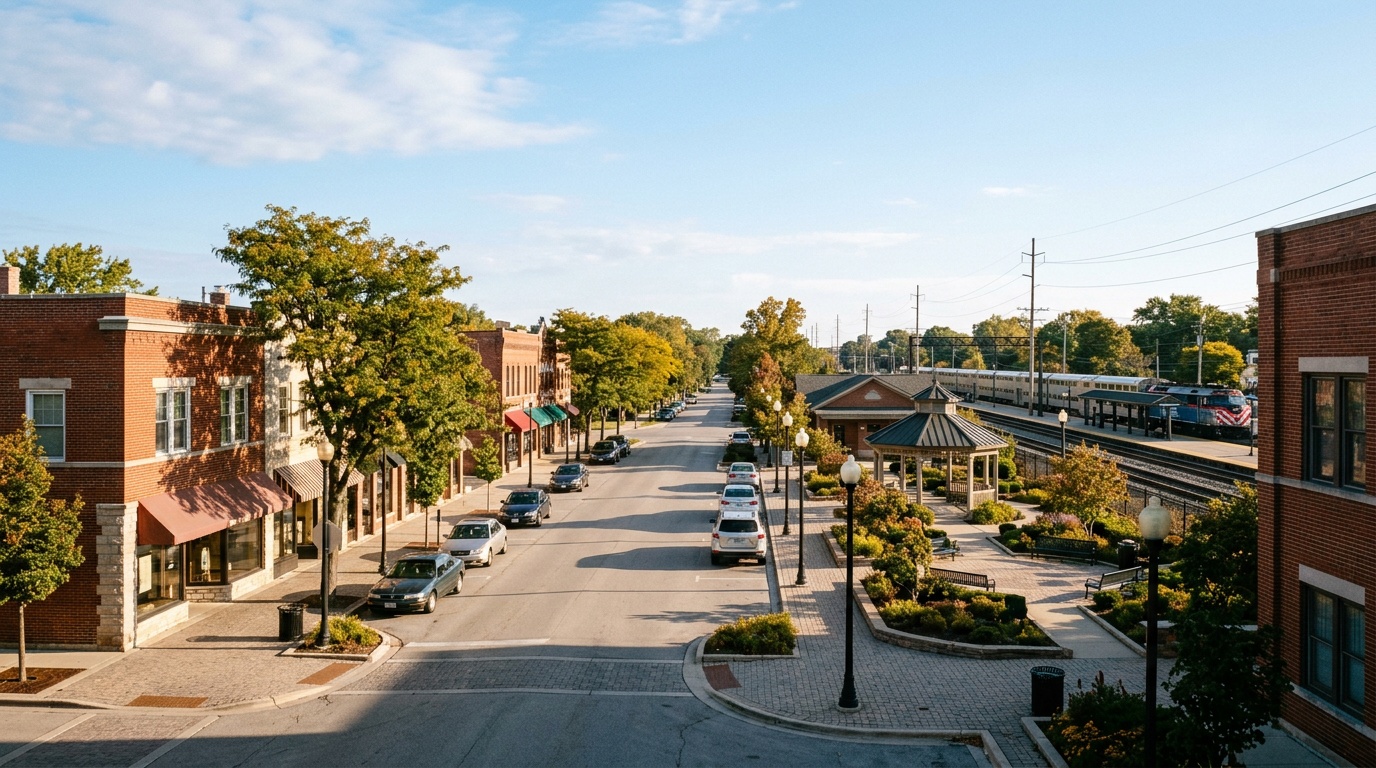
Downers Grove, Illinois · K-12 Online Home School
School that keeps up with a Downers Grove family.
An accredited, self-paced K-12 program for Downers Grove families, for the busy household, the student ready to move faster, and anyone who needs the day to fit real life.
Every grade, one record
Start any week of the year
Placed by demonstrated skill
Self-paced, accredited
Start here
A settled DuPage suburb, a school day built around the child
Downers Grove is a comfortable DuPage County suburb of commuters, parks, and full calendars. A solid local school is still one pace for a crowded room, and a capable student often waits or drifts. A self-paced, accredited K-12 program sets the work for your student and lets the family own the hours, so the day fits the child rather than the average.
The program serves families across Downers Grove, the DuPage suburbs, and the surrounding communities, with the same plan and the same accredited record behind every student. Start with how self-paced online high school works, or a plain look at online school versus homeschool versus public school. More about Downers Grove.
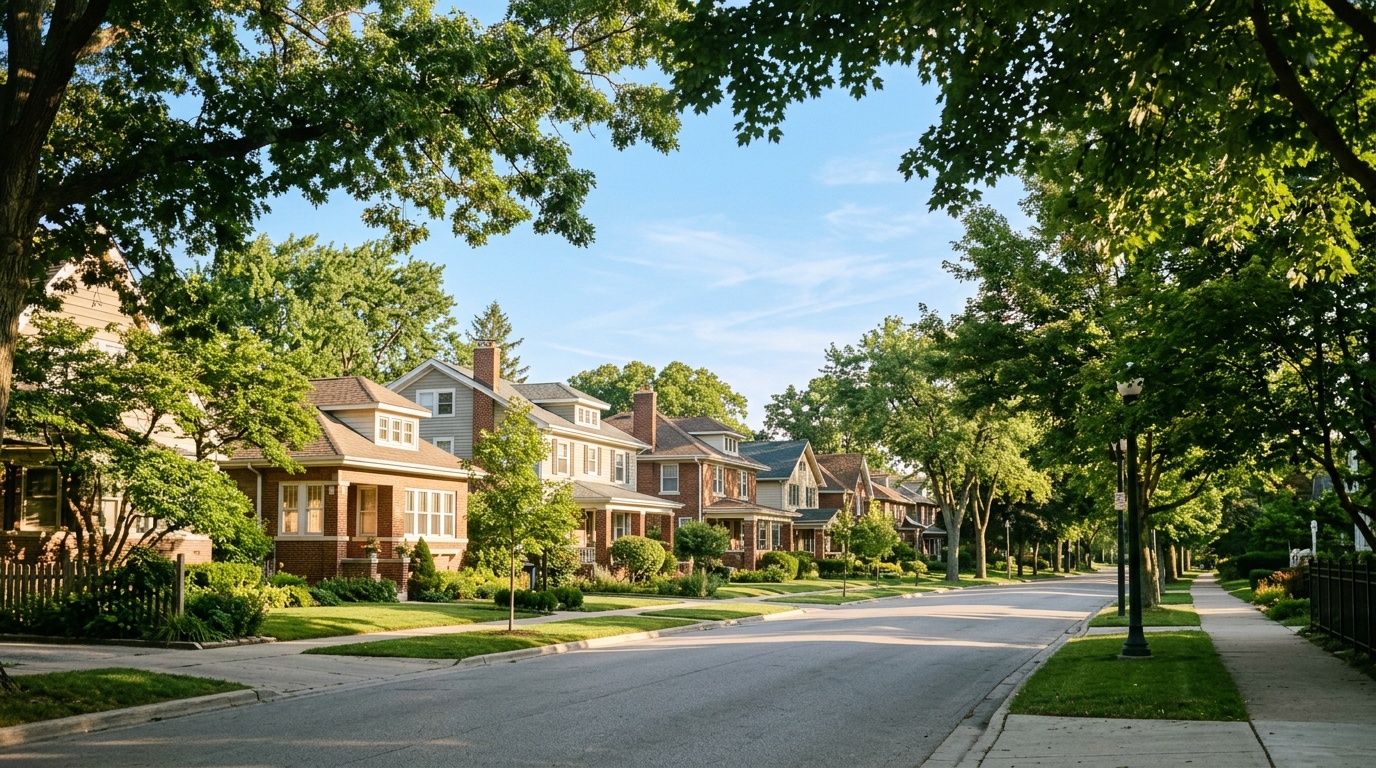
Shift-work parents: warehouse, healthcare, trades
School that fits the household
Learn more: how self-paced learning works
Placed by skill
One student, placed where they actually are
A child can sit above level in reading, on level in math, and still be building writing, all on the same day. The grid is a map, not a cage.
An example: one student, placed by skill the same day
Each subject starts where the student is, not where a birthday says.
The bored advanced student who’s acting out
Two ways to handle a student who is ahead
Learn more: the K-12 program
Why it fits here
A day that bends around a Downers Grove calendar
Between a Metra commute, club sports, and activities that fill the evenings, a fixed bell fights the way families here live. Self-paced coursework lands in the hours you have, a strong student races ahead, and a struggling subject gets time without a room of thirty watching.
Two ways to run a school day
The deeper answer
A light portfolio that does not take over
The official transcript does the heavy lifting, but a light portfolio sitting beside it tells the story the grade-point average cannot. Think of it as a small highlight reel rather than an archive: one writing sample that clicked, a science project the student actually cared about, a short reflection on a skill that surprised them. That is genuinely enough. The goal is not a binder thick enough to use as a doorstop; it is a handful of pieces that show growth, curiosity, and a little personality whenever the next school, a transfer office, or an extracurricular program wants a fuller picture. Most families who check our complete guide to virtual learning are relieved to learn how low the maintenance bar actually is.
The trick to keeping it from becoming a second job is ruthless simplicity. Pick one moment per semester worth saving, drop it in a shared folder, and move on. No formatting, no color-coding, no elaborate rubrics. A phone photo of a hand-drawn diagram counts. A short voice memo explaining what a student learned from a challenging unit counts. Digital or paper, it does not matter as long as it is findable when someone asks. Set a fifteen-minute reminder at the end of each term, choose one item, and close the folder. A portfolio built that way stays honest, stays light, and stays yours without colonizing the weekends you were supposed to have off.
Find your Downers Grove family
Whatever brought you here, the model bends to it
Six of the most common reasons Downers Grove families look at online K-12, and how a self-paced program answers each.
Two careers and a commute
When both parents work and the morning starts with a train, the school day works around the hours you have, and either parent can open the record from anywhere.
The student who is ahead
A strong student moves to the next course the moment a unit is mastered, with honors-level depth, instead of waiting on the middle of the room.
Athlete, dancer, or performer
Travel teams and rehearsals do not have to cost the school year. The accredited core compresses into focused blocks.
A day that actually sticks
A simple, repeatable rhythm anchored to real life, not a bell, is what makes a school week last past the first month.
Switching mid-year
You do not have to wait for fall. A counselor reviews the records and the student picks up at their real level on a clean record.
A family on the move
If life means another address, the accredited record is one continuous document that follows the family, with no gap to explain.
The deeper answer
Beating the after-lunch slump
Around 1 or 2 p.m., something predictable happens to the human brain: it quietly files a request for a nap. This is not laziness or poor discipline. It is circadian biology doing exactly what it was designed to do, producing a natural dip in alertness that researchers call the post-lunch dip, a pattern that shows up even when lunch is skipped entirely. Traditional school schedules ignore this completely, which is how millions of students end up staring at a math lesson on derivatives or a reading passage about the Missouri Compromise while their neurons are basically screaming for a hammock. The result is not learning. It is clock-watching dressed up as education.
A self-paced home school schedule flips this problem into an advantage. When a student controls the sequence of their day, the heavy cognitive lifting, reading dense text, working through proofs, analyzing primary sources, can land in the morning window when alertness peaks. The post-lunch valley becomes the slot for hands-on projects, physical movement, drawing diagrams, reviewing flashcards, or lighter review work that does not demand the same mental horsepower. That is not cutting corners; that is working with the brain instead of against it. Students who structure their days this way often report actually finishing material rather than just surviving it. Energy is a resource. A schedule that wastes it on the wrong tasks at the wrong time is leaving real learning on the table every single day.
How it works
The whole model, in four moves
Talk
A free fifteen-minute counselor call covers where your student is and what the year looks like.
Place
A counselor places each subject by demonstrated skill, not by birthday, so the work starts at the right level.
Plan
You get a written, subject-by-subject plan and a weekly target the student actually works toward.
Go
Start any week. Real teachers grade the work and answer questions on your student’s schedule.
The deeper answer
Civics for a student who will soon vote
Knowing how a bill becomes law is one thing. Knowing why some bills die in committee, who funds the campaigns of the people voting on them, and whether the headline you just read is straight reporting or opinion dressed in a blazer – that is a completely different skill set. Our civics sequence threads history, government, and media literacy into a single, honest conversation about how power actually moves in a democratic republic. Students read primary sources alongside breaking news, compare the Federalist Papers to a modern op-ed, and learn to spot the difference between a peer-reviewed policy study and a well-designed infographic that simply feels true. The goal is a student who can sit at a kitchen table the week before their first election and make a genuinely informed choice – not a performance of citizenship, but the real thing.
That foundation is built inside our American curriculum, where government and history courses are sequenced so each one sharpens the last. A student who spent eighth grade mapping the constitutional convention arrives in high school government already fluent in the arguments that still drive partisan debate today. Media literacy runs through every grade level because the news cycle does not wait for senior year. Teachers guide students to check sources, trace funding, and separate verified fact from confident speculation. Those habits compound quietly until, right around the time a student registers to vote, they realize they have been practicing this for years.
A week in practice
What a real week looks like
There is no homeroom and no bell, but there is a clear rhythm. On Monday the week’s targets are set. The student works in short, focused blocks, the heaviest subjects when they are freshest, and the record fills in as the work lands. A counselor watches that weekly target, so a slow stretch is caught early and a strong week is confirmed rather than wasted. Most students finish the academic core in fewer hours than a traditional day, because no one is waiting on a room of thirty to catch up.
A self-paced week, set by the family
- Targets set
- Math
- Reading
- Science
- Writing
- History
- Co-op
- Math
- Art
- Catch-up
- Review
The deeper answer
Error analysis: mining a wrong answer
Here is a secret that every sharp educator knows but rarely says out loud: the wrong answer is not the problem, it is the point. When a student misses a question, that mistake is a live data feed showing exactly where their thinking went sideways. Skipping past it with a red mark and moving on is like a mechanic hearing a knock in the engine and turning up the radio. The noise does not go away; it just gets more expensive later. Error analysis flips the script. Instead of asking “what is the right answer,” parents and students ask “why did this answer feel right?” That single shift transforms a correction session into the most productive ten minutes of the school day. Was the wrong answer a careless slip, a vocabulary gap, a shaky foundational concept, or a genuine misconception about how something works? Each diagnosis points to a different fix, and knowing the difference is everything.
The feedback loop is where the real acceleration happens. A student who can articulate why they missed something has already started building the mental scaffolding to avoid the same trap. Over time, this habit rewires how a learner approaches hard problems: slower, more deliberate, less rattled by uncertainty. In a self-paced environment, this is especially powerful because the student controls the pace of review and is not rushed by a classroom bell into burying the mistake under the next lesson. Wrong answers, handled well, are the most honest teachers in the building.
Ready when you are
See if it fits your family
A short conversation is the fastest way to know, with no pressure, just answers.
Kindergarten through senior year
One continuous record, every grade
The same program runs the whole way, and the level is set by what a student can do. Jump to any grade:
The deeper answer
Goal-setting a student can actually own
There is a quiet but powerful difference between a goal handed down from a syllabus and one a student actually helped write. When a learner sits down, looks at the week ahead, and decides “I will finish these two lessons and review my math notes by Thursday,” something shifts. Ownership kicks in. The target is no longer something to dodge; it is something to hit. That psychological shift is the whole game. A self-paced learning environment gives that autonomy room to breathe, but autonomy without structure is just drift. The key is pairing student-owned goals with a real support layer.
That is where guided check-ins matter more than any motivational poster ever could. A student who knows a trusted adult will review progress at the end of the week is a student who plans with a deadline in mind. Weekly goal-setting becomes a skill, not a chore, and skills compound. By the time a student has spent a semester setting and adjusting their own targets, they have built a habit of self-direction that transfers to every hard thing they will face. Our counselor scheduling tool exists precisely for that loop: set a goal, get support, adjust, repeat. That is the cycle that actually sticks.
The course catalog
A full course load, online and self-paced
Elementary, K-5
Reading, writing, and number sense built carefully, one mastered step at a time.
Middle School, 6-8
The analytical turn: pre-algebra, real writing, and a student learning to own a plan.
High School, 9-12
A full accredited course load with honors-level depth inside the same self-paced structure.
The deeper answer
How to know your student is actually engaged
Here is the honest truth about online learning: completion percentages lie. A student can click through every lesson, rack up green checkmarks, and retain almost nothing. Real engagement sounds different. It sounds like your child explaining photosynthesis at dinner without being asked, or circling back to a math problem that stumped them yesterday because it is still bothering them. Those unprompted moments, the mid-snack questions, the “wait, but why does that work” interruptions, are the clearest signals that learning is actually landing. Curiosity is not something a student can fake for long, and you will notice it before any report card does.
When those signals go quiet, that is worth paying attention to before it becomes a transcript problem. A student who scrolls through lessons in silence, never pushes back on an idea, and cannot paraphrase what they just read is coasting, not learning. The fix is rarely a longer study session. Sometimes the pacing is wrong, which is exactly why a self-paced structure exists in the first place. Sometimes the student needs a real conversation with someone outside the household. Booking time through the counselor scheduler gives families a direct line to an advisor who can spot the pattern, adjust the approach, and get engagement back on track before the problem compounds. Watching for genuine curiosity is the simplest diagnostic tool any parent has, and it costs nothing to start using it today.
The record that lasts
One accredited record, wherever life goes next
For a family that may move again, this is the part that matters most. The coursework is accredited, so the transcript is a professional document built to recognized standards and read cleanly by the next school. It is one continuous record across every grade and every move, with no gap to explain. A student who transfers in arrives at their real level, and a student who transfers out carries a transcript a registrar recognizes at face value.
What is on the accredited record
-
Course list and gradesEvery completed course, year by year
-
A cumulative GPACalculated and kept current
-
Descriptions a registrar readsStandards-aligned course descriptions
-
No gap across a moveOne continuous record, anywhere you go

A note from the Head of School
Do not wait for a semester to start. For a Downers Grove family, the most useful first move is the fifteen-minute counselor call with your student’s most recent records in hand. We place by skill, subject by subject, and build the week around your real schedule.
Questions and answers
Downers Grove online home school, in plain English
Is online home school legal in Illinois?
Yes. Illinois treats a home school as a private school. Families do not register with the state, seek approval, or sit state tests; you teach the same branches of education the public schools teach, in English. Authority: the Illinois State Board of Education.
Is the program accredited?
Yes. The coursework is accredited, so the transcript is a professional record built to recognized standards and read cleanly by the next school.
What about friends and activities?
A self-paced day frees up the hours a fixed schedule eats, which is why active families choose it. Co-ops, club sports, park-district programs, and city activities fill the daytime. Here is how online students build a social life.
Do you support an IEP or 504 plan?
Yes. The self-paced structure already provides extra time, a quiet space, and a flexible pace per subject. Bring the current plan to the counselor call and the routine is built around it.
How should we think about cost?
A home program removes much of the hidden spending around a daily commute and keeps the schedule open for a working parent. A counselor walks through what enrollment includes, and we are fully transparent about cost.
What if we try it and it is not working?
A struggling stretch gets caught by the weekly check and the counselor, the pace and support adjust, and the accredited record travels if a family decides to move on. No year is lost.
How much do I need to know to make this work?
Less than most parents fear. The school carries the instruction and the grading; the parent is a coach who keeps the rhythm, not a teacher who delivers the algebra. Not knowing the material yourself is fine, and on purpose.
What technology do we need to start?
A reliable laptop and a steady internet connection are the main requirements. Books and any hands-on materials are shipped to the house, so the day is a mix of on-screen and off-screen work.
The legal basics
In Illinois a home school is treated as a private school. Families are not required to register with the state, seek approval, give notice, or sit state tests; you teach the same branches of education the public schools teach, language arts, mathematics, the sciences, social studies, fine arts, and health, in English, and keep your own records. Compulsory attendance runs from age 6 to 17. Authority: the Illinois State Board of Education. Leaving a public school? A brief letter noting your child is enrolling in a private home school is the courteous step, and our accredited program keeps the cumulative record for you.
More Illinois cities we serve
Families across Illinois, one program
High School of America works with families all over the state. A few more cities we serve:

Get started in Downers Grove
Whether your student is transferring mid-year or starting fresh, the first step is the same short conversation.