Accredited K-12 Online Private School
Salinas K-12 online home school, that finishes the year through the harvest.
Salinas feeds the country from the Salad Bowl of the world. For a family whose calendar moves with the season, the accredited online homeschool is the part that holds steady.

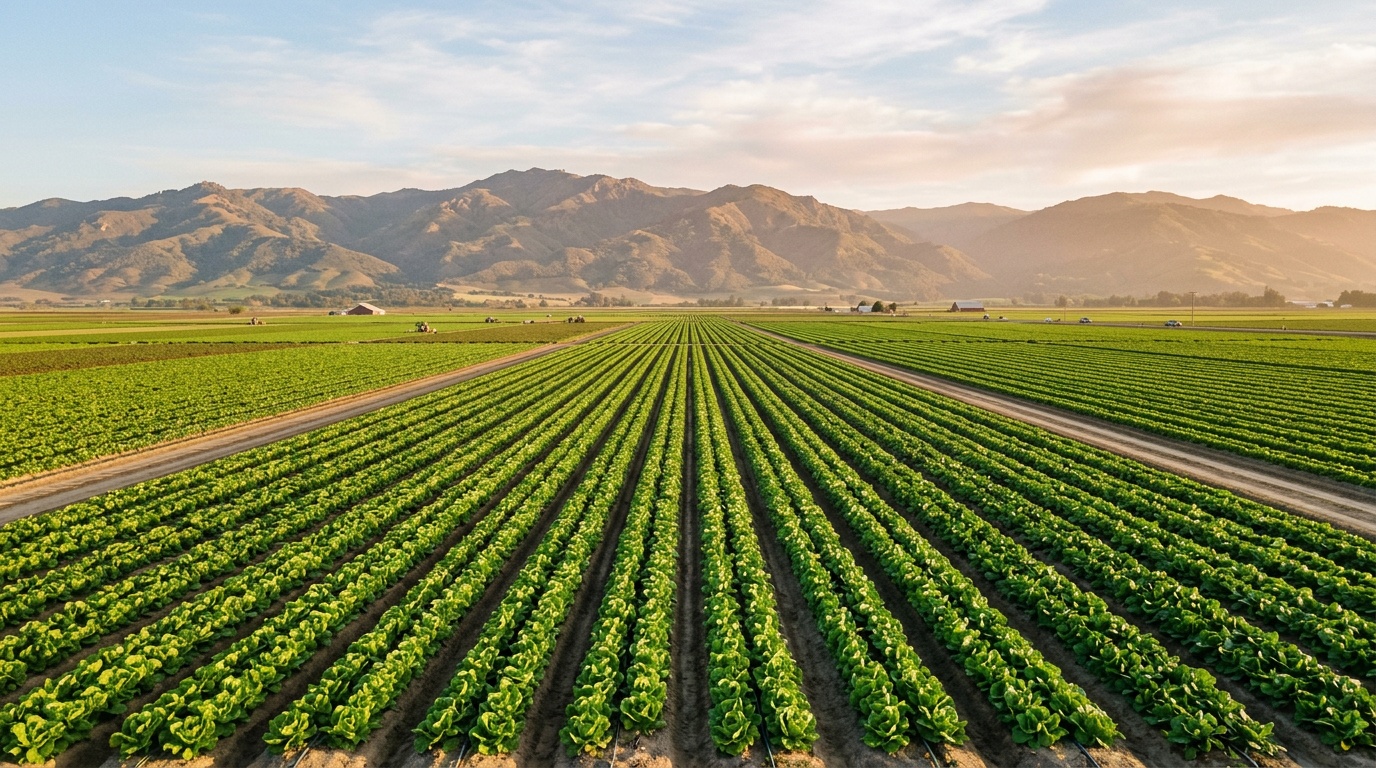
01 The Valley and the Season
Why a farmworking Salinas family chooses an online school.
Salinas sits in the middle of the Salinas Valley, the stretch of ground that grows so much of the nation’s lettuce, strawberries, and leafy greens that it earned the name Salad Bowl of the World. The work here runs on the season. Spring through fall the fields are at full tilt, and a great many Salinas households, the families who grow and pick and pack and ship, run their whole year on that clock. For their children, the school day has to fit a calendar the harvest mostly sets.
An accredited online K-12 program is built to fit it. The school does not need the student at a fixed desk at a fixed bell; it needs the work done, in the windows the family actually has. During the heaviest weeks the school leans light and the field work leans heavy; in the quiet months it is the reverse. The annual target is met either way, and the self-paced cumulative record reflects the work, not the hour it happened.
For the household that follows the crop, the steadiness matters even more. A family that moves with the season, or moves up from another valley, does not have to re-enroll or hand a new district a transcript to puzzle over. The school is the same school in Salinas as it is anywhere a connection reaches, and the record never restarts. Many of these homes are bilingual; the English-vocabulary scaffolding adapts to where the student is while Spanish keeps growing in parallel, and the record reflects the academic work rather than a separate track.
It is worth being plain about what self-paced does and does not mean. It does not mean a child learning alone, a watered-down year, or a parent turned into a full-time teacher. The teachers are at HSOA. The curriculum, the standards, and the checkpoints are fixed. What flexes is the timeline. A Salinas family does not trade rigor for flexibility; they get the same accredited education, arranged around a year the season largely sets the hours of.
02 The Program, Year by Year
The Salinas online K-12 program, grade by grade.
| Band | What the student is doing | Closes with |
|---|---|---|
| K–2 Foundation | Phonemic awareness, phonics, fluency, comprehension. Single-digit math facts and place value. First sentence to first paragraph. The years that decide what the next eleven can do. | Reading independently |
| 3–5 Expansion | Reading to learn, multi-paragraph writing, fractions and operations, the scientific method. Mastery moves the student up, not the calendar. | 5th-grade promotion certificate |
| 6–8 Analytical | Pre-algebra to Algebra I, life and physical science with shipped lab kits, analytical reading and argument writing. | 8th-grade promotion certificate |
| 9–12 Four-year arc | English, mathematics through advanced courses, laboratory science with shipped kits, and the social sciences, with honors and AP-equivalent options as coursework, built on the American Curriculum framework. | An accredited diploma |
Underneath the four bands is a single mechanic: mastery moves the student up, not the calendar. A course is finished when the work meets the standard, and the next course is already there when it does. A student who is strong in math runs ahead in it; a student who needs another week on fractions takes the week, without falling behind in everything else. That is how the same program serves a child who is two grades ahead in one subject and exactly on pace in another.
Flexibility does not mean drift. The platform tracks progress against the weekly target, and a counselor reviews pacing on a regular cadence, so a light week during harvest or a move is visible and gets made up rather than quietly lost. Every grade has its own page: kindergarten, elementary, middle school, and high school nine through twelve. The counselor walks through course selection in detail.
The Salinas Harvest Year
The Salinas Valley harvest runs hardest spring through fall (the filled months). A self-paced school year leans heavier in the quiet months and lighter at the peak, so the work in the fields and the work in the books both get done. The annual target is the same; the shape of the year is not.
03 Who Calls, and Why
Four Salinas households.
The farmworking family
The household that grows, picks, packs, or ships. The season sets the hours, and the heaviest stretches are exactly when a fixed bell schedule is hardest to keep. A self-paced year leans light through the peak and heavy through the quiet months, and the year still finishes.
The family that follows the crop
A household that moves with the season, or moves up from another valley. The school is the same school at every stop, with nothing to re-enroll in and no credits to transfer because the student never left. The record builds straight through the moves instead of restarting at each one.
The bilingual household
Spanish at home, often with abuelos helping through the day. The English-vocabulary scaffolding adapts to where the student is while Spanish keeps growing in parallel. The cumulative record reflects the academic work, not a separate ESL track, and the family’s two languages are an asset on it. See also considerations for immigrant students.
The SUHSD alternative
A family that wants an accredited K-12 path with a different pace than the local Salinas-area district programs offer. Not a verdict on any teacher. A straightforward transfer back to the district later if the family wants it.
04 When the Work Follows the Season
Online school for a family that follows the harvest.
For a lot of Salinas families, the hard part of the school year is not any single subject. It is the calendar. The harvest does not pause for a semester schedule, and a household whose income depends on the peak weeks cannot send a child to a program that treats a missed Tuesday as a failure. When the work moves, or follows the crop to another valley, a conventional district adds a transfer, a re-placement, and weeks lost on top of a move the family is already managing.
An accredited online school answers it a different way: it takes the calendar out of the fight. HSOA is the student’s school through the peak season, through the quiet months, and through a move if one comes. There is nothing to re-enroll in and no credits to transfer, because the student never left the school. The work in the fields and the work in the books share one year, and the year still closes complete.
The effect parents notice is steadiness. A record built continuously in a single accredited school stays one coherent transcript instead of a patchwork stitched across districts and seasons. A student whose family moved with the harvest still has a record that reads as settled and complete, and that transfers cleanly to whatever school comes next. For a child whose education has always bent around the work, that continuity is not a convenience; it is the difference between a record that holds together and one that has to be explained.
None of this asks the family to choose. The student can work the early hours before a shift in the fields, the long quiet afternoons of January, or the windows a migrant season leaves open, and the standard does not move. The harvest sets the hours; the school keeps the bar.
Wondering how the school year would fit your season?
05 The Week Around the Season
What a week actually looks like.
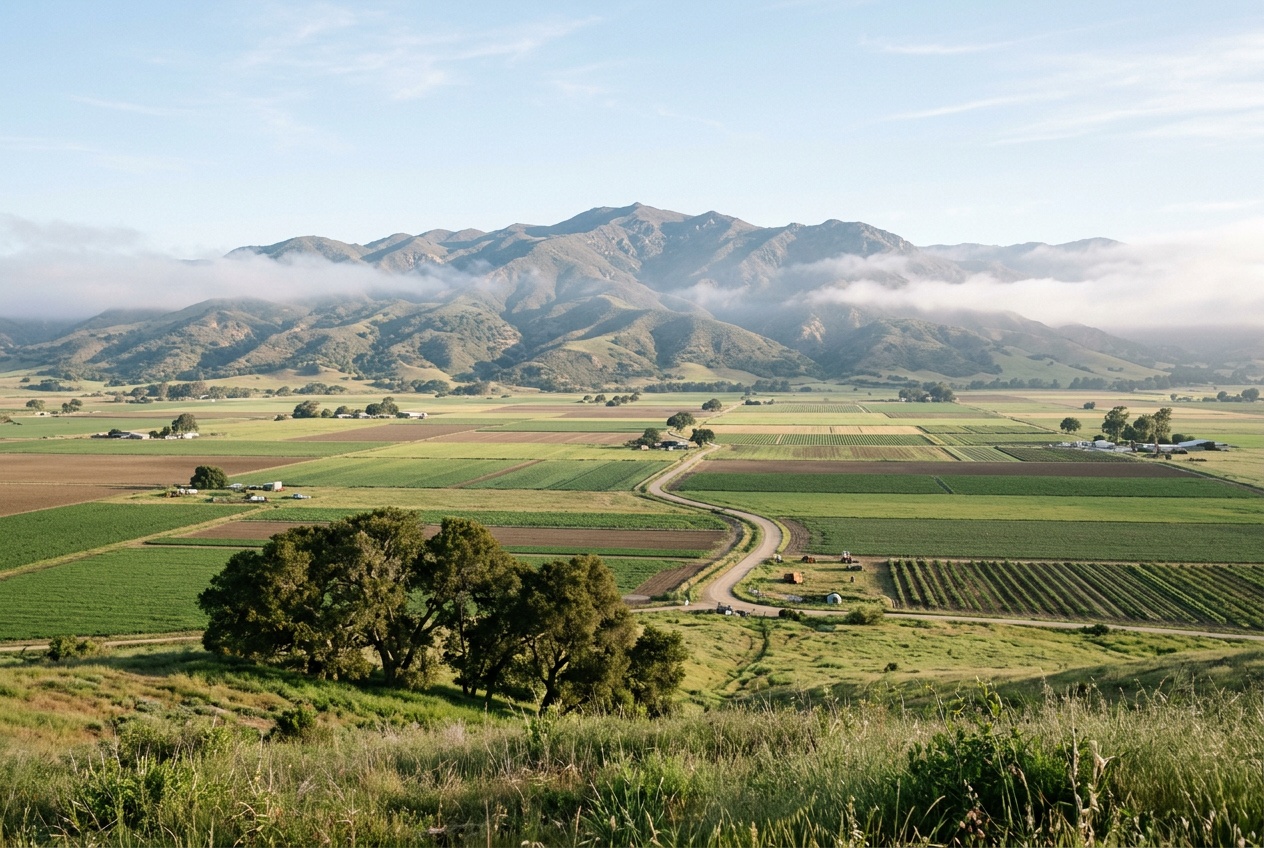
There is no single Salinas school day, which is the whole point. The schedule bends to the household instead of the household bending to a bell. A reading block can land at six in the morning before the cool of the day is gone, or in the long quiet of a winter afternoon. Lab science with shipped materials happens on the kitchen table when the week allows. The three weeks below are not edge cases; they are ordinary in the Salad Bowl, and the program is built to absorb all three without the student ever falling behind.
A peak-harvest week
The fields are at full tilt and the household is up before dawn. School goes light and early: an hour of math and reading before the heat, the rest banked for the evening or the weekend. The week’s target still gets met, just on the season’s clock instead of a bell’s.
A quiet-season week
Winter, when the Valley slows. This is when the heavier blocks land: full mornings, the lab kits, the writing that needs a long table and a quiet house. The year front-loads the catch-up here, so the peak weeks can stay light without anything slipping.
A moving week
The family follows the work to another valley. School happens on a laptop at the old kitchen counter, on the road, then at the new place. No re-enrollment, no new campus. The record shows no gap where the move was; the week simply continues.
06 How the Teaching Works
How a self-paced online home school actually teaches.
Self-paced is a method, not a shortcut. Here is how each part of the K-12 day actually runs for a Salinas student.
Ready to talk through the year, harvest and all?
07 Accommodations
Two paces, one cumulative record.
HSOA accommodates students with active IEP or 504 plans and works with families on the specific accommodations the plan calls for. The starting point for any Salinas family bringing an existing plan is a counselor call. The counselor reviews the plan, walks through how the accommodations land in the K-12 curriculum, and aligns the student’s pacing and supports to what the plan asks for. For a family that moves with the work, this also means the plan does not have to be re-litigated with a new district at every move.
Twice-exceptional learners are advanced in some subjects and need extra support in others. The self-paced mastery model runs both at once: a student can be two grades ahead in math and building in reading on the same day, without either pace becoming the wrong pace. What HSOA does not do is replace the clinical specialists or therapists a family already works with. The school works alongside that ecosystem; its job is the K-12 academic work, accommodated to fit the plan and the student.
From the Head’s Desk · Salinas
On the year that belongs to the harvest.
A lot of first calls I take from a Salinas family carry a quiet worry underneath them: that asking the school to bend around the work is asking for a lesser education. That a family whose year runs on the season has to settle for less than a family whose year runs on a bell. I want to be clear that the opposite is true. Bending the schedule to the work is how the student gets the full, accredited year, not a trimmed one.
The Salinas Valley feeds the country. The families who do that work keep some of the hardest hours in the state, and their children should not have to choose between the household’s livelihood and a real education. So the school takes the calendar out of the contest. The standard holds; the timeline gives. A student can do the morning’s reading before the heat, bank the heavier work for the quiet months, and still finish the year whole.
What I tell every family on that first call: bring the real year. The harvest calendar, the moves if there are any, the prior transcript, the IEP if there is one, and which languages live in the house. We will build the school around the season the family already keeps. The work is not the obstacle to the education. It is the reason the education has to travel well, and ours does.
Bring the season to the counselor call. The plan starts there.
The harvest sets the hours. The school sets the standard. In the Salad Bowl, both still get met.
From the Head’s Desk
08 Cost
What K-12 online home school in Salinas costs.
The financial side is a real conversation, and the right place to have it is a counselor call, not a tuition table on a webpage.
For exact numbers and a written plan for your family’s situation, schedule a counselor call. Fifteen minutes by phone. No pressure.
09 The First Fifteen Minutes
Talk to a Salinas online school counselor.
Fifteen minutes by phone. No commitment after.
Pick a window and the counselor calls you.
Or call (888) 242-4262 directly. Same counselor, no slot needed.
10 Frequently Asked
Salinas online home school questions, answered.
The harvest is brutal spring through fall. Can the school really go light during peak season?
We move with the work, or might follow the crop. Does the school come with us?
Spanish is our home language. Will the program support a bilingual household?
Is “self-paced” watered down or unstructured?
How are the core subjects actually taught: reading, math, science?
We work the season’s long hours. Do I have to teach my child myself?
Can my student transfer back to the local Salinas district later?
What does the K-8 student get at the end of 5th and 8th grade?
My child has an active IEP. How do accommodations work?
How long is the counselor call, and what does it cost?
Field Recording · 60 Seconds
Sixty seconds with the Head of School.
Locator
Salinas, California.
A landmark for context. The school itself is online, available wherever a Salinas family lives or moves with the season.
Cross-Reference
HSOA in nearby California cities.
Each city has its own page. The school is online, available wherever a family lives in California.
Further Reading
More from HSOA, and a few outside sources.
Weighing the move? Start with an honest comparison of online school, homeschool, and public school and our complete guide to getting started; for younger students, the K-5 parent guide. On the questions parents ask most: how online students socialize, avoiding screen overload, a safer, more supportive environment, and teaching AI literacy, not just AI tools. On the practical side: full cost transparency, the admissions requirements, and our complete online-school FAQ.
Outside context: NCES distance-learning data, NHERI homeschool research, and HSLDA state-law summaries.