
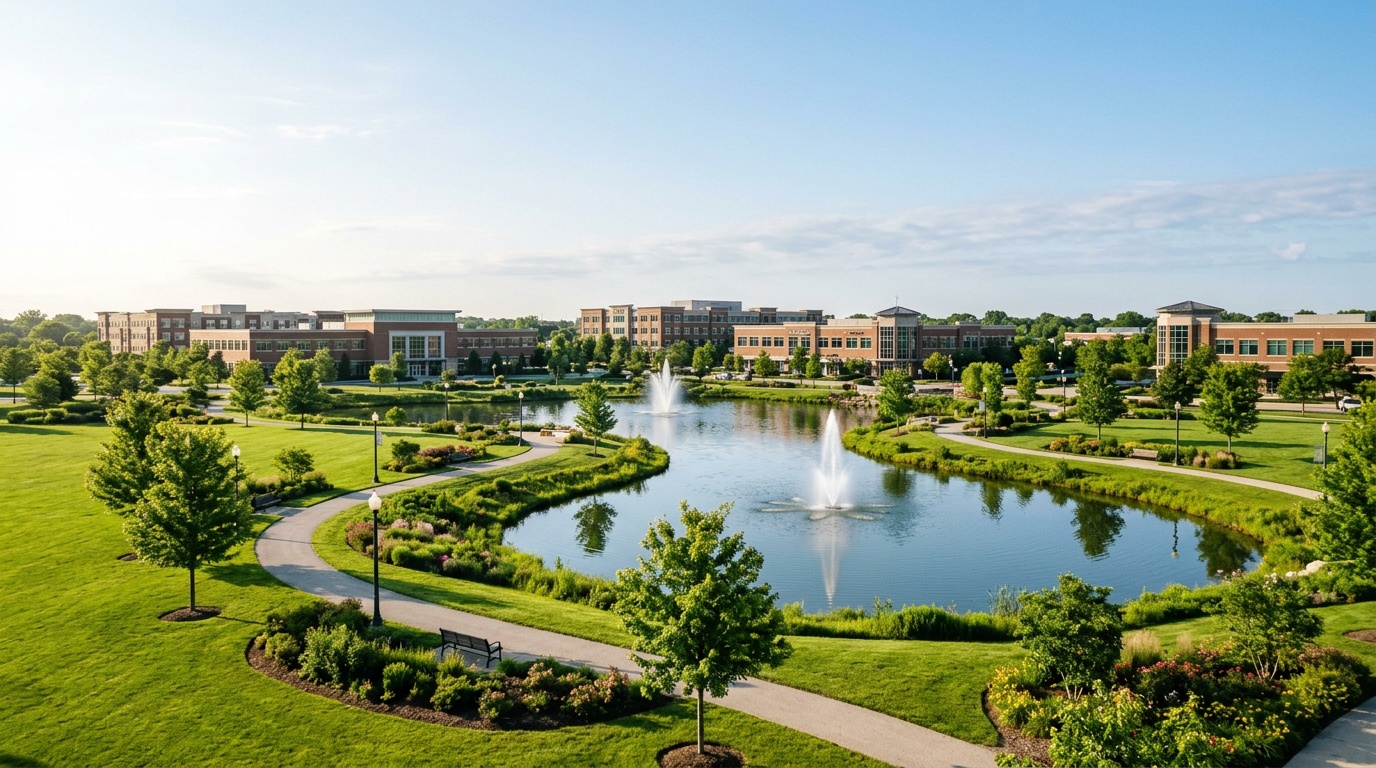
Schaumburg, Illinois · K-12 Online Home School
School that fits a Schaumburg family.
An accredited, self-paced K-12 program for Schaumburg families, built for commuters, diverse households, and students who do better when the day fits them instead of a bell.
K-12
Every grade, one record
52wk
Start any week of the year
1:1
Placed by demonstrated skill
100%
Self-paced, accredited
Start here
A busy northwest hub, a school day that flexes
Schaumburg is a diverse northwest suburb built around offices, retail, and commuters, where families run on every kind of schedule. A self-paced, accredited K-12 program sets the work for your student and lets the family own the hours, so a long shift or a long drive never decides whether the school day happens, and a student gets the pace they actually need.
The program serves families across Schaumburg, Hoffman Estates, and the northwest suburbs, with the same plan and the same accredited record behind every student. Start with how self-paced online high school works, or a plain look at online school versus homeschool versus public school. More about Schaumburg.
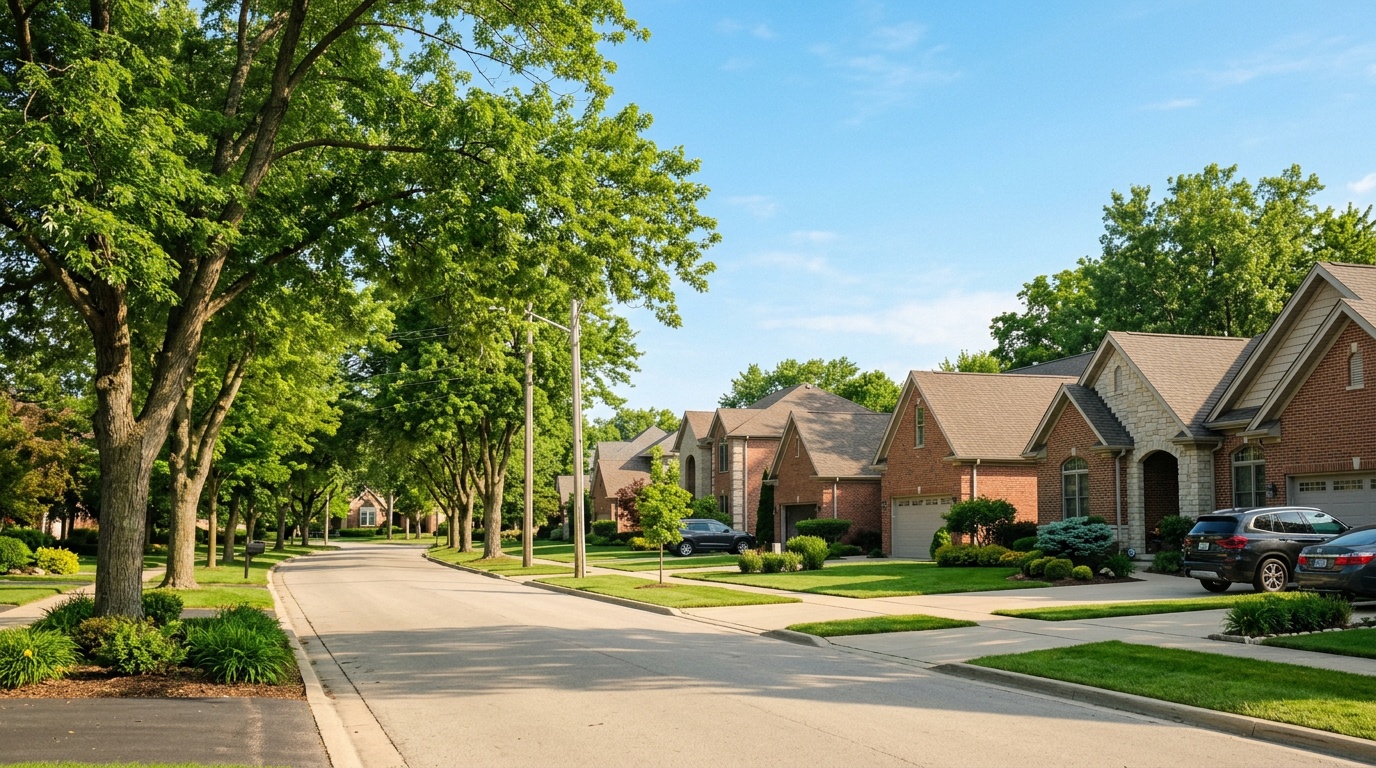
The working parent’s real daily role
A day that bends around two jobs
AM
An early start before the commute
PM
Evening catch-up at home
Either
Either parent can open the record
Wknd
Weekend flexibility when it is needed
Learn more: how self-paced learning works
Placed by skill
One student, placed where they actually are
A child can sit above level in reading, on level in math, and still be building writing, all on the same day. The grid is a map, not a cage.
An example: one student, placed by skill the same day
Each subject starts where the student is, not where a birthday says.
The bored advanced student who’s acting out
Two ways to handle a student who is ahead
A fixed class
Self-paced at home
Waits for the whole group to catch up
Moves on the moment a unit is mastered
Boredom turns into behavior notes
The challenge stays just ahead of the student
One pace for everyone
Honors-level depth inside the same plan
Learn more: the K-12 program
Why it fits here
A day that bends around a Schaumburg schedule
Between office and retail hours, a commute, and activities that fill the evenings, a fixed bell fights the way families here live. Self-paced coursework lands in the hours you have, a strong student races ahead, and a student still building English can re-read and replay at their own pace.
Two ways to run a school day
A fixed classroom
Self-paced at home
One pace for thirty students
The pace is set for your student
A bell decides when learning stops
The schedule belongs to your family
You hear about gaps at report-card time
You see progress the day it happens
The deeper answer
The deeply shy student who freezes when called on
Some students know every answer. They’ve done the reading, traced the argument, spotted the flaw in the textbook example – and when the teacher’s eyes sweep the room, they disappear into their chair. The freeze isn’t ignorance; it’s the spotlight. A timed, public, verbal performance is simply the wrong test for how their mind actually works. Classroom participation grades punish that student twice: once for the anxiety, and again on the report card. The knowledge was always there. The format was the problem.
That’s exactly the kind of mismatch that online learning was built to fix. When a student can respond to a discussion prompt in writing, take a breath before answering, and submit work without twenty-eight pairs of eyes waiting, something shifts. The freeze thaws. Written responses, asynchronous discussions, and a self-paced structure don’t lower the bar – they move it to a place where a thoughtful, deeply shy learner can actually reach it. Teachers see the real student for the first time: careful, thorough, often far ahead of where the classroom transcript suggested. The cumulative record starts reflecting actual ability instead of performance anxiety. For a student who has spent years being underestimated because they couldn’t perform on cue, that correction isn’t a small thing. It changes how they see themselves as a learner – and that travels with them everywhere they go next.
Find your Schaumburg family
Whatever brought you here, the model bends to it
Six of the most common reasons Schaumburg families look at online K-12, and how a self-paced program answers each.
Two careers and a commute
When both parents work, the school day works around the hours you have, and either parent can open the record from anywhere.
New to English, new to the system
A student building English can re-read, replay, and work at their own pace instead of falling behind a fast spoken lesson, with the whole family able to follow.
The student who is ahead
A strong student moves to the next course the moment a unit is mastered, with honors-level depth, instead of waiting on the room.
Athlete, dancer, or performer
Travel teams and rehearsals do not have to cost the school year. The accredited core compresses into focused blocks.
Switching mid-year
You do not have to wait for fall. A counselor reviews the records and the student picks up at their real level on a clean record.
A family on the move
If life means another address, the accredited record is one continuous document that follows the family, with no gap to explain.
The deeper answer
The fear that online means lower standards
Let’s address the elephant in the room: plenty of families hear “self-paced online school” and picture a student clicking through cartoon quizzes until a certificate prints itself. That is not what accredited K-12 education looks like, and the distinction matters enormously. Every course behind our American curriculum is built to the same academic standards a brick-and-mortar school is held to, reviewed by credentialed educators, and graded by actual teachers who have seen every flavor of a wrong answer. There is no “close enough” button. Mastery gates sit between a student and the next unit, meaning a learner cannot coast past a concept just because the calendar flipped. They have to demonstrate understanding, submit real work, and earn the grade on the transcript.
That transcript is the whole point. When a student transfers, enrolls in a new school, or walks across a graduation stage, the record they carry has to stand on its own. Ours does. The admissions requirements we uphold signal that getting in takes real academic standing, and staying in takes continued performance. Self-paced means a student controls the clock, not the rigor. A student who needs three weeks to genuinely master polynomial equations is better served than one who rushes through in three days and retains nothing. Higher standards and flexible pacing are not opposites; they are actually a smarter combination. If you want to talk it through, call us at (888) 242-4262.
How it works
The whole model, in four moves
01
Talk
A free fifteen-minute counselor call covers where your student is and what the year looks like.
02
Place
A counselor places each subject by demonstrated skill, not by birthday, so the work starts at the right level.
03
Plan
You get a written, subject-by-subject plan and a weekly target the student actually works toward.
04
Go
Start any week. Real teachers grade the work and answer questions on your student’s schedule.
The deeper answer
The night-owl who does their best work late
Some brains just refuse to cooperate before noon. That is not a character flaw or a discipline problem; it is chronobiology doing exactly what chronobiology does. For the student who stares at a first-period whiteboard like it is written in a foreign language, then suddenly hits a groove at 9 p.m. and reads three chapters without blinking, a traditional bell schedule is not a neutral inconvenience. It is an active obstacle. Forcing sharp thinking into the wrong hours does not build grit; it builds resentment, and it buries the grade under a layer of pure exhaustion that has nothing to do with the material.
An asynchronous self-paced structure flips the whole equation. Lessons wait. Discussions wait. Assignments wait, patiently, until the student’s mind is actually running at the right temperature. The night-owl cracks open a lecture at 8 p.m., takes notes while genuinely focused, submits work while the ideas are still warm, and wakes up the next morning without the accumulated fog of weeks spent fighting their own biology. The cumulative record reflects what the student actually knows, not what they managed to produce half-asleep. That is a meaningful distinction, especially when a transcript follows a student to their next school or becomes the document a family points to years later as proof of what was learned. Matching the schedule to the student is not lowering the bar. It is finally pointing the bar at the right person.
A week in practice
What a real week looks like
There is no homeroom and no bell, but there is a clear rhythm. On Monday the week’s targets are set. The student works in short, focused blocks, the heaviest subjects when they are freshest, and the record fills in as the work lands. A counselor watches that weekly target, so a slow stretch is caught early and a strong week is confirmed rather than wasted. Most students finish the academic core in fewer hours than a traditional day, because no one is waiting on a room of thirty to catch up.
A self-paced week, set by the family
MON
- Targets set
- Math
- Reading
TUE
- Science
- Writing
WED
- History
- Co-op
THU
- Math
- Art
FRI
- Catch-up
- Review
The deeper answer
The student getting a real fresh start
A label has a long memory. One bad year, one held-back grade, one teacher who decided what kind of student you were, and suddenly that story follows you down every hallway. The thing about hallways, though, is that online learning does not have any. There is no audience watching you move from the remedial table to the honors shelf. Placement here is a quiet, honest conversation between a student and what they actually know, and it happens without witnesses. A student who reads at a twelfth-grade level but struggled with attendance gets to start there, at the twelfth-grade level, not at the grade stamped on last year’s report card. A student who genuinely needs to rebuild a foundation in math gets to do that without anyone at the next desk noticing. That is not a workaround. That is fairness.
Skill-based placement also changes the emotional temperature of learning. When the work matches what a student can actually do, frustration drops and momentum builds, and momentum is the whole game for a student trying to rewrite their own story. Research increasingly connects academic placement mismatches to anxiety and disengagement, which is why the connection between online learning and student mental health is worth understanding before you choose a path. A self-paced structure lets the student set the tempo, prove what they know, and move forward on a record that reflects who they actually are, not who they used to be.
Ready when you are
See if it fits your family
A short conversation is the fastest way to know, with no pressure, just answers.
Kindergarten through senior year
One continuous record, every grade
The same program runs the whole way, and the level is set by what a student can do. Jump to any grade:
The deeper answer
The student in a family business
Some students clock in before they clock in to school. They’re restocking shelves at 7 a.m., running a register between lunch rushes, or helping bring in a harvest before the dew lifts. That kind of real-world responsibility doesn’t disappear because a bell rings somewhere, and it shouldn’t have to. A self-paced online school treats the family business as the legitimate, character-building commitment it is, letting the school day flex around morning deliveries, seasonal rushes, and the unpredictable rhythms that come with any working operation. Lessons are there at 6 a.m. or 10 p.m., whichever side of the shift makes sense.
What doesn’t flex is the academic record. Every assignment completed, every course passed, every grade earned goes onto a transcript that travels with the student, whether they’re transferring to a different school next year or finishing strong through graduation. Nothing about working alongside a parent or grandparent disqualifies a student from a serious, accredited education. It just means the schedule has to be honest about how life actually works for a lot of families. There’s no penalty for being useful, no attendance clock punishing the student who had to cover the counter during a busy Saturday. The coursework stays rigorous; the calendar stays human. If your household runs on early mornings and long weeks, call us at (888) 242-4262 and we’ll show you how a school day can actually fit inside the life your family has built.
The course catalog
A full course load, online and self-paced
Elementary, K-5
Reading, writing, and number sense built carefully, one mastered step at a time.
Middle School, 6-8
The analytical turn: pre-algebra, real writing, and a student learning to own a plan.
High School, 9-12
A full accredited course load with honors-level depth inside the same self-paced structure.
The deeper answer
The student recovering from a long hospital stay
A hospital stay measured in weeks or months does not pause the need to belong somewhere academically, but it does permanently change the terms of re-entry. The student who walks back through any educational door after extended treatment is not the same student who left, and a rigid bell schedule with a stack of make-up work is not a welcome mat. It is a wall. That is exactly where a flexible online setting earns its place. Schoolwork can begin at whatever hour energy actually exists, pause when a follow-up appointment runs long, and resume without a penalty clock ticking overhead. No one is calling attendance at 8 a.m. when a medication adjustment makes mornings impossible, and no one is whispering in the hallway about why you missed three months. The environment itself is quieter, lower-stakes, and designed around the learner rather than around an institutional calendar. Families working alongside a medical team can share a student’s realistic daily capacity, and the pace adjusts to match it rather than demanding the student match a predetermined sprint. Progress is still real progress, the academic record still reflects genuine mastery, and the path to graduation stays intact without the pressure of racing a cohort to the finish line. For students managing ongoing recovery, mental health and learning environment matter as much as curriculum, and a self-paced structure honors both without asking the student to pretend the last several months did not happen.
The record that lasts
One accredited record, wherever life goes next
For a family that may move again, this is the part that matters most. The coursework is accredited, so the transcript is a professional document built to recognized standards and read cleanly by the next school. It is one continuous record across every grade and every move, with no gap to explain. A student who transfers in arrives at their real level, and a student who transfers out carries a transcript a registrar recognizes at face value.
What is on the accredited record
-
Course list and gradesEvery completed course, year by year
-
A cumulative GPACalculated and kept current
-
Descriptions a registrar readsStandards-aligned course descriptions
-
No gap across a moveOne continuous record, anywhere you go

A note from the Head of School
Do not wait for a semester to start. For a Schaumburg family, the most useful first move is the fifteen-minute counselor call with your student’s most recent records in hand. We place by skill, subject by subject, and build the week around your real schedule.
Questions and answers
Schaumburg online home school, in plain English
Is online home school legal in Illinois?
Yes. Illinois treats a home school as a private school. Families do not register with the state, seek approval, or sit state tests; you teach the same branches of education the public schools teach, in English. Authority: the Illinois State Board of Education.
Is the program accredited?
Yes. The coursework is accredited, so the transcript is a professional record built to recognized standards and read cleanly by the next school.
What about friends and activities?
A self-paced day frees up the hours a fixed schedule eats, which is why active families choose it. Co-ops, club sports, park-district programs, and city activities fill the daytime. Here is how online students build a social life.
Do you support an IEP or 504 plan?
Yes. The self-paced structure already provides extra time, a quiet space, and a flexible pace per subject. Bring the current plan to the counselor call and the routine is built around it.
How should we think about cost?
A home program removes much of the hidden spending around a daily commute and keeps the schedule open for a working parent. A counselor walks through what enrollment includes, and we are fully transparent about cost.
What if we try it and it is not working?
A struggling stretch gets caught by the weekly check and the counselor, the pace and support adjust, and the accredited record travels if a family decides to move on. No year is lost.
How much do I need to know to make this work?
Less than most parents fear. The school carries the instruction and the grading; the parent is a coach who keeps the rhythm, not a teacher who delivers the algebra. Not knowing the material yourself is fine, and on purpose.
What technology do we need to start?
A reliable laptop and a steady internet connection are the main requirements. Books and any hands-on materials are shipped to the house, so the day is a mix of on-screen and off-screen work.
The legal basics
In Illinois a home school is treated as a private school. Families are not required to register with the state, seek approval, give notice, or sit state tests; you teach the same branches of education the public schools teach, language arts, mathematics, the sciences, social studies, fine arts, and health, in English, and keep your own records. Compulsory attendance runs from age 6 to 17. Authority: the Illinois State Board of Education. Leaving a public school? A brief letter noting your child is enrolling in a private home school is the courteous step, and our accredited program keeps the cumulative record for you.
More Illinois cities we serve
Families across Illinois, one program
High School of America works with families all over the state. A few more cities we serve:

Get started in Schaumburg
Whether your student is transferring mid-year or starting fresh, the first step is the same short conversation.