Milwaukee County, Wisconsin
West Allis Online High School
A high school year you can build ahead of the busy stretch, so the busy stretch never costs a credit.

West Allis online high school: built before opening day
The most useful thing a self-paced school offers a West Allis household is the chance to do the work early, in the quiet weeks, so the loud ones can be loud.
The city of West Allis has a habit of seeing the long run-up behind a short event. The Wisconsin State Fair has been held at its permanent home in West Allis since 1892, and it runs for eleven days. Those eleven days are the visible end of a great many weeks of preparation. A school year can be run the same way, and our Wisconsin online high school programs are set up so that it can.
The busy week is not the problem. A busy week nobody planned for is.
The rest of this page is for the student who can already see a crunch coming, and for the parent who would like the school year to bend around it instead of snapping. It is an online high school page for grades 9 through 12, and it sits beside the Wisconsin K-12 homeschool page for households with younger children. Nothing here argues against a school that suits a student. It describes the other way to run the year, in enough detail to compare, and our online school home page covers the rest.
What is a staged online high school year?
It looks like a normal set of high school courses with the calendar loosened: the same lessons, the same graded work, and a weekly rhythm and target finish date set with a counselor.
If you have wondered how online high school works day to day, the shortest answer is that the courses stay fixed and the clock does not. Graded work becomes a course grade, a course grade becomes a credit, and credits land on a transcript the school issues. That chain is what makes the diploma an accredited online high school diploma rather than a certificate of attendance.
How a year gets staged, in four moves
The counselor counts the credits already earned and lays out the courses still to come.
Before a known busy stretch, the student works a little ahead in each course.
The busy week arrives. Lessons wait until the student comes back to them.
The weekly rhythm is set again with a counselor, from where the record stands.
- Target finish date
- Set with a counselor, with a weekly rhythm that fits the household.
- Bank
- Work completed ahead of its planned date, kept in reserve for a week that will be short.
- Student services
- One assigned representative who notices when a course stops moving and writes first.
- Counselor
- The person who plans the years with you, starting with the first call.
The method works best on a rhythm. Many self-paced online high school students settle into working a little each day, and the days they work more are the days that fill the bank.
An empty hall, the week before the fair
Picture a big hall in the days before a fair: long tables set out in rows, nothing on them yet, and a crew that is not worried, because the order of the work is known.
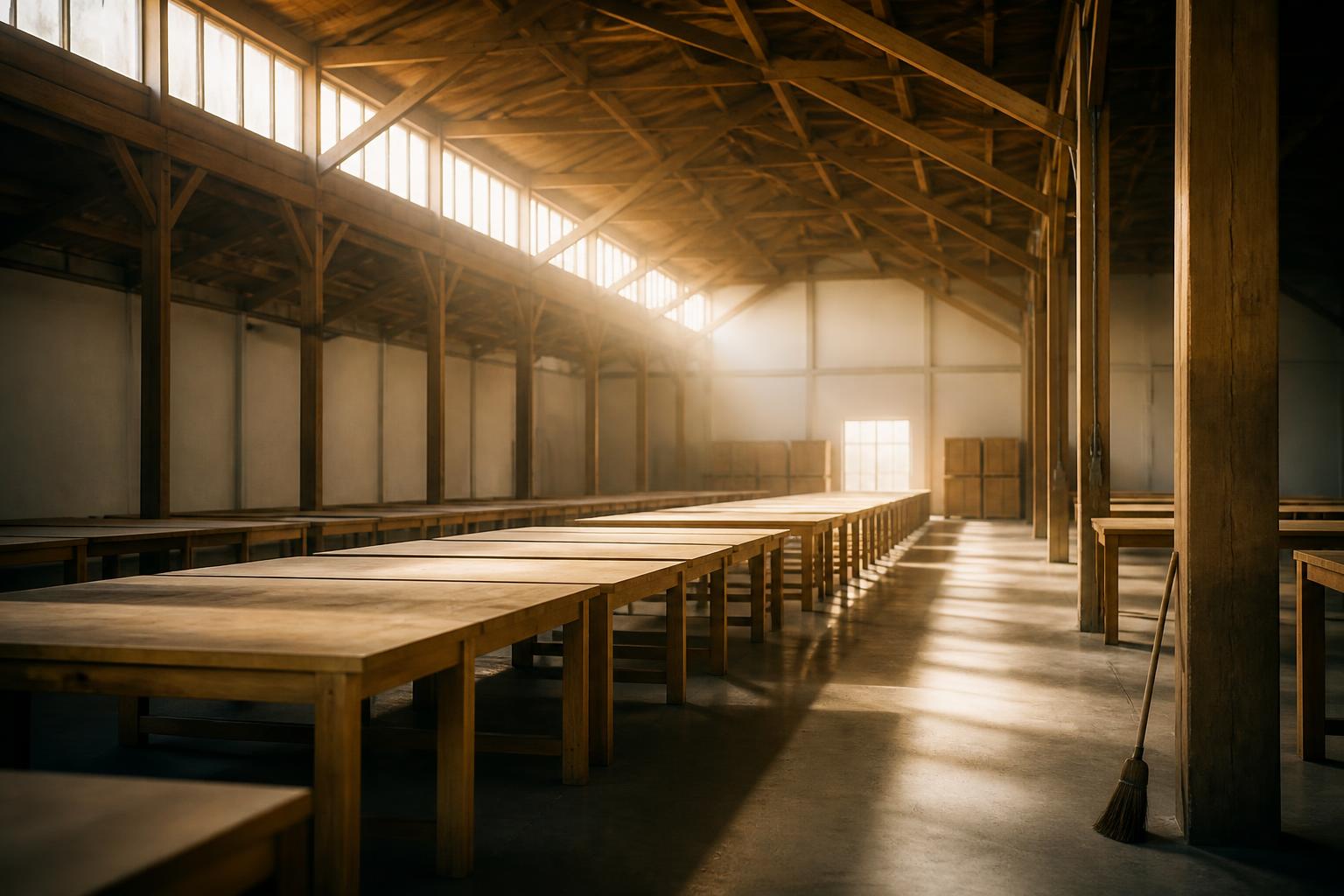
That is the feeling a staged school year is after. The student is not rushing a project the night before; a plan exists, and the week ahead has a shape. A basketball tournament, a family trip to see relatives, a part-time job that picks up for the season: each has a date, and each is easier to meet when the courses were moved forward in advance.
None of this needs a parent to teach anything. The parent reads the guide, asks one question, and leaves the courses to the student and the school.
Know a busy stretch is coming? Tell a counselor the dates, and the first call will plan around them.
Banking credit toward your diploma, course by course
Our diploma is earned at 24 credits, and the plan for earning them is as flexible as the weeks they are earned in.
A high school diploma from us is the school’s record that a student finished the work: courses by name, grades on one published scale, credits against the total. The page on the credits you need sets out how the 24 are counted. This is our requirement, not a statement about what any other school or program asks for. For the courses themselves, the full high school courses list is open to read before anyone enrolls, and the American curriculum page explains how they fit together.
| Year | English | Mathematics | Science | History |
|---|---|---|---|---|
| Ninth grade online | English 1 | Algebra 1 | Biology | World History |
| Tenth grade online | English 2 | Geometry | Chemistry | Elective of choice |
| Eleventh grade online | English 3 | Algebra 2 | Physics | United States History |
| Twelfth grade online | English 4 | Elective of choice | Elective of choice | U.S. Government |
The sequence is a way to see the shape, not a script. A counselor adjusts it for the student in front of them, after the credits already earned have been counted.
Bank two weeks before the busy stretch
Two weeks of a course, done early, is enough to turn a heavy week into a light one. Bank them in the courses that are hardest to restart, not the ones that are easiest to do.
Mathematics and a lab science are poor courses to leave cold for a week, because each lesson leans on the last. English and history handle a gap better. So the sensible order is to bank the sequential courses first and let the reading-and-writing courses absorb the busy week:
- Find the date. Tell the counselor about the busy stretch so the plan accounts for it.
- Work back four weeks. That is when banking starts, a little each day rather than a heroic weekend.
- Bank mathematics and science first. They are the courses that punish a gap.
- Spend the bank, not the grade. In the busy week, do the lightest reading and keep the rest on hold.
- Reset the guide afterward. Read where every course stands and plan the next stretch from there.
Four things families assume about working ahead
Claim
Working ahead means skipping the hard parts.
Reality
Every lesson and graded assignment is still done. Only the order and the dates move.
Claim
A busy week means falling a course behind.
Reality
A week that was planned for costs nothing, because the work around it was banked.
Claim
Self-paced means nobody is watching.
Reality
An assigned student services representative follows every course the student takes.
Claim
The pace has to be set once and kept.
Reality
A counselor resets the weekly rhythm and target finish date whenever the household changes.
Pace changes are made with the school, not around it.
The point is not speed. A student can finish the year at the same date as everyone else and still have had a lighter February. What changes is where the effort sits.
For West Allis parents weighing ninth grade
Ninth grade is a good moment to try the staged approach, because the habits made in the first year are the ones the next three years run on.
The city itself is easy to place: West Allis, Wisconsin sits in Milwaukee County and became a city in 1906, after the Allis plant that went up there in 1902 drew a village around it. Families here come from every part of that history, and most want the same thing from a school: a record they can trust and a week that fits.
A student who changes in ninth grade starts with a fresh plan and a full four years in which to carry it. Ninth grade carries the same core subjects as a year in a building, with the order and the hours set at home. The parent’s job is a short list:
- look over the posted grades;
- ask the student one good question about it;
- write to the student services representative when something is off.
The school grades the work, keeps the record and counts the credits, so the household is not building a transcript at the kitchen table. Families in nearby Waukesha and in the city of Milwaukee are working from the same plan, and the pages for those places describe it in their own terms.
Want the course list on the kitchen table first? We will send it, no call needed.
What happens to credits already earned at another school?
A counselor counts them before any course is assigned, and you hear the number on the first call: how many are done and how many remain of the 24.
Send the latest report card or transcript; a photograph is enough. Each course and grade is read, what carries over is posted, and only then is the rest of the plan written. Nobody is asked to repeat a course the record already shows as passed, and the transfer credits page lays out the process in full.
If one course along the way did not pass, credit recovery retakes that single course rather than the year. Because credits are counted first, the staging described above begins from facts and not from guesses.
- the latest report card or transcript;
- any record of courses finished since;
- the month the family would like to begin.
What if the record is incomplete?
Then the counselor says so on the first call, lists what is missing, and the plan is built on what can be confirmed while the rest is requested. A missing document is a task, not a stop sign.
Online high school, homeschool, or a building
The honest difference between the three is who sets the hour and who keeps the record, and every one of them suits some students.
Families who search for an honest comparison of the options are usually sorting out those two questions, whatever they call the choice. The table is a plain version of the answer.
Same diploma goal, three different answers to who holds the pencil.
A school building suits a student who does well with a fixed schedule and people in the room. Teaching at home suits a parent who wants to write the curriculum and keep the record. An online high school sits between the two: structured courses and an issued transcript, with the hour left to the family. Searches for home education programs turn up here too, and those are a separate matter from a school that issues its own diploma.
Can you finish high school online after leaving?
Yes. Enrollment opens in any month, and the plan starts from whatever the record shows.
Some students leave a building mid-year for health, work or a family reason, and some simply stop. The way back is the same count described above, followed by a plan that closes the gap one course at a time. Our page on how to complete the diploma you started walks through it.
Families sometimes ask what comes after the diploma. That depends on the student, and no school can promise how any college or employer will read a transcript. What a diploma does give is a finished record. Milwaukee Area Technical College has a West Allis campus, and the City of West Allis publishes what is happening in town; a student who finishes can look at both with a diploma in hand and an open calendar.
- courses finished, by name;
- grades, on one published scale;
- credits, counted toward the 24.
Cost is explained on the tuition page, and a counselor will walk through it on the call.
Pick a month, send the report card
Two things start a West Allis online high school plan: the latest report card, and the month you would like to begin.
- Send the latest report card. A photograph works. The counselor counts it before anything else happens.
- Name the busy dates. Any stretch you already know will be crowded goes to the counselor first.
- Pick the month. Enrollment is open every month, so the right month is the one that suits your household.
A student who begins with a plan has already done the hardest part of a staged year. The rest is steady work, a little each day.
Ready when your calendar is. Begin enrollment, or call and a counselor will answer the first call.