Waukesha County, Wisconsin
Waukesha Online High School
An accredited diploma built one course at a time, in whatever order and hour your student records best.
Open an applicationBook a call with a counselorSend me the details

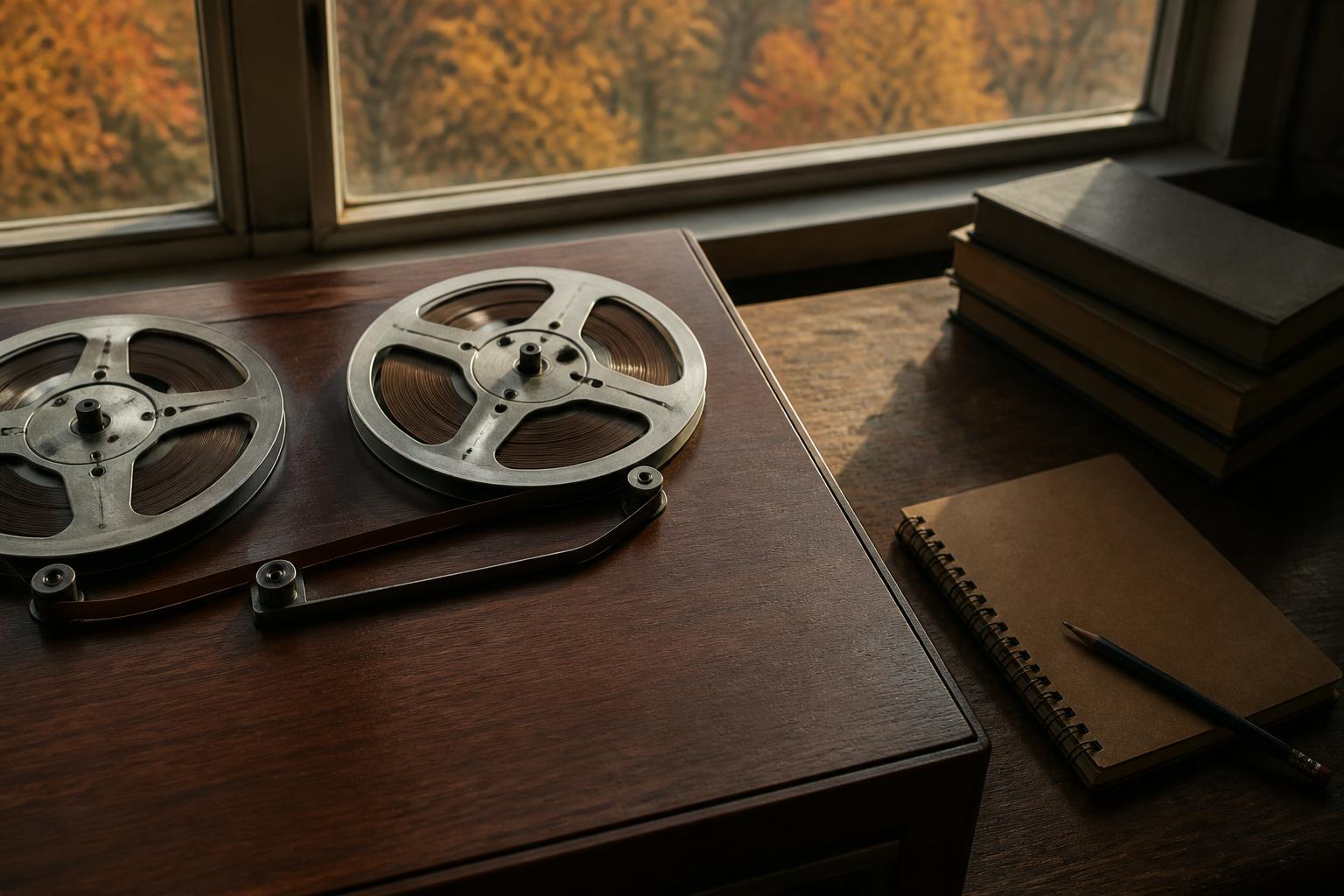
Waukesha has an unusual claim on the idea this page runs on. Les Paul was born here in 1915, and he is remembered for recording innovations such as overdubbing and multitrack recording: lay down one part, lay the next one over it, redo the take that went wrong without touching the others, and mix the lot into one finished master. A high school diploma can be made exactly that way. What follows is how our online high school does it for students in the Spring City, and where this page sits: it is one city under the Wisconsin online high school hub, which covers the state as a whole.
Waukesha online high school is recorded in tracks
Each course is its own track. A student records it when they are ready, a teacher marks every take, and each finished course is written onto one transcript, which becomes the diploma at 24 credits.
Here is a track sheet for one student partway through. Every row is a course, every course earns its own credit, and nothing on the sheet depends on anything else being finished first, except where the subject itself builds, as mathematics does.
| Track | Course | When it was recorded |
|---|---|---|
| 01 | English 1 | Carried in from a previous school |
| 02 | English 2 | Autumn, weekday mornings |
| 03 | Algebra 1 | Carried in from a previous school |
| 04 | Geometry | Redone once, then passed in winter |
| 05 | Algebra 2 | In progress, evenings |
| 06 | Biology | Finished in March |
| 07 | Chemistry | Not yet opened |
| 08 | World History | Summer, a few hours a day |
| 09 | United States History | In progress, afternoons |
| 10 | U.S. Government | Saved for the final year |
| 11 | Pre-Calculus | Weekends, alongside a job |
| 12 | Art History and Criticism | An elective, recorded when it suited |
A school building records the whole band live. Seven subjects, the same room, the same bell, every part played at once from August to June. For a great many students in Waukesha that is exactly right, and if it is working for yours, keep it. The online version simply separates the parts. Algebra 2 does not have to be recorded in the same hour as English 3, and a student who is ready to finish Biology in March does not have to wait for June to say it is done.
A specimen, not a student. The full list of online high school courses is on the course catalog.
How does online high school record a course?
Open the course, work through lessons that are already posted, submit work when it is finished, and a teacher marks it and replies in writing. Nothing is broadcast at a set hour, so no lesson is ever missed.
That last clause is the part families take longest to believe. There is no homeroom to be late for. The course is waiting when the student signs in, at seven in the morning or at nine at night, and it is in the same place the next day. The longer walkthrough of how online high schools work covers the mechanics; the short version is four movements, repeated for every course on the sheet.
- Open the track. The course appears with its lessons, readings and assignments laid out in order. The student can see the whole of it from the first day, which is how they plan the weeks.
- Play the part. Lessons are read, watched and practiced at whatever pace the material asks for. A hard unit takes longer, an easy one less, and nobody else in the room sets the tempo.
- Submit the take. Work goes in when it is done. A teacher marks it, writes back, and a take that did not land can be worked on again where the course allows it.
- Print it to the transcript. When the course requirements are met, the credit is recorded. That entry does not move again.
Around all four sits an assigned student services representative, one named person who knows the student’s sheet and notices when a track has gone quiet for too long. The material itself follows the American curriculum, and the range of online high school programs covers grades 9 through 12 with the same structure in each.
Pace
Eleven at night, a credit on the third take
Self-paced means a course ends when its work is done, not when the calendar says so. A take that did not land gets worked again; the course is not over until it is.
Picture the kitchen in a house off East Main at eleven at night. A geometry proof that refused to come together on Tuesday comes together on Thursday, the student submits it, and by the weekend it is marked. In a building, that proof would have been a grade on a test two weeks ago and the class would have moved on to circles. Here the class is one student and it moves on when the proof is right.
The students who do best rarely work the most hours. They decide which hours are for school, say it out loud at home, and keep to it on the weeks when nobody is checking.
The same logic is why a failed course is one track to record again, not the whole album. Taking that single course over, on its own, is what credit recovery means, and it is usually faster than repeating a grade around it. The fuller case for self-paced online high school, including where it goes wrong, is worth reading before you commit to it.
Want to see what a student’s own sheet would look like? Open an application(888) 242-4262
If your homeschool already recorded some tracks
Work done at home can count. A counselor reads what your student covered, subject by subject, and tells you in writing how many of the 24 credits it earns before anything is assigned.
Families who have taught at home in Waukesha County usually arrive with more on tape than they think and less paperwork than they would like. That is normal. Teaching at home and an accredited online school differ mainly in who issues the record, and comparing online, homeschool, and public school lays the options side by side without leaning on any of them. If you are at the very start rather than partway through, how to start homeschooling is the better first read, and graduation credit requirements explains how credit hours are counted in general.
What a counselor looks at depends on what kind of record the house kept. Four common kinds, and how each is read:
- A reading list with written work
- The writing is the evidence. A year of novels with essays attached reads as English; a year of novels without them reads as reading, which is good for a student and harder to credit.
- A packaged curriculum with its own tests
- Usually the easiest to place, because the scope is printed on the box. Bring the scores and the table of contents.
- Classes taken somewhere else
- A co-op, a community class, a course at another school. Anything with a grade from someone outside the house is read like a transfer.
- Hours of practice at something
- Music, a trade, a sport, a language spoken at home. Often worth elective credit, and the conversation is about what was learned rather than how long it took.
Finish high school online from the last good take
Start from what is already earned. A student who left school partway, or paused for a term, does not begin again at ninth grade; the credits on the last transcript come across course by course.
The city changed where its own water comes from in 2023, from deep wells to Lake Michigan by way of Milwaukee, and nobody in town had to move house to get it. Changing who issues a diploma works on the same principle. The source changes, and what the student already has stays put. Credits from an accredited school are read one course at a time at transfer credit review, and the route for a student who stepped away and wants to finish high school online starts from the last good take rather than from the top.
Three questions a counselor asks on the first call
Was the last school accredited?
Is a course half finished?
Is only one subject the problem?
Sometimes the honest answer is to stay where you are. A counselor will say so.
Mid-year moves are ordinary here. A student who leaves a building in November starts with us in November, and the transcript shows both schools honestly, each with its own courses and dates.
The master
Many sessions, one online high school transcript
However many sessions it took, the diploma comes from one issuer. We grant it ourselves once 24 credits are complete, as an accredited private school, and the transcript lists every course with its credit, grade and date.
This is the part of the multitrack idea that matters most to whoever reads the document later. They do not see the eleven at night, the redone geometry or the summer of history. They see a clean master: course names, credits, grades and where each credit was earned. What our online high school diploma is, and what it is not, is set out plainly on its own page, and what accreditation covers is in accredited online high school, explained.
What the master looks like to whoever reads it
- 1Transferred courses keep the grade the earlier school gave them, and say where they came from.
- 2A course redone shows the grade that counted, not every attempt along the way.
- 3Dates show when each credit was recorded, which is how a mid-year move reads plainly.
24 credits, and the four years they fill
Our diploma takes 24 credits: four in English, four in mathematics, three in science, three in social studies, one between health and physical education, and nine electives.
That is our requirement and it is the same for every student with us, which is why a counselor can tell a family what is left in one call. A school district and the state set their own; those are theirs to state, and the Wisconsin Department of Public Instruction is the place to read them. Laid out as four years, a typical plan looks like the session grid below, though almost nobody follows it to the letter, and that is fine.
Four years as a session grid
The nine electives are where a sheet becomes a particular student’s. A language, an art, a second science. The private online high school format makes room for an elective recorded in a season when the core load is light, which a fixed timetable rarely can.
Every grade has its own session
What a year asks of a student depends on which year it is. A ninth grader is laying down the first tracks; a senior is checking what is missing from the master and recording only that.
Where each year sits on the sheet
- 9th grade online: the first year on the sheet, where the four-year sequences in English and mathematics begin.
- 10th grade online: the year a gap first shows, and the cheapest year to close it.
- 11th grade online: usually the heaviest load, and the one that rewards planning the order of courses.
- 12th grade online: counting what is left, and finishing it in an order that keeps the last term light.
Can a Waukesha student enroll in any month?
Yes. Applications are open in every month of the year, and a course begins on the day it is opened rather than on a September date.
Open in every month
The practical sequence is short. Apply, send whatever records exist, take the counselor’s call, and get the credit count in writing before paying. The admissions process covers each part. What to have to hand for that first call:
- The most recent transcript or report card, even an unofficial copy.
- Any record of work done at home, labeled by subject and year.
- A rough idea of the hours in the week that can belong to school.
- The question you most want answered. Counselors would rather hear it first than last.
A kitchen table, and the tuition page open
Tuition is published rather than negotiated family by family, and payment plans exist. The figures are on the tuition page, and a counselor will go through them line by line without a sales pitch attached.
The costs that rarely appear on anyone’s invoice are the ones families mention afterwards: the second drive across town each afternoon, the job hours turned down because school ran until three, the term repeated because a missing half credit was noticed in May instead of October. Some of that is what families save when the schedule belongs to the household.
Ready to see the numbers for your student? Open an application(888) 242-4262
Questions from Waukesha County families
Is this connected to the local school district?
No. We are a private school that issues its own diploma, with no connection to the School District of Waukesha, which runs its own schools on its own terms. We only speak for ours, and a family weighing both should ask each directly.
Can my student keep a part-time job while finishing?
That is one of the most common reasons families call. With no fixed lesson hour, shifts do not have to be arranged around school. A lighter load across more terms is a normal plan, not a lesser one.
What if one subject is the whole problem?
Then one course may be the whole answer. A student can take a single course with us while staying at their current school, provided that school agrees to accept the credit. Ask them first; that decision is theirs.
Who does my student actually talk to?
Teachers, in writing, about the work. And an assigned student services representative about everything else: pace, the sheet, what is next. One named person, not a ticket queue.
Does starting mid-year cost a semester?
Usually not. Courses in progress at the previous school are the one place it can cost work, and you will hear exactly which ones before you commit, not after.
Are there colleges nearby for after graduation?
Several. Carroll University is in the city itself, and Waukesha County Technical College is just up the road in Pewaukee. We make no claim about what any college decides; the transcript is issued by an accredited school and read like any other.
We have younger children too. Is there a program for them?
Yes. Our online K-12 school runs from kindergarten up, and the Wisconsin K-12 online home school page is the right place to start for the younger grades.
Why is it called the Spring City?
Because the Spring City grew in the nineteenth century as a resort for its spring water. It has nothing to do with school, but every family here gets asked eventually.
Press record on the first online high school course
Nobody has to decide the whole album today. Start with an application and the records you already have; a counselor reads them, counts what is on tape against the 24, and tells you in writing what is left. If the honest answer is that your student should stay where they are, you will hear that too.
Families nearby can also read our pages for Milwaukee, a short drive east, and for Racine and Kenosha toward the lake.
Open an applicationBook a call with a counselorSend me the details(888) 242-4262