Milwaukee County, Wisconsin
Franklin Online High School
Set the pace and the finish month yourself, and let the school keep the record that makes it count.
Franklin’s 1956 vote and online high school terms
Franklin online high school is for the family that would rather decide how the four high school years run than have them decided by a calendar that was set somewhere else.
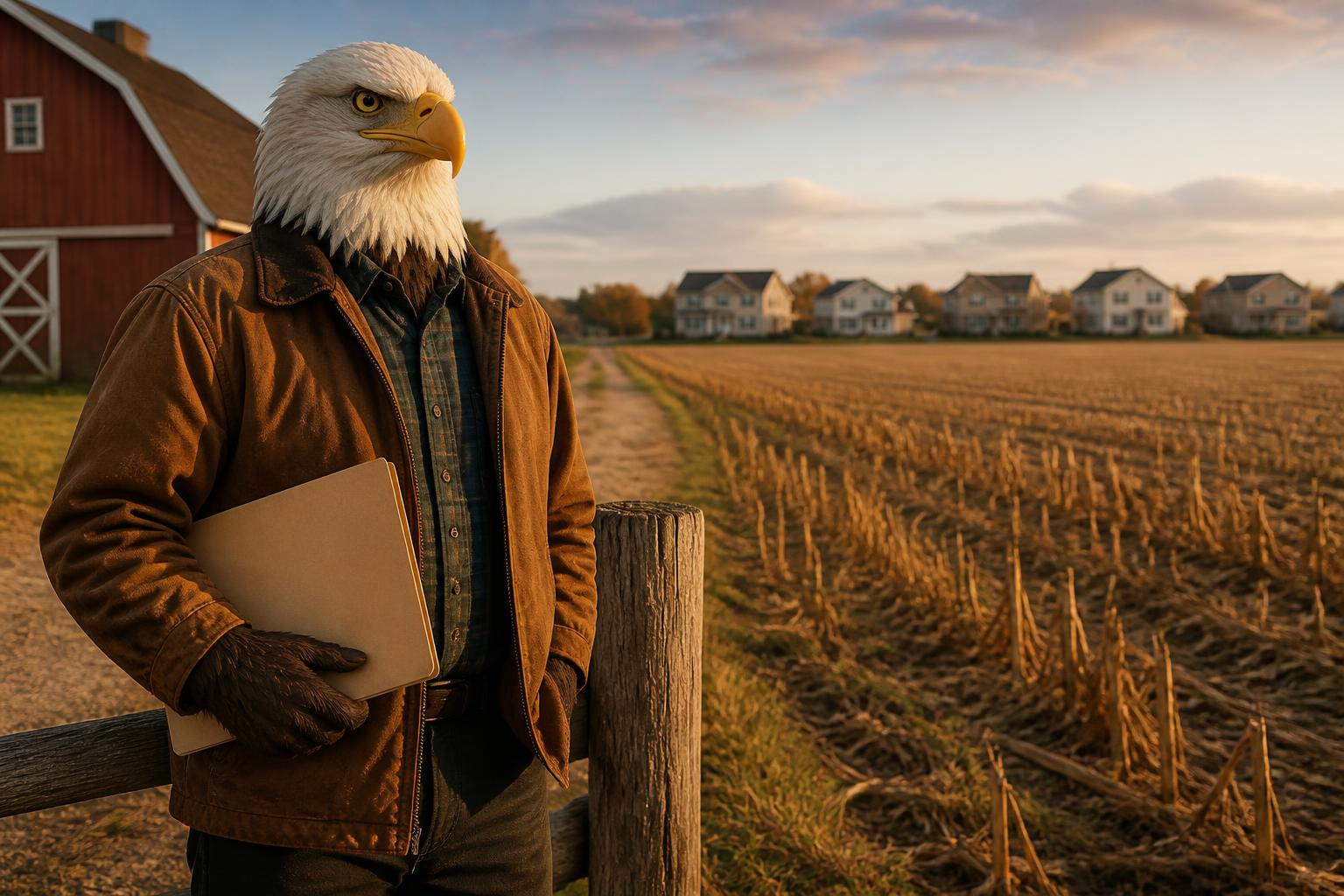
Franklin knows something about that. It began as a heavily wooded, 36-square-mile frontier bordering Racine County, and for about a hundred years it stayed a self-sufficient farming community; as late as 1962 roughly 80 percent of the city was still farmland (the Encyclopedia of Milwaukee on Franklin). Then, in the 1950s, Milwaukee was annexing nearby unincorporated towns. In August 1956 Franklin’s residents voted 704 to 220 to incorporate as a city instead, so that the change coming to the town would be on terms the town set (the Franklin Historical Society’s account of the vote).
Decide the terms before the calendar decides them for you.
That instinct is the whole subject of this page. A family in Franklin, Wisconsin choosing an online high school is choosing who holds the pen: the household picks the pace, the month to begin and the month to finish, and the school grades the work and keeps the record. It sits under the Wisconsin online high school hub, which covers the state as a whole.
Online high school is matched to the student
How does online high school work? The student enrolls, the school counts the credits already earned, and a counselor sets a weekly rhythm and a target finish date the student works toward from home.
The longer answer is on our page about how does online high school work?, and it comes down to four things that stay the same for every student, wherever the mailbox is.
- The count
- A reading of the student’s record that happens before any course is assigned.
- The plan
- The courses still needed toward 24 credits, in order.
- The target finish date
- Set with a counselor, alongside a weekly rhythm that is honest about the workload.
- The transcript
- The school’s own record of every credit, written by the school and not by the family.
Two ways to read an address
Claim
A Franklin address decides which school’s calendar a student follows.
Reality
For our online high school, the calendar is the student’s own: enrollment is open in any month.
Claim
Choosing a different route means the school year has to be restarted.
Reality
Credits already earned are counted before any course is assigned, so the year continues from where the student is.
Claim
A self-set pace means nobody is checking the work.
Reality
The school grades every course, keeps the record and issues the transcript and diploma.
The address goes on the enrollment form. The plan is built from the student.
An assigned student services representative is the person a family writes to when something needs sorting out, and a counselor is on the very first call. Our accredited online high school explainer covers what accreditation means for the diploma at the end.
Ready to hear what the count looks like? Choose my terms or Call (888) 242-4262.
A pace you set, a record the school keeps
A self-paced online high school hands the family the speed and keeps the accountability, which is the combination most Franklin parents are really asking about.
Self-paced does not mean unsupervised. The student decides when the work happens and how long a stretch of it runs; the school decides nothing about the household’s day but everything about whether a course is finished: it grades the work, enters the credit and holds the transcript. A student who moves quickly through a subject they like can finish it early. A student who needs three weeks on a hard unit takes three weeks, and nothing else in the plan has to be torn up to make room.
- The family chooses the hours; the school defines what finished means.
- A course is complete when the graded work is complete, not when a term ends.
- An assigned student services representative follows every course, so progress is seen rather than guessed at.
| Decision | The family | The school |
|---|---|---|
| Start month | Picks it | Opens the first course within days |
| Hours in the week | Chooses them | Helps set a weekly rhythm through a counselor |
| Finish month | Names a target | Says plainly what the load would be |
| Grades and credits | Does the work | Grades it and enters the credit |
| Transcript and diploma | Receives them | Keeps and issues them |
The weekly rhythm differs enough from student to student that a counselor will usually ask what a normal week already looks like at home before suggesting a load.
Curious how a self-set pace would look? Call (888) 242-4262 or Choose my terms.
For the Franklin student who names the finish month
If you already know when you want to be done, the plan can be built backward from that month instead of forward from the next start of term.
Enrollment is open in any month, which is what makes a chosen finish date possible at all. A student who is ahead on credits and wants to finish ahead of the usual four years can aim for it. A student who needs a longer runway, for a season of training, a family change or simply a slower year, can stretch the plan out and still end at a diploma. The count tells both students the same thing: how many of the 24 credits are in hand and how many are left.
A student who arrives with nine credits
From that number the plan works backward. Twelve credits left and eighteen months is a gentle plan; twelve credits left and six months is a brisk one, and the family sees both before agreeing to either. The school will not pick the date for you, and it will not pretend a date is easy when it is not.
- Name the month. The month the student wants to be finished, even if it may move.
- Hear the count. How many credits are already counted and how many remain.
- Set the weekly rhythm. What a normal week holds, set with the counselor, to land on that month.
- Adjust once, in writing. Move the date or the load until the plan is one the household believes.
Know your month? Talk to a counselor or Send me the details.
Can a Franklin ninth grader start online high school?
Yes: a student entering ninth grade starts at the first course of the core and builds all four years from there, and ninth grade online is where that starts.
Starting at the beginning is the simplest case for an online high school, because there is no earlier record to read. The plan is the full four-year core, and the question for the family is mainly about pace: whether ninth grade should be a steady year, an ambitious one with an early course or two, or a lighter one that leaves room to settle in. The credits count the same either way.
What if the student has already finished some high school courses?
Then the count takes them into account. A course passed at an earlier school is read against the plan and, where it matches, carried onto the transcript as a credit. Our transferring credits page explains how that reading works course by course.
Later grades work the same way from wherever the student stands: 10th grade online, 11th grade online and 12th grade online each pick up with the finished work already on the count.
4 years, 1 diploma, and where the credits sit
A high school diploma from us is 24 credits spread across four years, and the graduation credit requirements page lays out how a full set is made up.
For a family searching for a high school diploma in Franklin, WI, the practical thing to know is how those credits are arranged. English, math, science and history run through every year, and electives fill the remainder. The rows below show a typical order; the actual plan shifts to match what the student has already earned.
Core subjects across four years
Every course is part of a school-issued online high school diploma program, built on the American curriculum, and the full catalog of high school courses shows each one. A course that was failed or left unfinished does not send a student back to the start: credit recovery retakes that one course and lets the rest of the plan keep moving.
- English: English 2 and English 3
- Mathematics: Algebra 1, Geometry, Algebra 2 and Pre-Calculus
- Science: Biology, Chemistry and Physics
- History and civics: World History, United States History and U.S. Government
The diploma lands on the school’s own high school transcript. The family is not the record keeper at any point, which is the quiet reason a self-set pace still ends in a credential that reads as a school’s.
Write the online high school plan on one page
Put the credits, the pace and the finish month on a single page, and keep it where the whole household can see it.
A plan that lives in one person’s head is a plan that gets renegotiated every Sunday night. A plan on one page is something the student can check and a parent can ask about without it becoming an argument. The page is short on purpose.
Most of what goes on it comes from the first call, and the rest is the family’s own choices. If a question about cost comes up, the tuition page or the counselor is the place for it rather than a guess.
Want the page started with you? Choose my terms or Call (888) 242-4262.
How a Franklin online high school week fits
Most of it fits around what a household already does, because the work is chosen by hour and not by bell.
Franklin spreads across about 35 square miles of Milwaukee County, so a day often involves a drive: to practice, to a job, to a relative’s house, to the library or the park. An online high school travels in that gap. A hard course can go first thing, when the kitchen is quiet. A shorter one can wait for the afternoon. A reading can ride along in a folder.
- Morning for the course that needs the most attention.
- A midday stretch for a shorter course or a unit quiz.
- Afternoons and evenings for work, training or family, with one reading or one draft to close the day.
Families next door in Milwaukee and West Allis follow the same plan structure with the same 24 credits, and a family that later moves within Wisconsin or out of it takes the record along unchanged. For younger children in the same house, the Wisconsin K-12 online home school page covers the earlier grades.
Online high school in Franklin: decision, not deadline
Nothing about this has to be settled this week: enrollment is open in any month, and a conversation costs nothing but the time.
The vote in 1956 was a decision a town made on its own schedule, with the facts in front of it. A family can do the same at its own pace, starting with the simplest step, which is to hear the count. The first call is with a counselor, a plan follows, and the first course opens within days of enrolling. Our online school keeps the same steps for every grade, and our online high school does not wait on a district calendar to begin.
If you are researching what comes after high school too, the University of Wisconsin System is one public place to look, and nothing on this page makes a claim about what any college accepts.