Accredited K-12 Online Private School
San Bernardino K-12 online home school, on your household’s clock.
San Bernardino anchors an Inland Empire that never stops: warehouses, rail, and the highways run around the clock. For a family where someone is always on a shift, the accredited online homeschool slots into the hours the household actually has.

01 The Around-the-Clock Valley
Why a shift-work San Bernardino family chooses an online school.
San Bernardino anchors the Inland Empire, the logistics heart of Southern California. The warehouses and distribution centers, the rail yards, the trucking that moves the region’s freight: they run in shifts, around the clock, every day of the year. A great many San Bernardino households work those hours, on nights, on swings, on rotations that change week to week. For their children, the obstacle to school is rarely the subject matter. It is a bell schedule that assumes every parent is awake and available at 8 a.m.
An accredited online K-12 program is built for the opposite assumption. The school does not need the student at a fixed desk at a fixed hour; it needs the work done, to standard, in the windows the household actually has. When a parent works graveyard and sleeps mornings, the school day shifts to fit. The self-paced cumulative record reflects the work, not the hour it happened, and the weekly target gets met no matter which shift the week is built around.
The valley is also vast. The Inland Empire sprawls for miles, and a long bus ride or a cross-town commute eats hours a working family does not have to spare. An online school closes that distance by coming to the house: the same school, the same teachers, and the same record wherever the family lives, with nothing to re-enroll in if the household moves across town for a different shift or a cheaper rent.
It is worth being plain about what self-paced does and does not mean. It does not mean a child learning alone, a watered-down year, or a parent turned into a full-time teacher. The teachers are at HSOA. The curriculum, the standards, and the checkpoints are fixed. What flexes is the timeline. A San Bernardino family does not trade rigor for flexibility; they get the same accredited K-12 education, arranged around the hours the household actually keeps.
02 When Someone Is Always on a Shift
Online school for a night-shift or rotating-shift family.
For a lot of San Bernardino families, the hard part of school is not any single subject. It is that the household runs on a clock the school does not share. A parent comes off a graveyard shift at six in the morning and needs to sleep through the hours a campus expects a child to be dropped off, picked up, and shuttled between. A rotation flips from days to nights every couple of weeks. A second job fills the evenings. A bell schedule treats all of that as the family’s problem to solve, and too often the thing that gives is the child’s schooling.
An accredited online school answers it a different way: it takes the clock out of the fight. The day is self-paced, so the core academic work can land in the quiet morning while a night-shift parent sleeps, in the afternoon before the swing shift starts, or in a calm evening block. The platform tracks the weekly target and a counselor reviews pacing, so a week reshaped by a brutal rotation is planned around rather than quietly lost. The student keeps the standard on the household’s clock, not the bell’s.
Continuity carries the rest. When a family moves across the valley for a different shift or a cheaper place, the school does not restart with a transfer and a placement test. It is the same school, the same teachers, and the same record wherever they land, with nothing to re-enroll in and no credits to transfer, because the student never left. In a region where households move often and work odd hours, the school becomes the one fixed point in the week.
None of this asks the family to choose between the work that pays the bills and the child’s schooling. The student does the day in the hours the shifts leave open, and the standard does not move. The shift sets the hours; the school keeps the bar.
The 24-Hour Household
In a home where someone is always working, the school day cannot be pinned to a single 8 a.m. bell. A self-paced K-12 program finds the hours the household actually has, and the weekly target gets met no matter which shift the week is built around.
03 Who Calls, and Why
Four San Bernardino households.
The graveyard-shift family
A parent works nights at a warehouse or distribution center and sleeps through the morning. A campus bell schedule is built for the exact hours that parent is unavailable. The self-paced day syncs to when the household is actually awake and together, and the schoolwork still gets done to standard.
The rotating-shift family
Shifts that flip from days to nights every week or two, so no fixed routine ever sticks. Instead of fighting that, the school re-shapes with it: the weekly target stays the same while the hours the work happens move, and the counselor helps re-plan the rhythm when the rotation turns.
The long-distance family
A household far out across a sprawling valley, where the nearest campus is a long drive and the bus comes before dawn. The school comes to the house instead. The student does the day where they live, the commute hours come back to the family, and the record is identical to a student’s across town.
The district alternative
A family that wants an accredited K-12 path with a different pace than the local San Bernardino-area district programs offer. Not a verdict on any teacher. A straightforward transfer back to the district later if the family wants it.
Wondering how the school day would fit your shift?
04 The Program, Year by Year
The San Bernardino online K-12 program, grade by grade.
| Band | What the student is doing | Closes with |
|---|---|---|
| K–2 Foundation | Phonemic awareness, phonics, fluency, comprehension. Single-digit math facts and place value. First sentence to first paragraph. The years that decide what the next eleven can do. | Reading independently |
| 3–5 Expansion | Reading to learn, multi-paragraph writing, fractions and operations, the scientific method. Mastery moves the student up, not the calendar. | 5th-grade promotion certificate |
| 6–8 Analytical | Pre-algebra to Algebra I, life and physical science with shipped lab kits, analytical reading and argument writing. | 8th-grade promotion certificate |
| 9–12 Four-year arc | English, mathematics through advanced courses, laboratory science with shipped kits, and the social sciences, with honors and AP-equivalent options as coursework, built on the American Curriculum framework. | An accredited diploma |
Underneath the four bands is a single mechanic: mastery moves the student up, not the calendar. A course is finished when the work meets the standard, and the next course is already there when it does. A student who is strong in math runs ahead in it; a student who needs another week on fractions takes the week, without falling behind in everything else. That is how the same program serves a child who is two grades ahead in one subject and exactly on pace in another.
Flexibility does not mean drift. The platform tracks progress against the weekly target, and a counselor reviews pacing on a regular cadence, so a light week around a hard shift rotation or a move is visible and gets made up rather than quietly lost. Every grade has its own page: kindergarten, elementary, middle school, and high school nine through twelve. The counselor walks through course selection in detail.

05 The Parent’s Real Job
What it actually asks of a working parent.
The first worry from a shift-working household is usually the same: “I cannot be a teacher; I am barely home.” You do not have to be. Here is who carries what.
06 The Week, Whatever the Shift
What a week actually looks like.
There is no single San Bernardino school day, which is the whole point. The schedule bends to the household instead of the household bending to a bell. A focused block can land mid-morning while a night-shift parent sleeps, or in the early evening before a swing shift starts. Lab science with shipped materials happens on the kitchen table when the week allows. The three weeks below are ordinary in a round-the-clock valley, and the program is built to absorb all three without the student ever falling behind.
A graveyard week
A parent is working overnight and sleeping mornings. The student runs the core blocks quietly mid-morning, checks in with teachers online, and the household keeps its rest. The week’s target still gets met, just on the shift’s clock instead of a bell’s.
A rotation-change week
The shift flips from nights to days, and the whole household resets. The counselor and the family re-plan the week around the new hours, the heavier work shifts to the steadier days, and nothing in the record so much as wobbles while the routine catches up.
A moving week
The family relocates across the valley for a closer commute or a better place. School happens on a laptop at the old counter, then the new one. No re-enrollment, no new campus, no placement test. The record shows no gap where the move was; the week simply continues.
The shift sets the hours. The school sets the standard. In a valley that never sleeps, both still get met.
From the Head’s Desk
07 Accommodations
Two paces, one cumulative record.
HSOA accommodates students with active IEP or 504 plans and works with families on the specific accommodations the plan calls for. The starting point for any San Bernardino family bringing an existing plan is a counselor call. The counselor reviews the plan, walks through how the accommodations land in the K-12 curriculum, and aligns the student’s pacing and supports to what the plan asks for. For a household that moves across the valley for work, the plan moves with the student rather than being re-litigated with a new district at every address.
Twice-exceptional learners are advanced in some subjects and need extra support in others. The self-paced mastery model runs both at once: a student can be two grades ahead in math and building in reading on the same day, without either pace becoming the wrong pace. What HSOA does not do is replace the clinical specialists or therapists a family already works with. The school works alongside that ecosystem; its job is the K-12 academic work, accommodated to fit the plan and the student.
Ready to build a week around the hours you actually keep?
From the Head’s Desk · San Bernardino
On the hours nobody else schedules around.
A lot of first calls I take from a San Bernardino family carry a quiet worry underneath them: that a household running on shift work has to accept a lesser education, because no school seems built for the hours they actually keep. That a parent on graveyard, or a family whose rotation flips every two weeks, has to settle for less than a family that lives by a nine-to-three bell. I want to be clear that the opposite is true. Building the school day around the household’s real hours is how the student gets the full, accredited year, not a trimmed one.
The Inland Empire moves the country’s freight, and it does it around the clock. The families who keep those shifts work some of the least forgiving hours in the region, and their children should not have to choose between the work that pays the rent and a real education. So the school takes the clock out of the contest. The standard holds; the timeline gives. A student can run the morning while a night-shift parent sleeps, bank work ahead of a rotation change, and still finish the year whole.
What I tell every family on that first call: bring the real week. The shift schedule, the rotation, the distance to anything, the moves if there are any, the prior records, the IEP if there is one. We build the school around the life the family already has. The work is not the obstacle to the education. It is the reason the education has to fit the hours, and ours does.
Bring the week to the counselor call. The plan starts there.
08 Cost
What K-12 online home school in San Bernardino costs.
The financial side is a real conversation, and the right place to have it is a counselor call, not a tuition table on a webpage.
For exact numbers and a written plan for your family’s situation, schedule a counselor call. Fifteen minutes by phone. No pressure.
09 The First Fifteen Minutes
Talk to a San Bernardino online school counselor.
Fifteen minutes by phone. No commitment after.
Pick a window and the counselor calls you.
Or call (888) 242-4262 directly. Same counselor, no slot needed.
10 Frequently Asked
San Bernardino online home school questions, answered.
I work nights and sleep mornings. Can the school day really fit that?
My shift rotates every couple of weeks. Does the schedule re-shape with it?
We live far out and the commute is long. Does the school come to us?
Is “self-paced” watered down or unstructured?
I am barely home. Do I have to teach my child myself?
How are the core subjects actually taught: reading, math, science?
Can my student transfer back to the local San Bernardino district later?
What does the K-8 student get at the end of 5th and 8th grade?
My child has an active IEP. How do accommodations work?
How long is the counselor call, and what does it cost?
Field Recording · 60 Seconds
Sixty seconds with the Head of School.
Locator
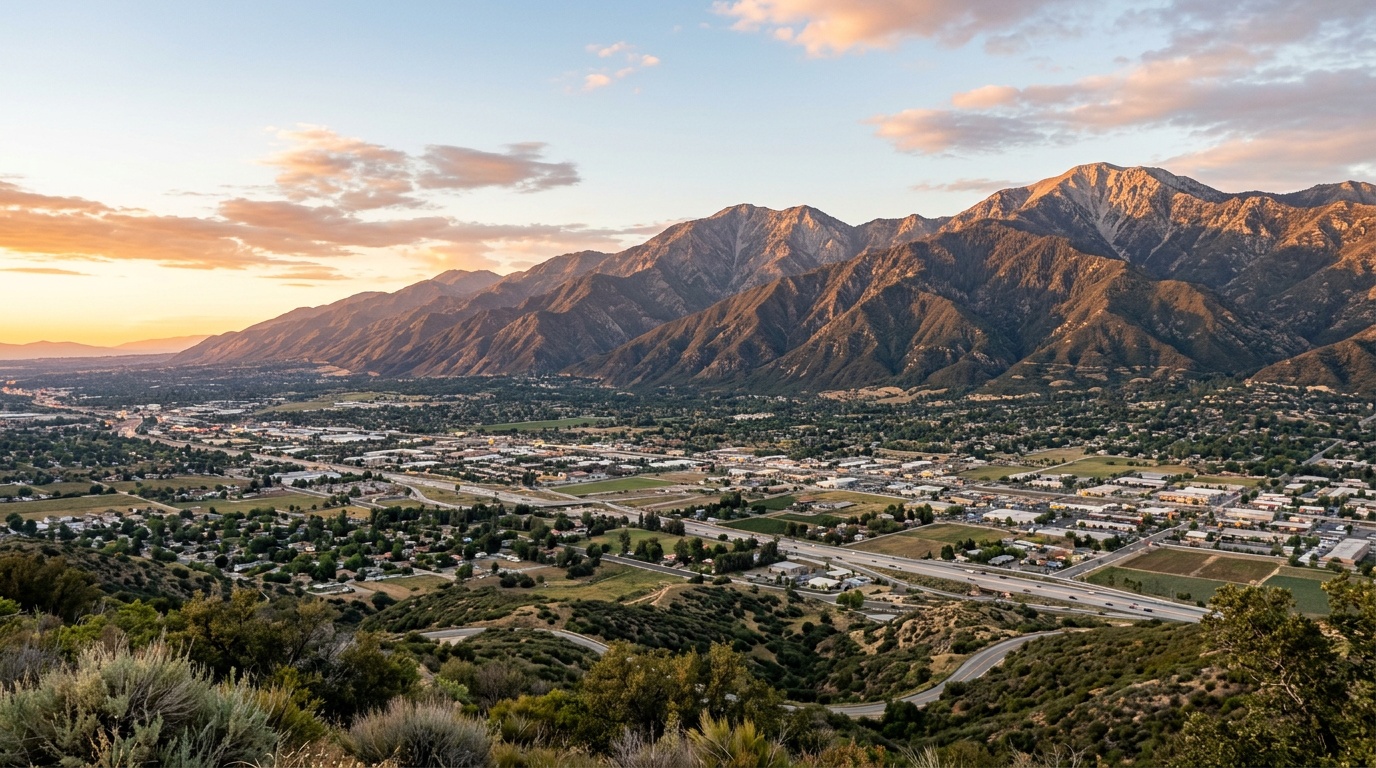
San Bernardino, California.
A landmark for context. The school itself is online, available wherever a San Bernardino family lives across the valley.
Cross-Reference
HSOA in nearby California cities.
Each city has its own page. The school is online, available wherever a family lives in California.
Further Reading
More from HSOA, and a few outside sources.
Weighing the move? Start with an honest comparison of online school, homeschool, and public school and our complete guide to getting started; for younger students, the K-5 parent guide. On the questions parents ask most: how online students socialize, avoiding screen overload, a safer, more supportive environment, and teaching AI literacy, not just AI tools. On the practical side: full cost transparency, the admissions requirements, and our complete online-school FAQ.
Outside context: NCES distance-learning data, NHERI homeschool research, and HSLDA state-law summaries.
Get Your Enrollment Plan
Fill out the form below and an enrollment counselor will reach out within one business day.
Or call us: (888) 242-4262