Accredited K-12 Online Private School
Torrance K-12 online home school, with room for what your child is serious about.
In the South Bay, the school day competes with Saturday heritage school, elite training, rehearsal, and a real academic load. A self-paced K-12 program does the academics in focused blocks and hands the rest of the hours back.

01 The South Bay Day
Why a Torrance family chooses a self-paced online school.
Torrance sits in the heart of the South Bay, an education-intensive stretch of Los Angeles County with a deep Japanese-American community, a long aerospace heritage, and a culture of taking children’s pursuits seriously. The result is a lot of full days. A child here may carry a real academic load and a heritage-language Saturday school, or club-level training, or a conservatory-track instrument, or a robotics obsession. The bottleneck is rarely the child’s drive. It is the clock.
A conventional bell day spends a surprising share of its hours on transit, transitions, and seat-time that a motivated student does not need. An accredited online K-12 program gives those hours back. The academics are done in focused, self-paced blocks, to the same standard, and the time a fixed schedule would have burned becomes time for the thing the child is serious about. The weekly target is the same; the day simply has room in it.
For the household whose week bends around a meet, a recital, or a Saturday-school commute, the steadiness matters even more. The schedule flexes around the busy days without the academic record taking a hit, because the platform tracks the weekly target and a counselor reviews pacing. A heavy commitment week is planned around rather than paid for in falling grades. The serious pursuit and the serious schooling stop competing for the same afternoon.
It is worth being plain about what self-paced does and does not mean. It does not mean a child learning alone, a watered-down year, or a parent turned into a full-time teacher. The teachers are at HSOA. The curriculum, the standards, and the checkpoints are fixed. What flexes is the timeline. A Torrance family does not trade rigor for flexibility; they get the same accredited K-12 education, arranged so it leaves room for a full life around it.
The Week, With Room
A self-paced K-12 day is not a lighter day. It is the same accredited load arranged so the child carries it AND the thing they are serious about, instead of choosing between them.
02 When the Other Commitment Is Real
Online school that makes room for a serious commitment.
For a lot of Torrance families, the hard part of school is not any single subject. It is that the day is already full. A child who is serious about something, a sport, an instrument, a craft, a heritage-language education, needs hours that a fixed bell schedule simply does not leave. So the family ends up rationing: cut the training, drop the Saturday school, or let the grades slide to protect the thing the child loves. Every one of those is a real loss, and none of them should be necessary.
An accredited online homeschool answers it a different way: it takes the calendar out of the fight. The academic load is done in focused, self-paced blocks, to the same standard, so the hours a conventional day spends on transit and seat-time come back to the family. The heavy academic work shifts onto the quieter days and lightens on the days a meet or a recital owns. The platform tracks the weekly target and a counselor reviews pacing, so a demanding week is planned around rather than paid for in falling grades.
The effect parents notice first is that the dinner-table argument disappears. The child is not choosing between the thing they are serious about and a serious education, because the week is built to hold both. A young athlete trains and keeps a full honors-level load. A heritage-school student does Saturday language work and an accredited weekday program without either one starving. The pursuit gets its hours, and the schooling keeps its bar.
None of this asks the family to lower the standard. The coursework, the checkpoints, and the accredited record are fixed. What flexes is when the work happens, not whether it meets the mark. The serious thing keeps its place in the week; the school keeps its place in the record.
03 Who Calls, and Why
Four Torrance households.
The heritage-language family
A child in a Japanese-American or other heritage household who attends Saturday language and culture school, with the homework that comes with it. That second education matters, and it takes real hours. A self-paced weekday schedule holds the full accredited load without crowding out the language the family is working hard to keep.
The young-athlete family
Club-level training, travel meets, and practice blocks that a 3 p.m. bell makes impossible. The academics shift to the open windows, the heavy load lands on lighter training days, and the weekly target still gets met. The sport and the schooling stop fighting over the same afternoon.
The music or maker family
A conservatory-track instrument, a serious art practice, or a robotics and engineering obsession that needs long uninterrupted blocks. Self-paced gives the deep-work time that a period-by-period bell never can, and the accredited record keeps full faith all the while.
The district alternative
A family that wants an accredited K-12 path with a different pace than the local South Bay district programs offer. Not a verdict on any teacher. A straightforward transfer back to the district later if the family wants it.
Wondering how the academics would fit around your child’s commitment?
04 The Program, Year by Year
The Torrance online K-12 program, grade by grade.
| Band | What the student is doing | Closes with |
|---|---|---|
| K–2 Foundation | Phonemic awareness, phonics, fluency, comprehension. Single-digit math facts and place value. First sentence to first paragraph. The years that decide what the next eleven can do. | Reading independently |
| 3–5 Expansion | Reading to learn, multi-paragraph writing, fractions and operations, the scientific method. Mastery moves the student up, not the calendar. | 5th-grade promotion certificate |
| 6–8 Analytical | Pre-algebra to Algebra I, life and physical science with shipped lab kits, analytical reading and argument writing. | 8th-grade promotion certificate |
| 9–12 Four-year arc | English, mathematics through advanced courses, laboratory science with shipped kits, and the social sciences, with honors and AP-equivalent options as coursework, built on the American Curriculum framework. | An accredited diploma |
Underneath the four bands is a single mechanic: mastery moves the student up, not the calendar. A course is finished when the work meets the standard, and the next course is already there when it does. A student who is strong in math runs ahead in it; a student who needs another week on fractions takes the week, without falling behind in everything else. That is how the same program serves a child who is two grades ahead in one subject and exactly on pace in another.
Flexibility does not mean drift. The platform tracks progress against the weekly target, and a counselor reviews pacing on a regular cadence, so a light week around a meet or a recital is visible and gets made up rather than quietly lost. Every grade has its own page: kindergarten, elementary, middle school, and high school nine through twelve. The counselor walks through course selection, and how to fit it around the family’s commitments, in detail.
05 How the Day Gives Time Back
Where the hours actually come from.
“Room in the day” is not a slogan; it is a set of mechanics. Here is where the time a fixed bell schedule spends, and a self-paced K-12 day saves, actually goes.
A child shouldn’t have to give up the thing they love to get a serious education. The day is big enough for both.
From the Head’s Desk
06 The Week, Three Ways
What a week actually looks like.
There is no single Torrance school day, which is the whole point. The academic load is fixed; when it happens bends to the week the family actually has. A focused block can land in the morning before training, or in a quiet evening after rehearsal. Lab science with shipped materials happens on the kitchen table when the week allows. The three weeks below are ordinary in the South Bay, and the program is built to absorb all three without the student ever falling behind.
A Saturday-school week
Heritage-language school on Saturday, with its own homework. The weekday academic blocks run efficiently in the mornings, the language study gets the weekend it needs, and neither one is shortchanged. Two educations, one week, both intact.
A competition or recital week
A travel meet or a performance owns the middle of the week. The student banks the heavier academic work into the days before and after, runs light during the event, and still meets the weekly target. The big day gets full attention without costing a grade.
A heads-down academic week
No events, no travel. This is when the demanding blocks land: long writing, the lab kits, the deep math. The year front-loads this kind of week so the busy ones can stay light without anything slipping.
07 Accommodations
Two paces, one cumulative record.
HSOA accommodates students with active IEP or 504 plans and works with families on the specific accommodations the plan calls for. The starting point for any Torrance family bringing an existing plan is a counselor call. The counselor reviews the plan, walks through how the accommodations land in the K-12 curriculum, and aligns the student’s pacing and supports to what the plan asks for. The same flexibility that makes room for a serious outside commitment makes room for the accommodations a plan calls for, on the student’s own clock.
Twice-exceptional learners are advanced in some subjects and need extra support in others. The self-paced mastery model runs both at once: a student can be two grades ahead in math and building in reading on the same day, without either pace becoming the wrong pace. What HSOA does not do is replace the clinical specialists or therapists a family already works with. The school works alongside that ecosystem; its job is the K-12 academic work, accommodated to fit the plan and the student.
Ready to build a week that holds both?
From the Head’s Desk · Torrance
On not making a child choose.
A lot of first calls I take from a Torrance family carry the same quiet worry: that a child who is serious about something outside of school, a sport, an instrument, a language, a craft, has to pay for it in their education. That the only way to protect the training or the Saturday school is to let the academics slide, or the only way to protect the grades is to give up the thing the child loves. I want to be clear that this is a false choice, and a costly one.
The South Bay raises a lot of serious children. The families here take their kids’ pursuits seriously, and they should not have to apologize for wanting the schooling to be just as serious. So we take the clock out of the contest. The academic load is fixed and real; what moves is when it happens. A student can run focused morning blocks, train or rehearse in the afternoon, bank ahead before a big week, and still meet every standard the year asks for.
I have watched what it does to a child to be told, year after year, that the thing they love is a distraction from the thing that counts. It teaches them to shrink one of the two. A schedule with room in it teaches the opposite: that a person can carry a full, serious education and a full, serious passion at the same time, because the week was built to hold both.
What I tell every family on that first call: bring the real week. The training schedule, the Saturday school, the rehearsal calendar, the prior records, the IEP if there is one. We build the school around the life the child already has. Bring it to the counselor call. The plan starts there.
08 Cost
What K-12 online home school in Torrance costs.
The financial side is a real conversation, and the right place to have it is a counselor call, not a tuition table on a webpage.
For exact numbers and a written plan for your family’s situation, schedule a counselor call. Fifteen minutes by phone. No pressure.
09 The First Fifteen Minutes
Talk to a Torrance online school counselor.
Fifteen minutes by phone. No commitment after.
Pick a window and the counselor calls you.
Or call (888) 242-4262 directly. Same counselor, no slot needed.
10 Frequently Asked
Torrance online home school questions, answered.
My child trains or rehearses on weekday afternoons. Can the school really work around that?
Does a flexible schedule mean a lighter academic load?
My child attends a heritage-language Saturday school. Does that fit?
Is “self-paced” watered down or unstructured?
My child is far ahead in one subject. Can they move faster there?
How are the core subjects actually taught: reading, math, science?
Can my student transfer back to the local South Bay district later?
What does the K-8 student get at the end of 5th and 8th grade?
My child has an active IEP. How do accommodations work?
How long is the counselor call, and what does it cost?
Field Recording · 60 Seconds
Sixty seconds with the Head of School.
Locator
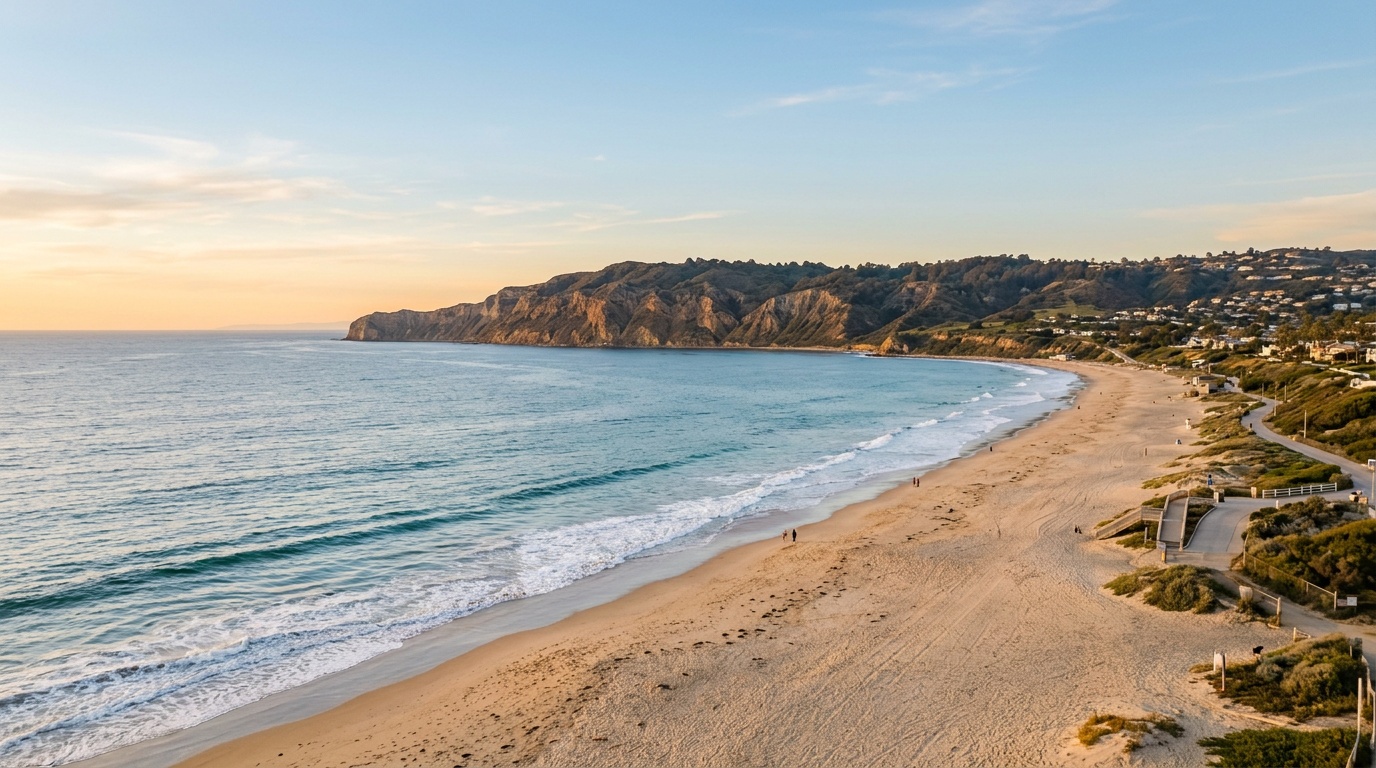
Torrance, California.
A landmark for context. The school itself is online, available wherever a Torrance family lives.
Cross-Reference
HSOA in nearby California cities.
Each city has its own page. The school is online, available wherever a family lives in California.
Further Reading
More from HSOA, and a few outside sources.
Weighing the move? Start with an honest comparison of online school, homeschool, and public school and our complete guide to getting started; for younger students, the K-5 parent guide. On the questions parents ask most: how online students socialize, avoiding screen overload, a safer, more supportive environment, and teaching AI literacy, not just AI tools. On the practical side: full cost transparency, the admissions requirements, and our complete online-school FAQ.
Outside context: NCES distance-learning data, NHERI homeschool research, and HSLDA state-law summaries.