
What Does Kansas Online Homeschool with High School of America Look Like?
Kansas online homeschool with High School of America pairs an accredited K-12 curriculum and certified teachers with one of the lightest processes in the country: register once as a nonaccredited private school, and there’s no annual renewal, no testing, and no ongoing paperwork after that.
Listen to the 30-second version
Read the audio transcript
Kansas online homeschool with High School of America pairs an accredited K-12 curriculum and certified teachers with one of the lightest processes in the country: register once as a nonaccredited private school, and there’s no annual renewal, no testing, and no ongoing paperwork after that. Every course stays open around the clock, so a harvest week and a normal week both fit the same school without a single missed assignment.
Kansas homeschooling growth since the 2017-18 school year, per district-enrollment reporting, even as public school enrollment has declined statewide.
Kansas nonaccredited-private-school registration happens once, with no annual renewal, no testing, and no ongoing paperwork.
The minimum instructional time Kansas expects per year for grades 1-11, substantially equivalent to public school’s 186-day calendar.
Numbers current as of July 2026, and any of them worth digging into further is a fair question for a counselor: send a request and expect a call back.
Built Around the Harvest and the Shift
Kansas runs on two calendars a district school day was never built to fit. Wheat harvest pulls whole farm families into the field for weeks at a time every summer. At the same time, Wichita‘s aviation plants and the meatpacking operations of southwest Kansas run around the clock, putting parents on shifts that start at 5 a.m. or midnight. A fixed 8-to-3 school day serves neither one.
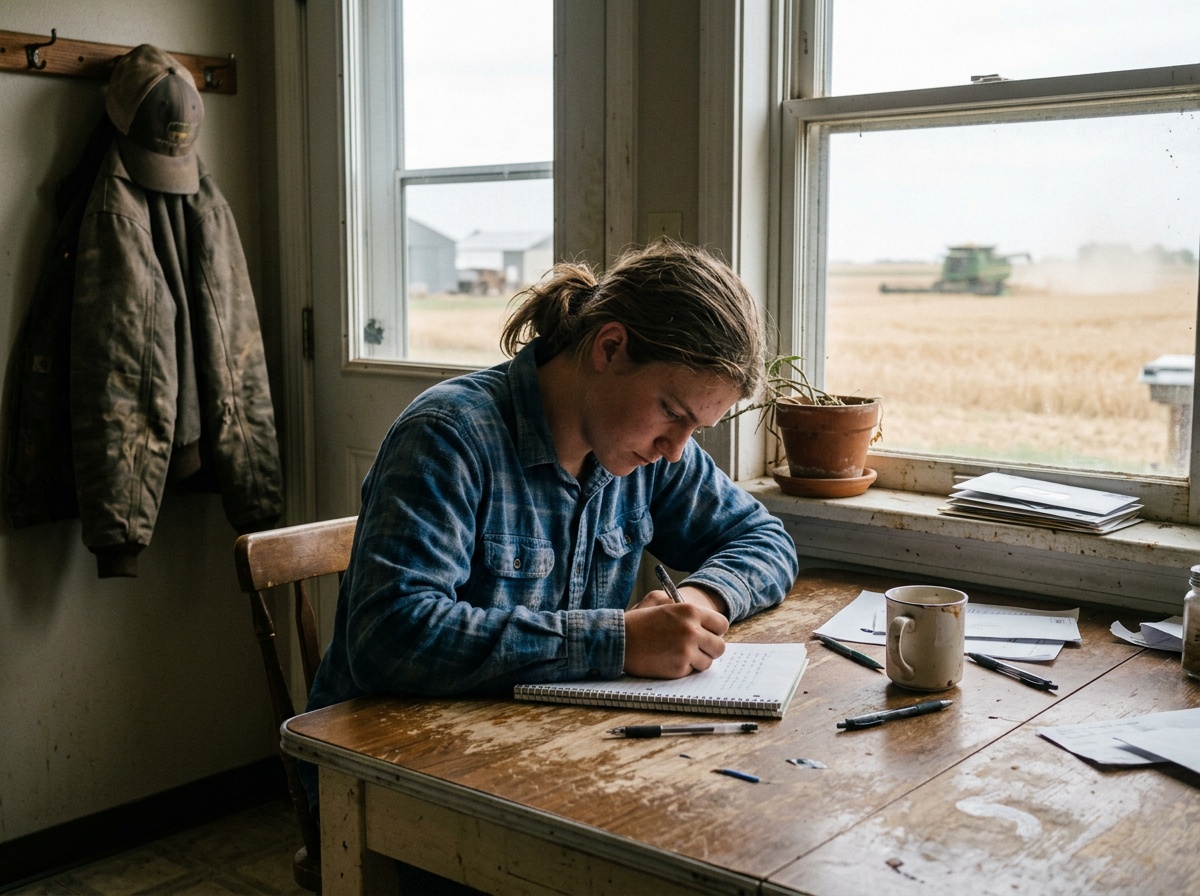
Here, coursework stays open every hour of every day, so a farm student can do algebra before sunrise during harvest and catch up on lighter days once the wheat is in, while an aviation-shift household in Wichita runs school whenever the family actually overlaps. Progress is tracked by what gets mastered, not by which hour or which week it happened in.
Most Kansas households that land here have already tried to force one fixed calendar onto a life with two rhythms running at once, and it didn’t hold up. The fix isn’t a stricter schedule. It’s a school that measures the work instead of the clock or the season.
How Do You Start Homeschooling in Kansas? Four Steps
Kansas has one of the lightest processes in the country: register once as a nonaccredited private school, and the state steps back. Here is the whole path.
Decide and withdraw
If your student attends public school, formally withdraw with the district. There’s no fixed statutory deadline the way some states set, but registering before instruction begins keeps the paper trail clean.
Register as a NAPS
Submit your school’s name and address to the Kansas State Board of Education as a nonaccredited private school. There’s no fee and no approval process: the state records it, and that’s the whole review.
Meet the instructional-time bar
Kansas expects instruction substantially equivalent to public school: at least 186 days of 6+ hours, or 1,116 hours a year for grades 1-11. An accredited full-time program like HSOA is structured to clear this without any extra tracking on your end.
Start coursework
Enroll any month, and most students are working within the week. From that point Kansas is done asking, and school runs on whatever rhythm harvest and shift work actually demand.
That covers the practical side; Kansas itself is the final word on the legal specifics. Verify current requirements on the Kansas State Department of Education’s nonaccredited private school page before registering. One nuance worth knowing: registering as a NAPS is not the same as state accreditation, and the two terms shouldn’t be confused when comparing programs.
Built for the Way Kansas Families Actually Live
Farm and ranch families
Planting and harvest don’t pause for a school calendar. When wheat or milo needs to come in, coursework flexes around the field instead of the field working around school. How the parent dashboard works.
Wichita aviation shift families
The Air Capital of the World runs production around the clock. A parent on a 5 a.m. line shift needs a school day that doesn’t assume a 9-to-3 household. See the 9-12 program.
Southwest Kansas shift-work families
Garden City, Dodge City, and Liberal run major food-processing operations with round-the-clock shifts. Self-paced coursework fits whenever the family is actually together. How records and credits carry.
Fort Riley military families
Around Junction City and Manhattan, a permanent-change-of-station move shouldn’t mean losing momentum. Records, teachers, and courses carry with the family through every transfer. Browse the course list.
Rural western Kansas families
In Colby, Goodland, and the towns between, the nearest full-service school can be an hour away. Every course arrives the same way over a home internet connection, so the drive simply isn’t part of the school day anymore. The admissions steps.
Families leaving a large district mid-year
Switching out of a big Kansas City-area or Wichita-area district partway through the year is simpler than it looks: register, send records, and start. About the K-12 program.
What Grade Does a Kansas Student Enroll In?
Whatever grade fits, starting whatever month works. A short placement conversation checks where a student’s skills actually sit before anything else happens.
K-5
Phonics, early math, and a lot of hands-on exploration, paced for a young learner’s attention span rather than a bus schedule. Enroll at kindergarten or join partway through at any elementary grade.
6-8
Multiple teachers, real writing assignments, and the run-up to algebra, with certified staff paying attention during the years students need it most. More at the middle school program.
9-12
A real transcript, electives worth choosing, and a fair look at prior credit for students switching in partway through. Visit the online high school page or go directly to 9th grade.
One family, several children, several grade levels, one login: Kansas farm households with two or three students at different ages run all of them through the same account without splitting the household across programs. Enrollment starts with a conversation and a quick skills check, not a formal test, and for a mid-year arrival that same check becomes the plan for closing whatever gaps showed up at the old school.
A Catalog Deep Enough to Replace a Whole Building
Close to 200 courses live in the catalog, spanning phonics through pre-calculus, lab sciences, world languages, and civics, with the upper-grade list broken out separately on the course page. That’s the part a one-building rural Kansas school can’t match on its own: a computer science elective, an art history elective, and everything between, available to a student in Goodland the same as one in Overland Park.
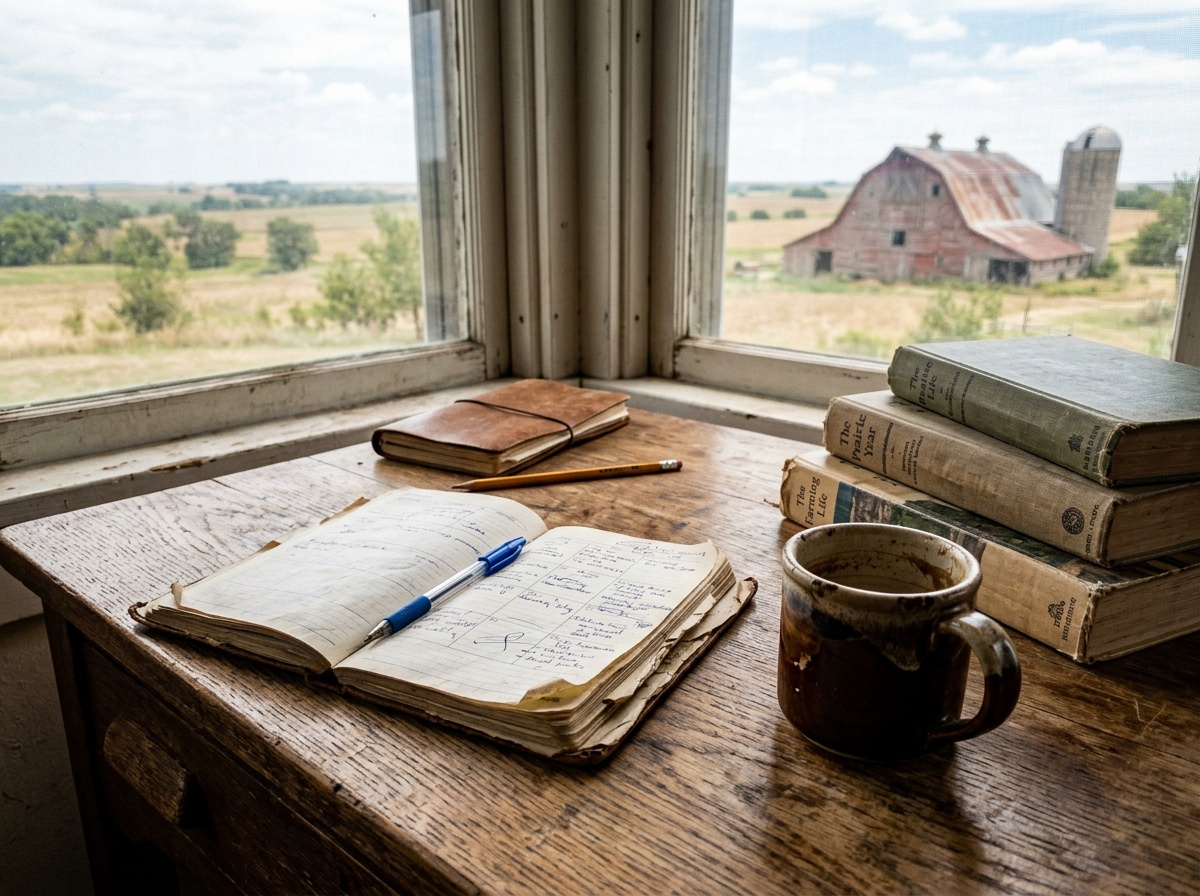
Self-pacing is what makes the same catalog work for two very different weeks: a farm household mid-harvest and an aviation-shift household running school at odd hours both draw from it identically. Certified teachers do the grading, catch a student who’s stuck before it becomes a pattern, and take the questions a tired parent would otherwise have to answer alone.
Nothing about the sequence is improvised. Younger grades build reading and number fluency in short blocks, an approach our reading-intervention research review covers in more depth; middle grades layer in real writing assignments and algebra prep; grades 9 through 12 add lab science, math through pre-calculus, world languages, and history built on primary sources rather than summaries. A student aiming at a competitive college list, in-state options like the University of Kansas or Wichita State included, gets the honors depth to back it up, and a student coming off a hard year gets a catalog built to rebuild footing, not assign blame.
Kansas Already Has a Homeschool Community; This Doesn’t Replace It
Regional homeschool co-ops and support groups run active calendars across the state, from Reno County to Great Bend, and families already plugged into that network aren’t giving it up to enroll in an online program. HSOA handles the accredited academics; the co-op, the 4-H chapter, or the church group stays exactly where it was. The two aren’t competing for the same afternoon.
Is NAPS Registration the Same as Accreditation?
No, and the difference matters when you’re comparing options. Registering as a nonaccredited private school satisfies Kansas’s compulsory attendance law: it’s a name-and-address record with the state, not a review or endorsement of what’s actually being taught.
Accreditation is a separate, voluntary standard that an educational program earns by meeting outside evaluation criteria. HSOA carries that accreditation on top of, not instead of, meeting Kansas’s NAPS registration requirement, which is exactly why the resulting transcript and credential hold up the same way a district’s would, even though the underlying legal filing is as light as Kansas law allows.
The honest sorting question for Kansas families is simple: do you want the state’s lightest-touch legal path, an actual accredited program behind the credential, or both at once? Kansas doesn’t force a tradeoff between them, and neither does enrolling here.
Why Do Kansas Homeschoolers Hear About Two Different State Bodies?
Kansas splits authority in a way that trips families up: the Kansas State Department of Education handles the free, one-time nonaccredited private school registration that homeschool families file, while the Kansas Board of Regents issues a separate “Certificate of Approval” that applies to actual schools and organized programs, not individual homeschooling households. A parent who stumbles onto Board of Regents paperwork while searching for homeschool requirements is usually looking at the wrong agency for their situation.
The practical takeaway: a Kansas homeschool family registers with KSDE and never needs to touch the Board of Regents process at all. HSOA’s own accreditation is separate from both of those state-level tracks, layered on top rather than substituting for either one.
What Kansas Asks of Parents, and What We Handle
Kansas asks for the registration, once, and then largely trusts you. The day-to-day parent job here is coaching, not lecturing: glance at the dashboard during a break in the field or the shift, keep the week’s rhythm honest, and loop in a counselor when something feels off. The certified teaching staff owns instruction and grading end to end.
The paperwork mostly builds itself as coursework happens. Lessons, grades, and progress land automatically in the family dashboard, ready to print if you ever need a paper trail, while the handbook covers every policy in one place. None of it goes to Kansas unless you choose to send it; families arriving from a district usually notice the silence first.
Keep a light file anyway: your NAPS registration confirmation and a handful of dashboard progress reports each year. Kansas will not ask for it, but a future college application, a move to a stricter state, or a return to district school goes smoother when the paper trail already exists. The full text of K.S.A. 72-3120 is public if you want the state’s own language alongside a counselor’s explanation.
Switching In From a Kansas District or Elsewhere
Records don’t need to be complete to start. A transcript, report cards, or just a rough sense of where the student left off is enough for the placement and credit review. Prior credits carry forward, weak spots get extra attention, and subjects the student already has a handle on keep moving at pace.
Start at the admissions page, or leave a note at request information for a callback; it typically doesn’t take long to go from that first call to a first finished assignment. Tuition specifics live on the tuition page, and any counselor can walk through them directly at (888) 242-4262.
Areas We Serve Across Kansas
From the Wichita and Kansas City metros to the wheat towns of the western plains, kansas online homeschool enrollment works anywhere the internet reaches. Communities we serve include:
WichitaOverland ParkKansas CityTopekaOlatheLawrenceManhattanSalinaHutchinsonGarden CityDodge CityJunction City
Rural Kansas pays a distance tax that this model simply doesn’t charge. A farmhouse outside Colby draws from the same course list, the same teaching staff, and the same rolling enrollment window as a house in Overland Park, at every grade level.
Kansas Online Homeschool, Asked and Answered
What do we have to file to homeschool in Kansas?
Kansas homeschools operate as nonaccredited private schools (NAPS). You register the school’s name and address with the Kansas State Board of Education one time, when you start. There’s no cost, no approval process, and no review of your curriculum. Registering isn’t the state endorsing your program, just a name-and-address record.
I found something about a Board of Regents “Certificate of Approval.” Do we need that too?
No, and it’s a common mix-up. The Certificate of Approval is a Kansas Board of Regents process for schools and organized programs, not individual homeschooling households. A homeschool family registers with the State Department of Education (KSDE) as a nonaccredited private school and never needs to touch the Board of Regents process.
What’s the actual process for withdrawing our child from their current Kansas school?
Put it in writing. A short letter to the district stating your child’s last day of attendance is enough, and sending it by certified mail with a return receipt gives you proof it was received. Kansas treats three consecutive unexcused absences as truancy, so this letter is what keeps a mid-year switch from turning into a truancy question. It’s a separate step from registering as a nonaccredited private school, not a substitute for it.
Do we ever have to renew the registration or submit paperwork?
No. Beyond the initial registration, Kansas doesn’t require curriculum plans, attendance records, test scores, or any other ongoing submission. Once registered, most families never hear from the state again about it.
Does Kansas require standardized testing or portfolio review?
No. Kansas nonaccredited private schools are exempt from state testing requirements, and there is no portfolio review. Kansas law also doesn’t name specific required subjects the way some states do.
How many hours or days does Kansas require?
Instruction has to run for a period substantially equivalent to public school: at least 186 days of at least 6 hours each, or 1,116 hours a year for grades 1 through 11. An accredited full-time program like HSOA is built to clear that bar as a matter of course.
Do our teachers need a Kansas teaching license?
No. Kansas law requires instruction by a ‘competent’ instructor, not a state-licensed one. HSOA’s certified teachers exceed that standard regardless, with instruction and grading handled by credentialed staff, not left to the parent.
Our income depends on harvest or an aviation shift. Does this actually work?
That’s the household this was designed around. A farm family can shift the school week around planting and harvest, and a household on Wichita aviation shift work can run coursework whenever the family is actually together, morning or night. Nothing is pinned to a fixed daily start time.
What about distance in western Kansas: Garden City, Liberal, Colby?
Some western Kansas towns sit an hour or more from the nearest full-service school. Online homeschool removes the drive entirely: the same course catalog reaches a ranch outside Colby and a house in Overland Park identically.
Can a student switch out of a Kansas public school mid-year?
Yes. The one-time nonaccredited-private-school registration is the only paperwork, and it doesn’t need to line up with any particular date. A counselor turns whatever records exist into a placement plan fast, which matters most around wheat harvest and right after fall sports wrap.
Is a parent expected to teach the material themselves?
No. Instruction and grading sit with certified teaching staff, start to finish. A parent’s role is checking the dashboard and staying looped in, not re-explaining algebra at the kitchen table after a 12-hour shift.
Will the diploma be recognized the way a district one would be?
The credential is an accredited diploma with a real transcript behind it, one that colleges and employers can independently verify. That record builds itself as coursework is finished, and a counselor will show you a sample transcript before you commit to anything.
Register This Week, Start This Week
There’s no closed enrollment window for kansas online homeschool. Talk to a counselor first if you want to, or handle the NAPS registration tonight once the shift or the fieldwork is done; most students are working through coursework within days.
Prefer to ask questions first? (888) 242-4262
Free Credit Evaluation
Find out exactly what’s left to graduate.
- Send your transcript — or let us request it
- We map your remaining credits free
- You get a graduation plan with a finish date
No enrollment required. Or call (888) 242-4262.
Full Course Catalog · Kindergarten Program · Grades K-5 · Grades 6-8 Online · Starting 9th Grade · 11th Grade Online · 12th Grade Online · Individual Courses · Mid-Year Transfer Guide · Graduation Credit Requirements · How Admissions Works · Tuition Details · Students & Parents · Student Handbook · The K-12 Program · Missouri Hub · Colorado Hub · Nebraska Hub · Oklahoma Hub · Texas Hub · Homeschool Regulation Map · Talk to Us First