
Lubbock County, on the South Plains
Lubbock Online High School
Count what your student has already earned, then put the work only where the transcript is dry.
In Lubbock, nobody pumps water without knowing where it is going. The farms around the city draw on the Ogallala Aquifer, a groundwater conservation district headquartered here has been measuring and protecting that supply since 1951, and the irrigation method researchers developed in the Lubbock area in the late 1970s puts water at the soil, row by row, instead of throwing it into the wind. Measure first, then apply only where it is needed. That is also a sensible way to finish high school, and it is how this Lubbock online high school page works. We are an online high school for grades 9 through 12, and this page is one city under our Texas online high school hub, which covers the whole state.
How does online high school work in Lubbock?
A student signs in, opens a course that is already built, works through the lessons at a pace that fits the material, and turns in work that a teacher grades and answers in writing. Nothing streams at a fixed hour, so no class is ever missed by being somewhere else.
Families on the South Plains usually ask it with the kitchen table already in mind. The short answer is four moves, repeated for every course a student takes. The longer answer, with screenshots of what a course looks like, is on the page that asks how does online high school work?
- The course opens whole. Every unit, reading and assignment is visible from the first day, so a student can see the size of the job before starting it and plan the weeks around it.
- Lessons move at the speed of the material. A unit that clicks takes two days. One that does not takes two weeks, and nobody else in a room decides which it is.
- Work goes in when it is ready. A teacher grades it and writes back. Where a course allows it, an assignment that missed can be reworked rather than written off.
- The credit is recorded. When a course is complete, it goes onto the transcript, and that entry stays put.
Behind all four sits an assigned student services representative: one named person who knows the student’s plan and notices when a course has gone quiet. The lessons follow the American curriculum, and our K-12 online homeschool programs use the same structure in every high school grade, so a student who moves from 10th to 11th grade does not have to learn a new system.
Measure first
If your student already has high school credits somewhere
Send the transcript before anything else. A counselor reads it course by course and tells you in writing how many of our 24 credits are already earned, and only the gap gets assigned.
This is the step most families expect to come last, and it is the one we insist on first. A student who finished English 1, Algebra 1 and Biology at a Lubbock County high school has finished them. Assigning them again would be the educational version of watering a field that rained yesterday. The credits are read at transfer credit review, and what a full diploma takes in general is set out on the page about the credits you need.
A specimen: a junior arriving with two years at a Lubbock County high school behind her. Eleven credits read across, thirteen to plan, and nothing repeated.
The ring is the question every family brings to the first call, drawn once. The answer for your student will be a different number, and it will be on paper before you pay for anything. If the count says the gap is one course rather than a year, you will hear that plainly.
One credit recovered, not a whole year repeated
If one course failed, retake one course. Credit recovery means redoing the single class that did not pass, on its own, instead of repeating a whole year around it.
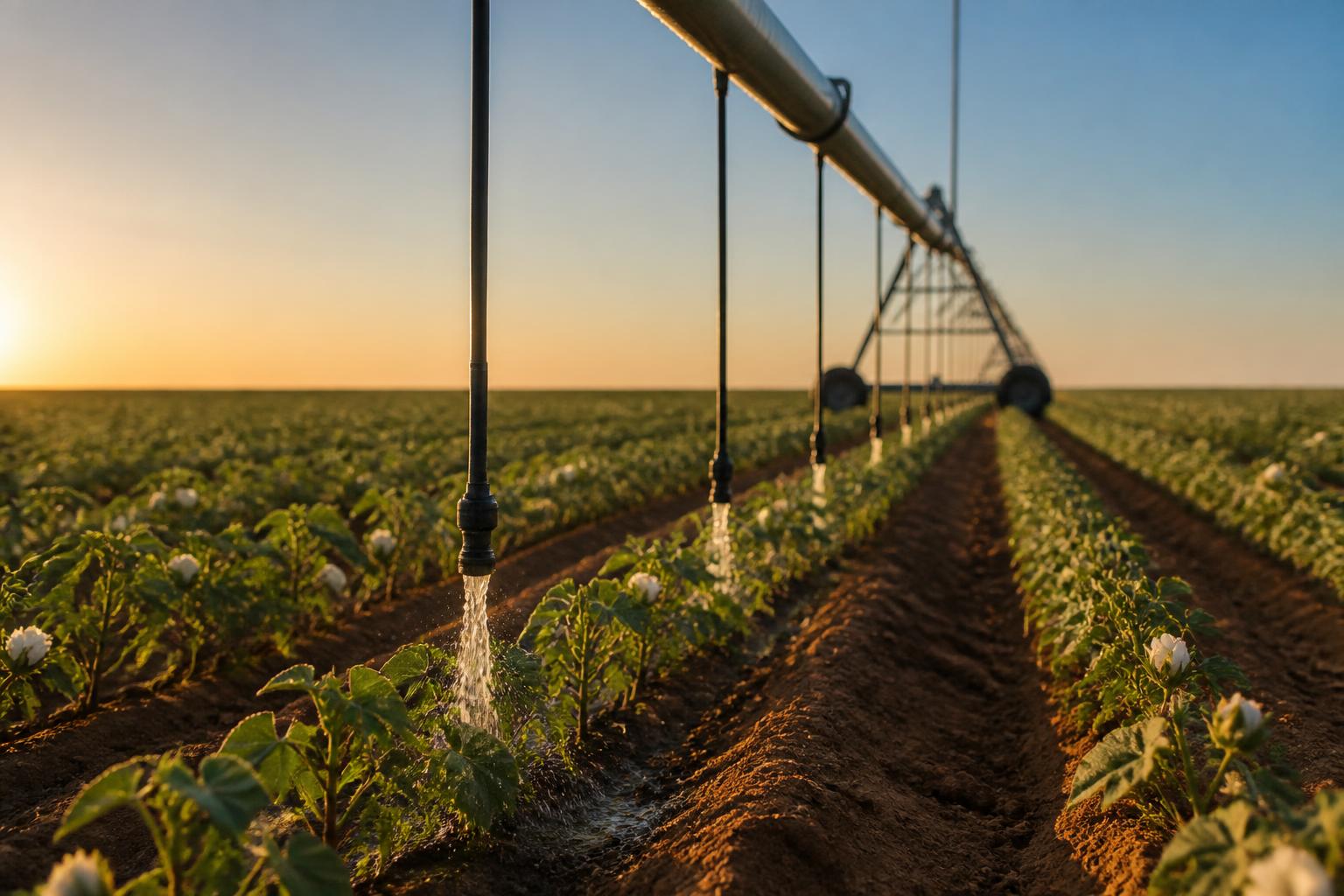
The irrigation idea that came out of the experiment station here in the late 1970s was simple to say and hard to build. A sprinkler throws water high into dry air and lets the wind take a share of it. The low energy precision method hangs hoses from the moving pipe so the water lands at the soil surface, in the row, where the plant can use it. Same crop, same field, far less wasted.
| The situation | Spread across everything | Applied at the row |
|---|---|---|
| One failed course in 10th grade | Repeat the grade, all seven subjects | Retake that one course, alongside the rest |
| Half a credit missing at the end of senior year | Wait for next fall’s schedule | Open the half credit this month |
| Strong in math, behind in English | Both move at the class pace | Math moves fast, English gets the hours |
| Credits from two earlier schools | Start a fresh four-year plan | Count both transcripts, plan only the remainder |
None of this is a criticism of a building. A school with a bell schedule has to water the whole field at once because it serves the whole field, and for most students that works. The row-by-row version exists for the student whose transcript has one dry patch. Our page on credit recovery covers how a single retaken course is graded and recorded, and it is often the quickest way back on schedule.
Not sure which rows are dry? Start the application(888) 242-4262
Self-paced high school bends around a household’s season
A self-paced course has no daily bell, so the school hours can sit wherever the household’s week leaves room: mornings in a busy season, longer stretches when it is quiet.
Plenty of households in the Hub City run on a calendar that is not September to May. A family business with a heavy autumn, a parent on rotating hospital shifts, a student who travels for a sport or holds a weekend job. The structure that serves them is asynchronous coursework, where the course waits for the student rather than the other way round. Here is one realistic week for a junior with an afternoon job:
Dark cells are the job. School fits in around them, and Friday afternoon is a buffer for anything that ran long.
The families who do this well are not the ones with the most spare hours. They decide which hours belong to school, write them on the refrigerator, and protect them in busy weeks.
Self-paced does not mean unsupervised. A course left untouched for too long gets a message from the student’s representative, and a parent can see progress at any time. It means the pace is set by the material and the week, not by a room of thirty.
October on the caprock, and an old transcript open
A student who left school can finish high school online from the last credit they earned. Nothing already on the transcript is lost by stepping away; the work starts where the record stops.
Picture a Saturday in October, the wind up and the sky enormous, and a student at the table with a transcript from two years ago that stops halfway through 11th grade. The usual fear is that stepping away erased something. It did not. The courses that were passed are still passed, and the route to finish your diploma online begins at the first empty row.
What stepping away does and does not cost
Claim
Leaving school erased the credits.
Reality
Passed courses stay passed. They are read onto the new transcript course by course.
Claim
Coming back means starting at 9th grade.
Reality
The plan starts at the first empty row, wherever that is.
Claim
A course half finished counts for half.
Reality
Partial courses are the one place work can be lost, and you hear which ones before you commit.
Claim
The diploma will say it was finished late.
Reality
The transcript shows courses, credits, grades and dates. It does not editorialize.
Every case is read individually. These are the patterns counselors see most.
Mid-year arrivals are ordinary here. A student who leaves a building in February starts with us in February, and the transcript shows both schools honestly, each with its own courses and dates.
Measure the homeschool record first
Write down what each homeschool year covered, subject by subject, and bring it to the first call. A counselor turns that record into a credit count before anything is assigned.
Texas families who have taught at home through the middle grades, or into high school, often reach 9th or 10th grade wondering who will issue the diploma. That is a fair question, and the honest answer depends on the family. An honest comparison of the options lays the paths side by side without leaning on any of them, and a family still at the very beginning should read getting started with homeschooling first. A Lubbock online homeschool high school route, where an accredited school issues the record, is one of those paths, not the only one.
What a counselor can do with a homeschool record depends on what was written down:
- A log of lessons and grades
- The best case. Dates, topics and marks read almost like a transcript and place quickly.
- A finished textbook series
- The scope is printed in the book. Bring the table of contents and any tests that came with it.
- Projects and portfolios
- A science fair board, a research paper, a year of lab notebooks. Evidence of learning that a counselor can weigh course by course.
- Outside classes
- A co-op, a community course, a lesson series with a grade from someone outside the family. Read much like a transfer.
24 credits on one accredited online high school diploma
Our diploma is earned at 24 credits, and we issue it ourselves as an accredited private school. The transcript lists every course, its credit, its grade and where it was earned.
Twenty-four is our number, the same for every student, which is why a counselor can say what is left in a single call. A district or the state may set a different one, and those are theirs to state; the Texas Education Agency is the place to read Texas rules. What our online high school diploma is, and what it is not, has its own page, and accredited online high school, explained covers what accreditation does and does not mean.
The nine electives are where a transcript becomes one student’s own. A second language, a fine art, a computer course, another science. Because there is no fixed timetable, an elective can be taken in a stretch when the core load is light.
Which online high school courses does each grade take?
Each grade has its own work. A 9th grader starts the four-year sequences in English and math; a senior takes only what the count says is missing.
- Ninth grade onlineThe first year of the sequences, and the cheapest place to set good habits.
- 10th grade onlineWhere a gap first shows, and the easiest year to close it.
- 11th grade onlineUsually the heaviest load; the order of courses matters most here.
- 12th grade onlineOnly what the count says is left, ordered to keep the last term light.
The high school courses below are the ones families ask about most. Each links to its own page with the units listed, and the full course catalog holds the rest:
- English 1
- English 2
- Algebra 1
- Geometry
- Algebra 2
- Pre-Calculus
- Biology
- Chemistry
- World History
- United States History
- U.S. Government
- Art History and Criticism
A student who already passed half of these elsewhere takes the other half. That is the whole idea of measuring first, applied to a course list.
If your student must enroll mid-term
You can start any month. Applications are open all year, and a course begins on the day the student opens it rather than on a fall date.
Families move to the Hub City for a job, a residency, a post at the university or the hospitals, and the move rarely lines up with August. A mid-year start is routine for us. The steps are short: apply, send whatever records exist, take the counselor’s call, and get the credit count in writing. The admissions process page walks through each one.
Four steps to a mid-year start
A short application, any day of the year.
Transcripts, report cards, homeschool logs. Unofficial copies are fine to begin.
A counselor reads the records and answers your questions first.
Credits earned and courses left, in writing, before you pay.
Most families finish all four within about a week.
If the honest answer is that your student should finish the term where they are and start with us after, a counselor will say so on that call.
Published tuition, not a negotiation at the kitchen table
Tuition is published for everyone, payment plans exist, and the numbers are on the tuition page. A counselor will go through them line by line with no pitch attached.
The costs families mention afterwards are usually the ones nobody invoiced: the second drive across town in the middle of the day, the shifts turned down because school ran to four, the extra semester because a half credit was spotted in May instead of October. Measuring first is what prevents the last one, and some of the rest is what families save when the schedule belongs to the household.
Want the numbers for your own student? Start the application(888) 242-4262
Questions from Lubbock County families
Are you part of Lubbock ISD or another local district?
No. We are a private online school that issues its own diploma, with no connection to Lubbock ISD, Frenship, Lubbock-Cooper or any other district in the county. They run their own schools on their own terms, and many students are best served exactly there. We speak only for ours.
How fast can a credit count come back?
Usually within a few days of the records arriving, and in writing. A clean transcript from one school is quickest; several schools plus homeschool years take a little longer, because each one is read on its own.
Can my student take one course with you and stay at their school?
Sometimes. A single course can fill a gap if the current school agrees to accept the credit. That decision belongs to the school, so ask them before you ask us.
Who does my student actually talk to?
Teachers, in writing, about the coursework. An assigned student services representative about everything else: pace, the plan, what is next. One named person, not a ticket queue.
Is there a college nearby for after graduation?
Lubbock is a university town. Texas Tech University opened here in 1923, as Texas Technological College. We make no claim about what any college decides; our transcript is issued by an accredited school and read like any other.
Why is Lubbock called the Hub City?
Because it is the economic, educational and medical center for a wide stretch of the South Plains, as the Hub City entry on Wikipedia puts it. Families drive in from a long way around for school, doctors and work, which is part of why a school that comes to the house appeals here.
We have younger children too. Is there something for them?
Yes. Our online K-12 school runs from kindergarten up, and the Texas K-12 online home school page is the place to start for the younger grades.
Every online high school plan starts with a count
Nobody has to plan four years today. Start with the application and whatever records you have; a counselor measures them against the 24, tells you in writing what is left, and the work goes only there. If the count says your student should stay where they are, you will hear that too.
Our Texas city pages are spread across a big state, and the nearest to the South Plains are a long drive east: Fort Worth and Dallas, each written for its own families.
Start the applicationTalk to a counselorMail me the facts(888) 242-4262