Tom Green County, where two kinds of lily share one pond
San Angelo Online High School
Grades 9 through 12 for every teenager in the house, each on a pace and a clock of their own.
Start an applicationTalk it through with a counselorMail me the outline
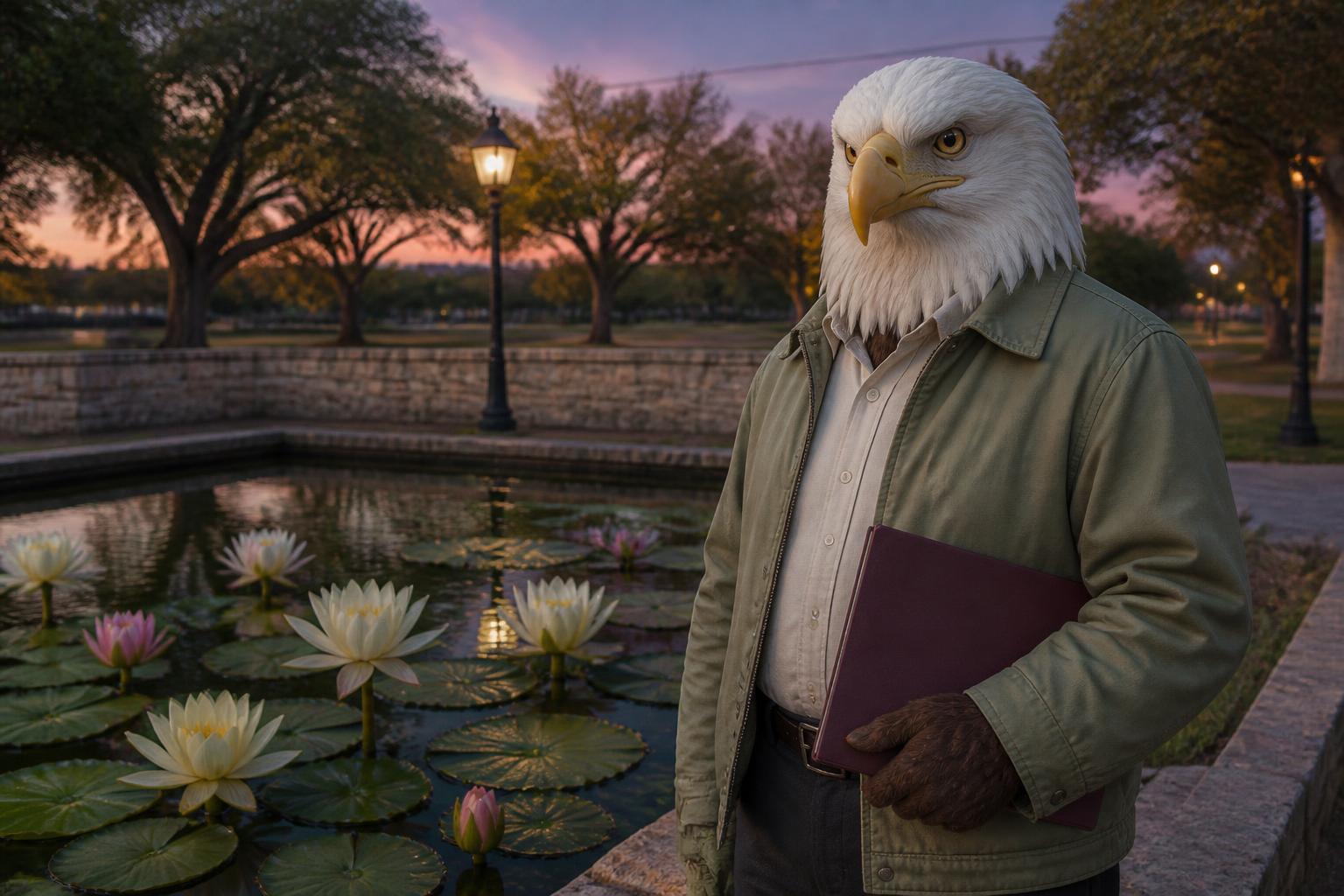
A San Angelo online high school page could start with the river or the fort. This one starts in a pond. In San Angelo, the water lilies in Civic League Park keep two schedules at once: the day bloomers are open through the morning, and the tropical night bloomers open somewhere between nine and midnight and hold until about nine the next morning, in the same water, a few feet apart. Nobody asks either one to keep the other’s hours.
Plenty of homes in town look like that pond. One teenager is up before the sun and finished by lunch; another does their best thinking after supper. One is a freshman and one is a senior. We are an online high school for grades 9 through 12, and this page sits under our Texas online high school hub. It is written for the household with more than one student in it, in a city that grew up beside Fort Concho in 1867 and is still the seat of Tom Green County.
Early riser, night owl, one online high school
Each student in the house keeps their own hours. Lessons are posted ahead of time and nothing is broadcast at a fixed hour, so a junior can work from seven to noon while a younger brother works from four to nine, and both are on schedule.
The usual worry is that two teenagers at home means two teenagers fighting over the same table at the same time. In practice the opposite tends to happen. Because nothing in an online high school course runs live, the household stops needing one shared start time. A student who wakes at six can be through English and half of Chemistry before the other one is out of bed, and the late starter can still do a full day’s work by evening. The kitchen gets quieter, not louder.
What we ask is that each student keeps a steady shape to the week, not that the shape matches anyone else’s. Here is what that looked like for one pair of students on a counselor’s planning sheet:
A specimen week drawn for this page, not a real family. The dark cells are the shared afternoon hours, when both are at the table and one parent can look in on both.
Neither row is better. A parent looking at this grid sees one thing to protect: the two hours in the afternoon when both are working and the table is shared. Everything else sorts itself out.
When a parent calls about two students, the first thing I ask is who gets up first. It tells me more about how to set up the house than any grade on a report card.
Two students, two transcripts, one online high school household
Every student has their own record. Credits, grades and the finish line belong to one child at a time, so a sister’s fast year never pulls a brother forward, and a slow semester for one never holds the other back.
It helps to be plain about what is shared and what is not, because families often assume one enrollment covers the house the way one bus route does. It does not, and that is the point. Here is how the pieces divide:
- Separate for each student
- The course list, the pace, the graded work, the transcript and the diploma. Each student’s record is read, counted and kept on its own.
- Separate, but easy to coordinate
- The weekly hours. Two students can share a table and a set of afternoon hours and still keep different mornings and evenings.
- Shared by the household
- The parent who follows both plans, the home calendar, the phone number we call, and the first conversation about where each student stands.
- Held by us
- An assigned student services representative who knows each file, and a counselor who can talk about both students on one call.
A name on every record. Two students in one family never share a transcript, a grade book or a diploma, even when they take the same course.
are really asking about. They do not want two schools with two sets of logins, two front offices and two ways of doing things. They want one school that treats two children as two people. A senior with nineteen credits looks like this on our side, while her freshman brother starts his own count from zero:
Her count, not his
Five credits left is about one more year for the senior, at her own pace. Her brother’s ring starts at zero and fills on its own.
The ring is hers alone. His starts empty, and nothing on her transcript ever appears on his.
Self-paced online high school gives each student a speed
Self-paced means the pace belongs to the student, not to the household. Two children in the same home can move through their courses at two different speeds, and neither one is told to wait for the other or to hurry up for them.
The pond, again. The day lilies on South Park Street do not close early so the night bloomers can open sooner. Neither student should either.
At home with more than one student, families sometimes rebuild that problem without meaning to: everyone starts at the same hour, everyone stops for lunch at the same time, and the slower reader in the house feels the faster one breathing down the hall. Self-paced courses are built to undo that. A unit opens when the student finishes the one before it, not when a sibling does. Here is how two students in one San Angelo house might differ, side by side:
| The early riser, 11th grade | The night owl, 9th grade | |
|---|---|---|
| Best hours | Six to noon | Three to nine |
| Quick subject | Algebra 2, two units a week | English 1, ahead of plan |
| Slow subject | U.S. History, one unit a week | Biology, rereading every lab |
| What the parent checks | Is the history unit moving? | Is the lab work getting turned in? |
| Who notices a stall | The assigned student services representative, for each student separately | |
The table is a specimen, but its shape is common. Almost every two-student house has one student who races in one subject and crawls in another, and the subjects are rarely the same for both. Self-paced lets each course run at its own speed for each child.
Two students to place? Talk it through with a counselor(888) 242-4262
Can freshmen begin online high school beside a senior?
Yes. Each student enrolls on their own date at their own grade. A freshman can begin 9th grade online in any month, while an older sibling is halfway through senior year, and neither start changes the other’s plan.
Families tend to enroll children one at a time, and often for different reasons. The older one comes first, because of a move, a job, a schedule or a year that did not go well. Then the younger one watches for a semester and asks to follow. Or the reverse: a family starts a rising freshman at the beginning of high school and the older sibling, seeing the week it gives, asks to switch in March. Both are ordinary. The first year is laid out on our page about freshman year online, and each later grade has a page of its own:
- 9th grade onlineThe first credits, the first full course load, and learning how a course is laid out.
- 10th grade onlineLonger writing, the middle of the English and math sequences, and a pace the student now owns.
- 11th grade onlineThe heaviest year for most students, and the one where separate hours at home matter most.
- 12th grade onlineOnly the courses still missing, arranged so the last stretch stays manageable.
Starts are rolling, so there is no single date the whole house has to hit. One student can begin in January and the other in August, and the calendar below is the same for both:
A start month for each student
One long table, two online high school courses open
Most two-student homes do not need two study rooms. They need one surface, two places to keep things, and a short routine that tells each student where their day starts and stops.
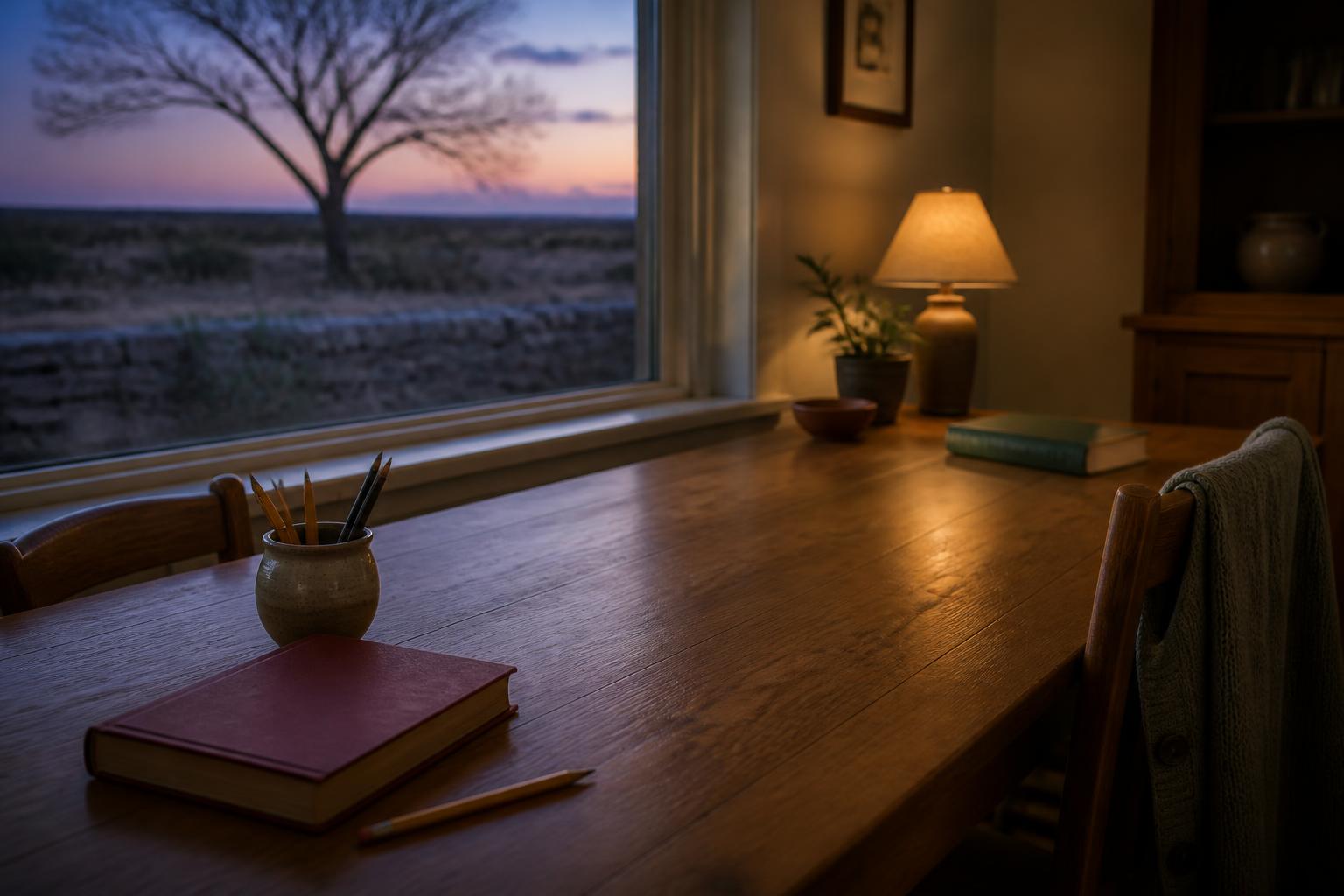
Picture a dining table with a window on the west side. At one end, a stack that belongs to the junior: a closed binder, a pencil cup, a printed unit outline with three boxes ticked. At the other end, the freshman’s corner, emptier because his day has not started. The table is the same table it was at supper. What turns it into a place for school is a handful of habits, and the families who settle in fastest usually land on something close to this:
- Give each student one end of the table. Their things stay at their end. Nobody clears the other one’s work to make room.
- Post both schedules where both can see them. Not to compare, but so each student knows when the other needs quiet.
- Keep one shared stretch of hours. Two or three hours when both are working, which is when a parent can look in on both at once.
- Close each day with one line in writing. Each student notes where they stopped, so tomorrow starts in the right place without help.
- Check the weekly record, not the minute. A parent who looks once a week at what was finished learns more than one who watches the clock.
None of this is a rule from us. It is what we hear back from families who made it work, in houses of every size.
Tom Green County homeschoolers headed for a diploma
If you taught more than one child at home through the middle grades, you already run a house of separate paces. Our accredited online high school picks up that habit and adds a school-issued transcript and diploma at 24 credits for each student.
One house, two answers. Enrolling one child is not a vote on how the other is taught. Families revisit the younger one every spring.
Homeschooling families in and around San Angelo often reach high school with one child ready and one not yet, or with one who wants a school record and one who is happy at home. Both can be right at once. A family can enroll the older student and keep teaching the younger one, and decide again a year later. What changes for the student who enrolls is that the courses are graded outside the family and recorded on a transcript we issue. The general picture of graduation credit requirements is on its own page, and our online high school diploma page explains how ours is issued.
One house, two answers. Enrolling one child is not a vote on how the other is taught. Families revisit the younger one every spring.
the same for every student. What the state of Texas or a district asks for is theirs to say, and we do not speak for it. Homeschool years are read course by course on the first call, and what counts is counted for that student alone. If accreditation is the open question, what accredited means here is set out in plain terms.
Worth knowing
Each student’s records are counted before any course is assigned
A counselor reads every transcript and homeschool record on the first call, one student at a time, and puts the count for each in writing.
The count comes first, for every child in the house.
Can one child enroll while another keeps homeschooling?
Yes. Enrollment is per student. A family can bring one teenager into our private online high school and keep teaching the other at home, and nothing about one decision binds the other.
List every child before choosing online high school programs
Write down every child in the house and the grade each will be in next fall. That one list tells a family which programs it needs, and whether a younger child belongs in the K-12 side while the older ones are in high school.
The list is often longer than the question that started the call. A parent phones about a sophomore and mentions, near the end, a sixth grader and a second grader. A family can lean on our online homeschool programs, which run from kindergarten up, so a family can keep every child under one school and one structure, with the high schoolers on credit-bearing courses and the younger ones on their own grade work. The lessons follow the American curriculum at every level. Families with children below 9th grade can start from the Texas K-12 online home school page. Here is how one household of three mapped out a year:
One household, three grades, one plan
For the high schoolers on that map, these are the online high school courses families ask about most, each with a page listing its units. The full high school courses catalog carries the electives and the rest:
- English 1
- English 2
- English 3
- Algebra 1
- Geometry
- Algebra 2
- Biology
- Chemistry
- Physics
- World History
- United States History
- U.S. Government
Two students taking the same course in different years is common, and it is not a shortcut for the younger one. Each takes the course at their own speed and turns in their own graded work.
Separate credit counts, one shared first call
Send every student’s records before the call. A counselor reads each transcript on its own, counts what transfers toward our 24 for that student, and names in writing the courses each one still needs. One call can cover both.
Families who move to Tom Green County for work at the hospitals, at Angelo State University or on a ranch rarely arrive in August, and rarely with two students at the same point. One may be mid-year with a full semester to carry over; the other may have one failed course on an otherwise clean record. Our transfer credit review explains how each course is read, and for a single class that did not pass, credit recovery means retaking that one course, not repeating a year. The admissions steps are laid out one at a time, and they are the same for each student.
Send everything, even the messy parts. A report card from a school that closed, a homeschool book list, a summer course: each one is read for the student it belongs to.
and families with two or more students ask it first. Tuition is published per student, payment plans exist, and the figures are on our tuition and payment plans page, where a family can read them before anyone phones. Some of what a household spends on a building schedule, in fuel and in rearranged work, is set out under what families save.
Records ready for both? Start an application(888) 242-4262
Two finish lines, one high school plan each
The lilies on South Park Street do not compromise on hours, and the pond is better for it. A house with two students can work the same way. Each one gets a plan, a pace and a transcript of their own, and the family gets one school to deal with. If you want the longer explanation of how a week inside a course runs, read how online high school works; if one of your students needs a way back after time away, our page on how to finish high school online starts there. For the other paths a family weighs, there is a side-by-side of school options, and for everything from kindergarten up there is our online K-12 school.
Before the call: write each student’s name, grade, last school and best hours on one sheet. That sheet is most of the first conversation.
have their own pages, each written for its own town: Abilene up the highway to the northeast, Lubbock on the plains to the north, and San Antonio to the southeast. A San Angelo online high school start can begin any month, for one student or for all of them.