Milwaukee County, Wisconsin
Greenfield Online High School
A whole high school fits in one corner of a Greenfield condo, and the school keeps the record.
Enroll this monthBook a counselorGet the detailsCall (888) 242-4262
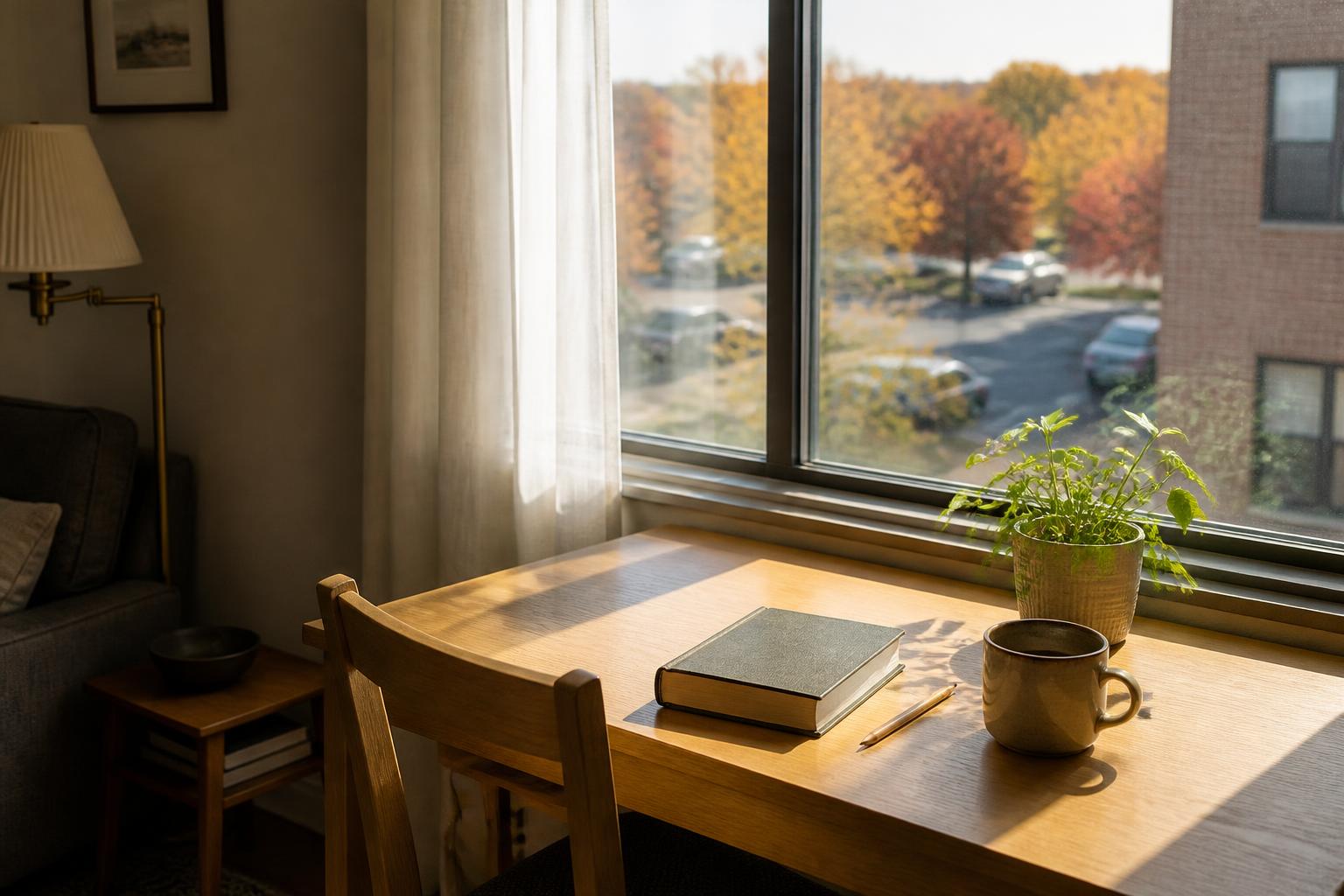
1 desk by a window holds online high school
Greenfield online high school needs less room than most families expect: one steady surface, a posted plan, and a school on the other end that grades the work and keeps the transcript.
This page sits under the Wisconsin online high school hub, which covers the state as a whole. The question here is narrower and very local: what grades 9 through 12 look like when they happen inside the homes Greenfield is actually built from.
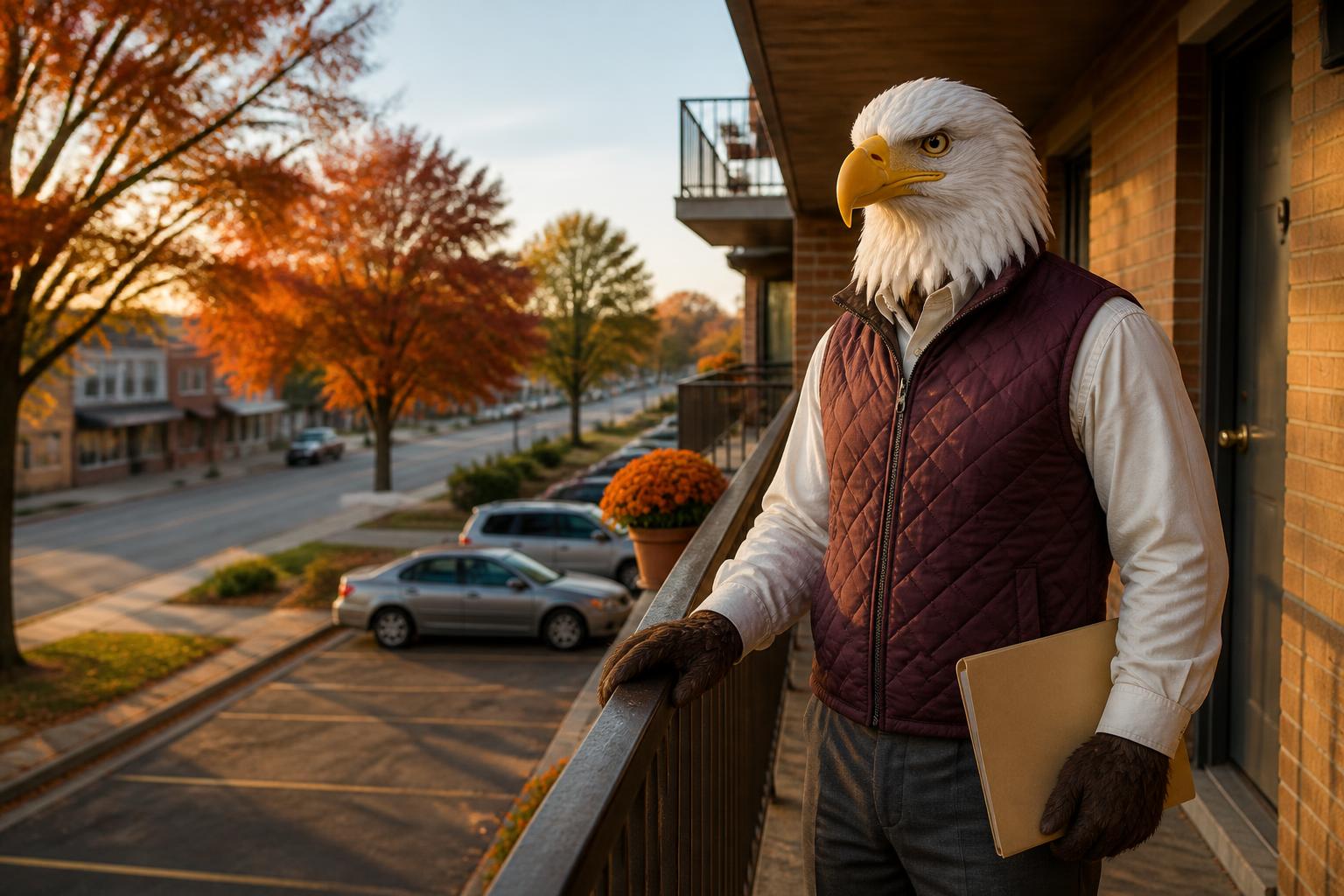
Those homes are worth describing plainly. Over 40 percent of households in the city live in multi-unit housing, a large share of it condominiums, and the city has no major industrial sites (the Encyclopedia of Milwaukee entry on Greenfield). Greenfield, Wisconsin is usually counted among the bedroom communities of the Milwaukee area. Most adults leave in the morning for work somewhere else, and many of them come home in the evening to a unit on the second floor rather than to a house with a finished basement.
Families often assume an online school needs a home office, a spare bedroom, or a parent at the next desk all day. It needs none of those. The work happens inside courses the school builds, grades and records, so the home supplies a place to sit and a few predictable hours. Everything heavier lives with the school.
The home supplies a corner. The school supplies the rest, and keeps the record.
The city is a fair local example of fitting a whole thing into a smaller footprint. Greenfield was the last municipality in Milwaukee County to become a city, in 1957, and by then the neighbors incorporating around it had taken so much land that it was barely a third of its original size. It built a full city on what was left. A high school year can be built the same way, inside the room a household already has.
Follow one online high school assignment until graded
An online high school runs as a loop the student can see: open a lesson, do the work, submit it, get it back graded, and watch the finished course become a credit on the school’s record.
- Open the lesson. Each course is laid out in units, with the reading, the worked examples and the practice in one place.
- Do the work. At the desk by the window, during whatever hours the posted plan sets aside for that course.
- Submit it. Quizzes, written responses and unit tests go to the school, not into a folder on the counter.
- Get it back graded. The grade lands in the course and counts toward the final mark.
- Close the course. A passed course becomes a credit on the school’s transcript, one of the 24 our diploma asks for.
The loop is the same in every grade. For the longer walk through it, how does online high school work? covers each stage. The short version is that the family never becomes the grader or the record keeper, which is exactly what lets the loop fit inside a small home without taking it over.
Grades 9 through 12, one loop
The first full year of core courses, with a weekly rhythm set with a counselor from the start.
Same loop, with any finished ninth-grade work already on the record.
Heavier courses at the same desk, with the same assigned representative.
The last credits toward 24, and a diploma issued by the school.
A student can join at any of the four, in any month.
Every course belongs to an accredited online high school, and that is the one thing no apartment can supply by itself: a school standing behind the grade. Enrollment is open all year, so a student can start any month, and a mid-year start is as ordinary here as a September one.
Layton Avenue at noon, high school half done
By midday on a weekday in Greenfield, a student working online has usually finished the hardest course and planned the afternoon, while the adults in the household are miles away at work.
Layton Avenue runs the length of the city and is promoted as its city center, a road rather than a square, lined with shops, offices and the low condominium buildings so many families here call home. Picture a sophomore in one of those buildings at noon. Algebra was done before ten. An English draft is half written. A parent is somewhere on Interstate 43 or at a desk downtown, and the building is quiet the way a building of commuters is quiet in the middle of the day.
One sophomore’s posted plan. The hours are the student’s to set; the courses and the grading are the school’s.
Nothing in that plan depends on a parent being home before the evening. The hours are posted, the work goes to the school, and the grades come back from the school. What the adults get, when they walk in after the drive home, is a record they can read rather than a day they had to supervise.
The open afternoon blocks are open on purpose. They can go to a part-time job, a practice, an appointment, or an hour on the Powerline Trail, which has run through the city since 2022 (the trail’s own site). On a Sunday from May to October the Konkel Park farmers market is a short walk from many of these buildings. None of that is school, and all of it fits around school when the plan is posted.
Corner picked out already? Enroll this month or Call (888) 242-4262 to set up the plan.
Self-paced online high school still keeps a schedule
Self-paced means the student sets the speed inside each course, not that the course has no shape: a counselor sets a weekly rhythm and a target finish date that is honest about the workload.
That matters most in a small home, because a schedule is what keeps school from spreading into every room and every hour. The point is to learn on your own schedule while each course keeps its order and its deadlines for unit work. A student who moves faster in one subject can, and a student who needs another week on a hard unit can take it, but both are measured against the same guide, so drift shows up early.
The courses are the full set a four-year plan draws on, and the catalog of high school courses lists every one. The core runs like this:
- EnglishEnglish 1, English 2, English 3
- MathematicsAlgebra 1, Geometry, Algebra 2, Pre-Calculus
- ScienceBiology, Chemistry, Physics
- History and civicsWorld History, United States History, U.S. Government
These are online high school courses in the full sense: each one ends in graded work and a credit. The American curriculum page shows how they stack across the four years, so a student finishing Algebra 1 in a condo near the Root River on the west side of the city is on the same sequence as a student finishing it anywhere else.
A school-issued diploma, not a parent-kept homeschool file
In an online high school the school keeps the record and issues the diploma; in a homeschool the parent does both, and that difference decides how much paperwork has to live in your home.
Families looking for a home schooling diploma often find both kinds of program on the same page of results, and the words get used as if they meant the same thing. For a household with two commuting adults and limited shelf space, the difference is practical before it is anything else. A homeschool runs on a parent’s file: the course choices, the grading and the transcript are the parent’s to produce and to store for years. An online high school keeps all of that with the school.
Neither path is wrong for every family, and an honest comparison of the options sets out what each one asks of a household. Parents who do want to run the record themselves will find the homeschooling starter guide a good first read. For the student who wants a school-issued online high school diploma, the high school diploma at the end and every grade before it stay with the school from the first course to the last.
Can a student who was homeschooled move over to the online school?
Yes. The homeschool record is read alongside any school transcripts, documented courses are reviewed one at a time, and the plan is built from what is left. From that point on, the school holds the file and the household stops being its keeper.
For Greenfield parents on I-43 during high school hours
If you leave Greenfield for work every morning, the online high school is set up so the oversight you cannot give from the car is already in place before you go.
Interstate 41 and Interstate 43 both serve the city, which is part of why so many households here commute. The supports below are switched on for every student from the start, so nothing has to be arranged on the way out the door:
- Your evening job is to read the record, not to recreate the school day.
- Questions during the day go to the assigned student services representative instead of to a parent’s phone at the office.
- A stretch that slips is noticed by the representative following the course, while it is still small enough to fix in an afternoon.
Households in the cities next door run on the same supports. A family that moves here from West Allis to the north, or from Milwaukee to the east, keeps the same courses, the same transcript and the same 24-credit plan, because none of it is attached to an address. For younger brothers and sisters, the Wisconsin K-12 online home school page covers the earlier grades.
Rather talk it through first? Book a counselor or Get the details by email.
Can students finish high school online in an apartment?
Yes: a student can finish high school online from an apartment, a condo or a duplex, and what decides how it goes is the record and the hours, not the square footage.
| The household’s question | What it turns on |
|---|---|
| Is there room for school here? | One surface and one chair, used at the same hours most days. |
| Who is home during the day? | Nobody has to be; the posted plan and the school carry the day. |
| What about sound through the walls? | The heaviest course goes in the quietest stretch, usually midday. |
| Where do the papers go? | To the school, onto its own transcript. |
| What if we move to another unit or city? | Nothing changes; the record is not tied to the address. |
For a student partway through high school who wants to finish your diploma online, the first step is identical in any home: the school reads the record and counts the credits before anything new is assigned. A course that was failed or left unfinished goes through credit recovery on its own, and courses passed at an earlier school come across as transfer credit, so a move into online school partway through a year never sends anyone back to the start of ninth grade.
- School of record
- The school that grades the work, keeps the transcript and issues the diploma. For an enrolled student that is us, not the household.
- Posted plan
- The student’s own weekly hours for each course, written somewhere the whole household can read them.
- Quiet stretch
- The part of the day with the fewest interruptions at home, saved for the hardest course.
Space is rarely the deciding factor in the conversations our counselors have with families in condos and apartments. Hours are. A student who can protect three or four predictable hours most weekdays has what the courses need, wherever the desk happens to sit.
4 edges of an online high school study corner
Four things mark out a study corner that works: a flat surface, set hours, a steady connection, and a door that can close some of the time.
Greenfield was surveyed for settlement in 1836, created as the Town of Kinnickinnic in 1839 and renamed for its post office in 1841. Like any surveyed parcel, a study corner is easier to keep once its edges have names. Drawn as a plat, it looks like this:
None of the four edges asks for more room than a small unit has. The surface can be a corner desk or a fold-down shelf. The hours are the posted plan. The connection is the one the household already uses. The door can be a bedroom door closed for the hour of a unit test, or a pair of headphones when there is no door to close. A student with those four edges and a school behind the work has everything the home is responsible for.
Have the four edges covered? Enroll this month or Call (888) 242-4262 with your questions.
Gather the high school records before moving furniture
Before anyone rearranges a room, send the most recent report card or transcript: the count of what a student already has decides the plan, and the plan decides how many hours the corner needs.
What the count reads first
- 1Passed courses that match ours go straight onto the count.
- 2The unfinished half credit is completed on its own, without repeating the year.
- 3Whatever remains of the 24 becomes the posted plan, one course at a time.
- Find the papers. The latest report card or an unofficial transcript, plus anything from an earlier school or a stretch of homeschooling.
- Apply. The application takes the student’s details and those papers.
- Take the first call. A counselor goes through the record line by line and names what carries over.
- Read the plan. The remaining courses, in order, with a weekly rhythm and a target finish date.
- Set up the corner. Now the household knows how many hours a week the work needs, and can pick the spot and the times to match.
Every credit lands on the school’s own high school transcript, and questions about cost are answered on the first call or on the tuition page. A private online high school like ours runs on no district calendar, so the first course usually opens within days. Our online school uses these same steps for every grade, and the online high school overview describes the program as a whole.
Moving the furniture is the last step, not the first. Once the plan is in hand, the corner is simply the place where those hours happen, in a home that already had room for them.