Orange K-12 online home school, built for the student who is ready to move faster.
In a historic, education-minded Orange County town, the right answer for a bored, capable student is rarely more worksheets. It is the right pace.
Orange keeps its old town square and its craftsman streets, and it keeps an education-minded streak to match: dual-career households, families who research the school decision hard, and more than a few students who finished the chapter while the room was still on page one. A pace set for the middle of thirty is the wrong pace for that child.
A self-paced, accredited K-12 program runs on mastery rather than the calendar. The work is asynchronous and done in the windows the family has; the student who is ahead keeps going the moment a unit is mastered. Here is an honest comparison of online school, homeschool, and public school.
It is not a lighter year, and it is not a parent turned teacher. The teachers are ours; the family keeps the rhythm, and a counselor keeps the year honest. Honors and AP-equivalent courses sit inside the same structure, so a ready student simply takes them.
The record stays one continuous document, the same one every student carries, and it moves with the student to any California school. The standard never drops; only the pace meets the student where they actually are.
What a year like this protects is the student’s relationship with learning. A child who spends years waiting through a pace set for someone else learns that school is something done to them on a clock. A child who moves at their real pace learns the opposite: that effort and curiosity actually move the needle, and that being stuck for a week is a normal, fixable part of the work rather than a verdict. In a Orange household with real demands on its hours, that is the difference worth building a childhood around.
How much school the week actually takes.
An honest look at focused hours per week by grade band, shipped-science time included. Self-paced trims the seat-time a fixed bell cannot, which is part of why the day fits a working Orange household.
Figure 1 · Typical focused hours per week, by grade band. Approximate; a counselor sets the real plan per student.
For the Orange student who is already ahead.
Not every student who is restless in class is struggling. Plenty are bored, finished with the chapter while the room is still on page one. A pace set for the middle of thirty students is the wrong pace for that child, and the fix is rarely more worksheets.
Mastery, not the calendar, decides when a student moves here. A child who is ahead keeps going into the next unit and the next course the moment the work is mastered, with honors and AP-equivalent options inside the same self-paced structure. They are not held to a grade-level average or made to wait for a room of thirty. It is a property of the model, not a separate gifted program.
What it protects is the student’s relationship with learning. A child who spends years waiting through a pace set for someone else learns that school is something done to them on a clock; one who moves at their real pace learns the opposite, that effort and curiosity actually move the needle, and that being stuck for a week is a normal, fixable part of the work rather than a verdict.
The parent’s real job: coach, not teacher.
The fear on nearly every first call is the same: “I work long hours and I never took calculus. How am I supposed to teach this?” The short answer is that you are not. The teaching is ours. The teachers plan the courses, grade the work, and answer the questions, on the student’s schedule rather than at a single bell.
The Orange parent’s job is rhythm, not instruction: keep the day on track, make sure the materials are out, and ask whether the work got done. If a child hits a wall, the teacher is the resource, not you. A counselor reviews pacing on a regular cadence, so a flexible week never quietly drifts into a gap.
It protects the relationship, too. A parent who is the encourager rather than the enforcer of algebra gets to stay on the child’s side of the work; the hard conversation about a missed concept happens with the teacher, where it belongs, and the parent stays the person who asks how the day went and means it.
One online school for every child in the house.
Plenty of Orange households run more than one student at once, often grades apart. The old model means a different campus, a different bell, and a different drive for each child. One accredited online homeschool holds all of them on one platform, with one counselor and one weekly rhythm.
Each child is still placed and paced independently, by skill rather than birthday. The third-grader works phonics while the ninth-grader works geometry, same morning, neither waiting on the other. The logistics relief is the part parents feel first: one login, no three-campus shuttle, one calendar the school bends around.
It also changes how the day feels. Siblings keep their own pace instead of one waiting on another, and the home runs on a rhythm the parents already manage rather than several school bells pulling in different directions. When one child races ahead and another needs a slower week, both happen on the same morning, each on their own record.
A calmer place to learn, for the Orange student who needs one.
For some students the building itself is the problem: the crowd, the noise, the social weather that makes it hard to think. They are not less capable; they are spending energy on survival that should be going to the work.
Online learning can be a safer, more supportive environment for that student, a lower-stimulation setting where real academic work gets done and confidence rebuilds. The pace bends to the day the student is actually having.
The point is not to lower the bar. The standard never moves; what changes is the setting and the pace, so a capable student who was spending energy on survival gets to spend it on the work instead, and rebuild at a pace they can sustain.
The Orange online K-12 curriculum, grade by grade.
The full course of study, subject by subject across the four grade bands. A student is placed by skill, not birthday, so the grid is a map, not a cage. It is the American Curriculum framework underneath, with honors and AP-equivalent options where a student is ready. For families weighing the move, here is an honest comparison of online school, homeschool, and public school.
| Subject | K–2 | 3–5 | 6–8 | 9–12 |
|---|---|---|---|---|
| English | Phonics & fluency | Reading to learn, writing | Literature & argument | Composition, honors options |
| Mathematics | Number sense | Fractions & operations | Pre-algebra to Algebra I | Geometry, Algebra II, Precalculus, Calculus |
| Science | Observation & inquiry | Scientific method | Life & physical, shipped lab kits | Biology, Chemistry, Physics |
| Social Studies | Community & maps | US & world geography | World & US history, civics | US History, Government, Economics |
| Electives | Art & music | Intro languages | World languages, computer skills | Computer science, visual & performing arts |
Every grade has its own page, from kindergarten through elementary, middle school, and high school. New to this with a young child? The K-5 parent guide is the place to begin, and the counselor walks through placement in detail.
Every grade and class, kindergarten through twelfth.
The full K-12 catalog. Each grade has its own page, and the counselor places a student by demonstrated skill, subject by subject.
How a self-paced online home school actually teaches.
A self-paced day is a method, not a shortcut. Here is how each part of the K-12 day runs for a Orange student. New to all of this? Start with the complete guide to getting started.
Not every restless student is struggling. Plenty are just bored.
Two paces, one cumulative record.
We accommodate students with an active IEP or 504 plan and work with families on the specific accommodations the plan calls for. The starting point for any Orange family bringing an existing plan is a counselor call: the counselor reviews the plan, walks through how the accommodations land in the K-12 curriculum, and aligns the student’s pacing and supports to what it asks for.
Twice-exceptional learners are advanced in some subjects and need extra support in others. The self-paced mastery model runs both at once, on the same day, without either pace becoming the wrong one. What the school does not do is replace the clinical specialists a family already works with; it works alongside that ecosystem. For some students the calmer setting matters in its own right, and online learning can be a safer, more supportive environment.
The worry every parent raises first, whether a child online will have a social life, has its own answer too: here is how online students actually socialize, on their own schedule and often with more time for it than a seven-period day allows.

On the student who outran the room.
A lot of first calls I take from an Orange family start the same way: “My kid isn’t struggling. He’s bored, and it’s turning into a problem.” That is a pacing problem, and it has a clean fix.
We hold the standard exactly where it belongs and let the clock move. The student who is ahead keeps going into the next unit and the next course; the one who needs a week on something takes it without stigma. Most children are both, in different subjects, on the same day, and a school that can hold two paces at once finally sees them.
Bring the real student to the call, the one who is curious when they are not bored. We design the year around that student, and we start there.
Sixty seconds with the Head of School.
What K-12 online home school in Orange costs.
The financial side is a real conversation, and the right place to have it is a one-to-one counselor call, not a table posted on a webpage.
For exact numbers and a written plan, schedule a counselor call. Fifteen minutes by phone. No pressure.
Orange online home school questions, answered.
My child is bored, not struggling. What does an online school actually do differently?
It changes the pace, not the rigor. Mastery moves the student up, not the calendar, so a child who is ahead keeps going into the next unit and the next course the moment the work is mastered, with honors and AP-equivalent options inside the same self-paced structure. It is a property of the model, not a separate gifted program.
Is “self-paced” watered down?
No. The coursework, standards, and checkpoints are fixed; only the timeline flexes. A counselor verifies pacing on a regular cadence so a fast pace never turns sloppy and a slow week never turns into a gap.
My child is years ahead. Can they move faster?
Yes. Mastery, not the calendar, decides when a student moves up, so a child who is ahead keeps going into the next unit and the next course the moment the work is mastered.
I work long hours. Do I have to teach the lessons myself?
No. The teachers are ours; they teach, grade, and answer questions. Your job is rhythm, not instruction. A counselor reviews pacing so a flexible week never drifts into a gap.
Can my student transfer back to the Orange Unified district later?
Yes. The accredited cumulative record transfers to any receiving California school. The counselor provides the transcript with completed work and standards-alignment notes for the district’s intake.
How does placement work, by age or by skill?
By demonstrated skill, subject by subject, not by birthday. A student can sit at different levels in different subjects on the same day. The counselor sets initial placement and adjusts as the student moves.
Can we start in the middle of the school year?
Yes. Enrollment is year-round, so a student can begin any day. The counselor reviews prior records first, so the student picks up at their real level rather than at the start of a term.
What does a K-8 student get at the end of 5th and 8th grade?
A promotion certificate at the end of 5th grade and another at the end of 8th. The cumulative record continues uninterrupted through high school.
How long is the counselor call, and what does it cost?
Fifteen minutes by phone. No commitment after. The counselor walks through where the student is in each subject, what the year would look like, and what enrollment would take.
Still have questions? See the complete online-school FAQ and the admissions requirements for an online K-12 school.
What the first call actually covers.
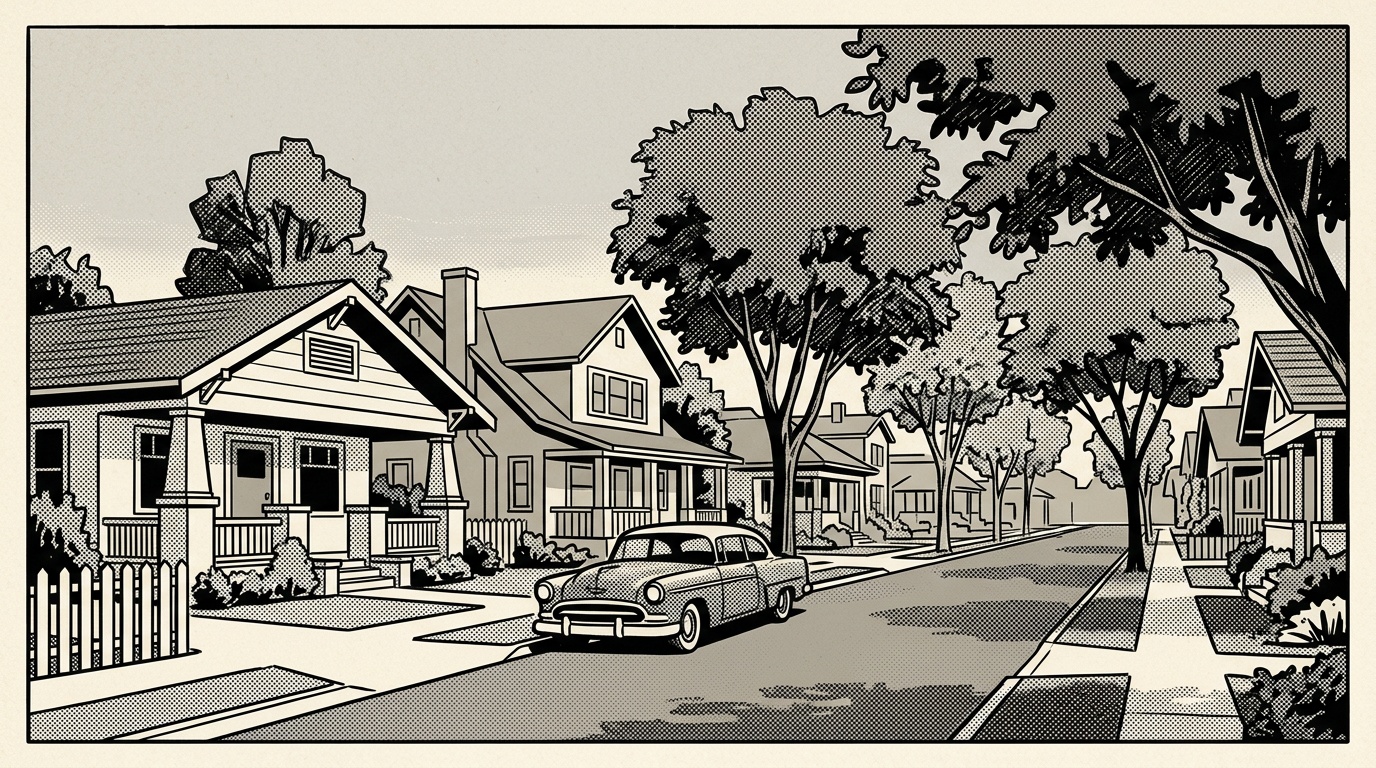
an Old Towne Orange neighborhood, craftsman and bungalow homes under mature trees.
The first step is a fifteen-minute phone call with a counselor. No commitment, no pressure, nothing to prepare. It covers where your student is now, their real level in each subject and any prior records; what the year would look like, how the self-paced day runs and where honors or acceleration fit; how it fits your family, the weekly rhythm around your real schedule and the parent’s coaching role; and what enrollment takes, the honest cost conversation and the few steps to start.
Orange, California.
A landmark for context. The school itself is online, available wherever a Orange family lives.
Sources & local references: Orange on Wikipedia · California Department of Education · Chapman University
HSOA in nearby California cities.
Each city has its own page. The school is online, available wherever a family lives in California.
The door does not close in September.
Enroll any day of the year. Start with a fifteen-minute call and the counselor builds the year around your family.